

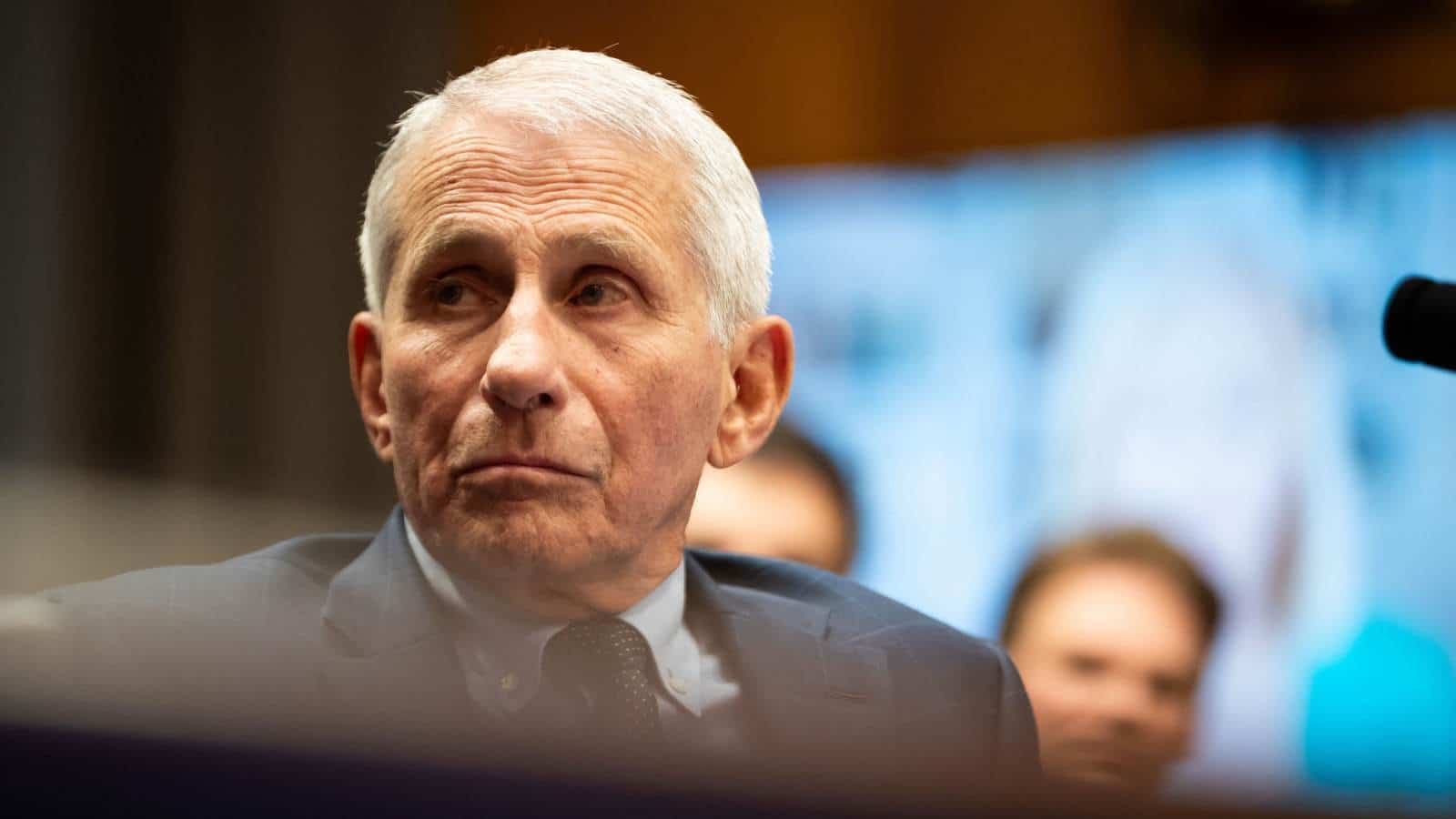
Anthony Fauci got hit with a formal contempt vote from a Senate committee, 8-5, straight down party lines. And honestly? If you’ve been following his story for the last few decades, this isn’t shocking. It’s almost expected at this point.
Here’s the thing though. Fauci isn’t just some random guy who got unlucky during COVID. This man has been the government’s go-to disease expert since 1984, serving under seven different presidents starting with Ronald Reagan.
HIV and AIDS. SARS. Bird flu. Swine flu. Zika. Ebola. He was there for all of it, telling Americans hard truths while the fear was still fresh and nobody had answers yet.
George W. Bush even gave him the Presidential Medal of Freedom back in 2008 for that work. So this isn’t a man with a thin resume showing up during one crisis and stumbling.
He’s been doing this job, under both parties, for longer than most of us have been paying attention to politics.
Four decades of being the person sent out to explain uncertainty to a scared country, long before most people even knew his name.
He’s Seen This Movie Before
What’s wild is that Fauci himself says this isn’t even new for him. He told CNN’s David Axelrod that the hate he’s getting now feels a lot like what he dealt with back in the AIDS crisis of the 1980s.
Back then, he called the hate mail the work of “stupid people saying stupid things.” His words, not mine.
But he also said something that stuck with me. He said the hostility hasn’t really changed in nature, just in size. “It’s really a magnitude different now,” he told Axelrod.
So basically, people have always wanted someone to blame when a health crisis scares them. Social media just gave that blame a megaphone and a much bigger stage.
It’s telling that the man himself, someone who has lived through this exact dynamic twice now, is the one drawing the line between then and now. He’s not claiming this is unprecedented. He’s saying it’s the same old story, just amplified.
When the Anger Stopped Being Just Talk
At some point, criticizing Fauci turned into something scarier than angry letters. The Department of Justice actually confirmed that security around him was increased after real threats came in, and that request came from the Health and Human Services Inspector General.
His own family wasn’t spared either. Fauci said his wife and daughters needed extra protection because of serious threats made against them.
“I’ve seen a side of society that I guess is understandable, but it’s a little bit disturbing,” he said to CNN.
Let that sit for a second. A career scientist who spent decades explaining outbreaks to a scared public ended up needing federal protection just for doing his job. That’s not a normal outcome for public service, no matter how you slice it.
And it didn’t happen overnight either. This was an escalation: disagreement turning into hostility, hostility turning into something the government had to guard against formally.
There’s Even a Name for This Pattern
Turns out, this whole cycle has a name. Boston University public health law scholar Nicole Huberfeld calls it “health freedom,” basically the public’s pushback against official medical guidance and the people who deliver it.
She’s noticed this pushback dies down during some administrations and spikes hard during others. And she’s pretty direct about why.
“People take their signals from the leaders that speak to them,” Huberfeld said. She also pointed out that public health “has been devalued significantly by leadership right now.”
In other words, this isn’t really about whether the science changed. It’s about which political voices are loudest at any given moment, and how much those voices decide to trust or trash the experts standing behind the microphone.
That’s a pretty important distinction. It means the backlash against people like Fauci isn’t necessarily tied to new evidence or new mistakes. It rises and falls with whoever’s currently setting the political tone.
Why This Matters Way Beyond Fauci
Save this article
Here’s my worry with all of this. Every time a health crisis hits, the government needs scientists willing to step up and deliver bad news early, before anyone wants to hear it.
If the reward for doing that job well is contempt votes, hate mail, and security details for your kids, why would the next brilliant epidemiologist want that gig?
This week’s Senate vote isn’t just a headline about one man’s legal troubles. Placed next to his AIDS-era experience, the security threats, and Huberfeld’s research on this recurring cycle, it starts looking like a pattern the country keeps repeating on autopilot.
Different outbreak, different decade, same basic setup. Scientist warns people early, fear eventually fades, and then the blame shows up right on schedule to fill the space fear left behind.
Fauci spent four decades on the early side of that timeline. Now he’s living through the other side, the part where the danger has passed, and the anger has arrived to take its place instead.
He’s essentially watched this same cycle play out twice, from the same chair, decades apart. First with AIDS, now with COVID, and the shape of the backlash barely changed.
So here’s the real question nobody’s really answering yet. If we keep treating our scientists like villains once the crisis is over, who exactly will want to stand at that podium the next time something dangerous shows up?
- Fauci’s Fifth Amendment stand fuels new push for legal accountability despite Biden pardon
- COVID-19 Vaccinations: Considerations for Irritable Bowel Syndrome (IBS) and Inflammatory Bowel Disease (IBD)
- Nicki Minaj Tells Fauci “Feeding Tubes Will Be His Portion” After Senate Testimony Sparks New Clash
- COVID-19 & IBS: “Long COVID”, Mast Cell Activation & Histamine Intolerance





