

That container of pico de gallo tucked into the back of your refrigerator may deserve a closer look.
On August 9, Taylor Fresh Foods, the parent company of Taylor Farms, voluntarily recalled 20 prepared food products containing jalapeño peppers, including items sold at Walmart, Kroger, Target, Whole Foods, Trader Joe’s, Hannaford, and Stop & Shop.
Coast Citrus Distributors, Taylor Farms’ jalapeño supplier, recalled fresh jalapeños linked to a multistate Salmonella outbreak traced to a grower in Sinaloa, Mexico, prompting Taylor Fresh Foods to act.
The timing puts Taylor Farms under a food-safety spotlight again only weeks after a separate cyclospora investigation involving iceberg lettuce from central Mexico. The two incidents involve different pathogens, different supply chains, and different growing regions.
If you bought prepared jalapeño products at any of these retailers recently, the full recall list is the place to start.
How a Supplier’s Recall Worked Its Way Down the Chain
The contamination originated upstream, at a grower supplying Coast Citrus Distributors, before it moved into Taylor Farms’ finished products.
Taylor Fresh Foods began the recall after Coast Citrus Distributors pulled its fresh jalapeños over potential Salmonella contamination. Chipotle Mexican Grill and Qdoba had also received jalapeños imported by Coast Citrus; both chains stopped using them, and Coast Citrus recalled its remaining stock.
Taylor Fresh Foods said it is “no longer sourcing products from this farmer and will be filling orders from alternative suppliers.” The company also said it is “currently not aware of any reported illnesses linked to its products containing jalapeños,” which makes the recall precautionary rather than a response to confirmed illnesses tied specifically to Taylor’s products.
Which Products Are Affected and Where They Were Sold
The recall spans 20 products sold under multiple brand names, several of which carry retailer private labels that do not mention Taylor Farms at all.
The complete recall list includes UPCs, “Best If Used By” date ranges, and state distribution for each item.
Products include salsas, guacamole, pico de gallo, mango pico de gallo, taco dip, spicy Jarlsberg and pimento cheese dips, a Trader Joe’s Fiesta Style Salad Shrimp, a Kroger Private Selection spicy roast beef sandwich, and a Hannaford rice and bean burrito.
All recalled products carry a “Best If Used By” date up to August 16, 2026. Distribution reached 26 states, including Maine, Vermont, Illinois, Ohio, Texas, Oklahoma, and Minnesota.
The Salmonella Outbreak Driving the Investigation
The wider federal inquiry has confirmed significant spread of illness, though the company says it is unaware of any cases linked to its own recalled products.
The multistate Salmonella outbreak connected to jalapeños has sickened 345 people across 27 states and led to 36 hospitalizations, according to the CDC and FDA.
No deaths have been reported, and federal, state, and local health officials are investigating. Symptoms, typically diarrhea, fever, and abdominal pain, can appear within 12 to 72 hours of consuming contaminated food.
Salmonella can be especially serious for young children and adults with weakened immune systems. Anyone in those groups who has consumed a recalled product and develops symptoms should contact a healthcare provider promptly.
How Retailers Responded
Walmart, Whole Foods, and Hannaford confirmed they removed recalled products.
Save this article
Walmart announced on Monday that it had removed all recalled products from shelves and blocked sales at registers and online. Representatives for Amazon-owned Whole Foods and Ahold Delhaize-owned Hannaford confirmed that the products were pulled and advised customers who had purchased them to discard them.
Kroger declined to comment. Target and Trader Joe’s did not immediately respond to requests for comment, and all three appear on the recall distribution list, meaning they sold recalled products in at least some states.
The responses differed, but by then the products had already reached several major grocery chains under a range of labels.
A Company Under Its Second Spotlight in Weeks
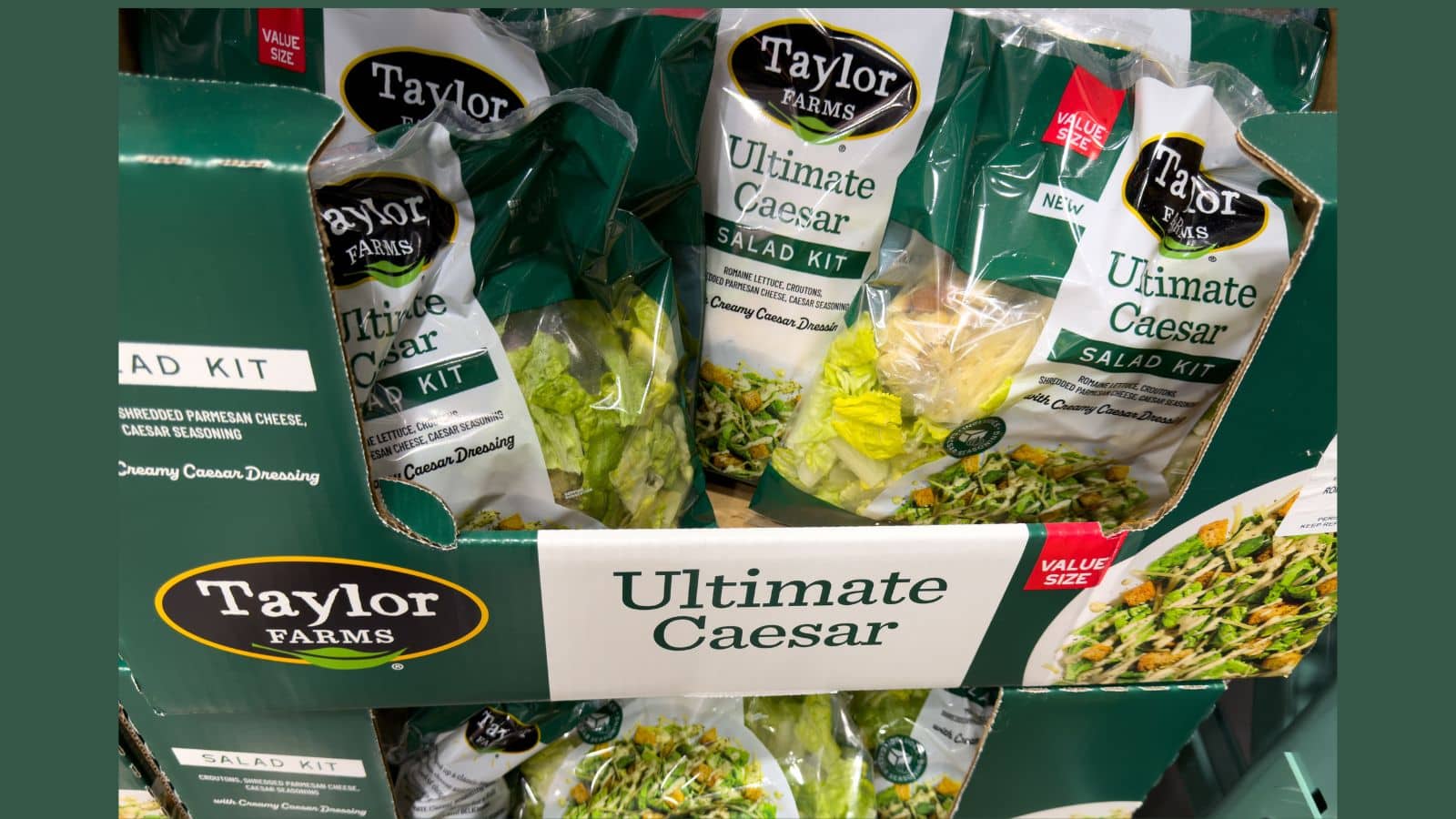
Taylor Farms supplies a significant share of America’s fresh produce, which means a single upstream contamination can reach consumers under many different labels at once.
Taylor Farms accounted for 40% of all salad sold in the United States last year and employs more than 25,000 people. One contaminated ingredient can surface as a store-brand pico de gallo at one retailer and an unbranded dip at another, without a consumer recognizing the common supplier.
The jalapeño recall came weeks after Taylor Farms recalled iceberg lettuce from central Mexico in a separate cyclospora investigation, an outbreak described as “already among the largest foodborne illness events in recent U.S. history.”
The Farms disputed elements of the FDA’s findings in the lettuce case; the incidents involve different ingredients, growing regions of Mexico, and pathogens.
Joe Feldman, senior managing director at Telsey Advisory Group, said: “Consumers are likely to avoid all Taylor Farms products for a while. Taylor Farms will have to work hard to change the perception that its products can make people sick. It could take some time.”
What to Do Right Now
Discard any recalled product immediately and contact the store of purchase or Taylor Farms directly for a refund.
Taylor Fresh Foods has set up a consumer hotline at 855-455-0098, available Monday through Friday from 8 a.m. to 5 p.m. Pacific time. Refunds are available at the location of purchase.
Outbreaks connected to long produce supply chains present a recurring challenge for investigators and consumers alike: by the time an illness is identified, the food itself may already be gone. Food safety attorney Bill Marler captured the problem in four words: “People eat the evidence.”
Taylor Farms said it “has operated for more than 30 years and produces billions of servings of safe, high-quality fresh produce annually” and added: “We have cooperated fully with regulators in any instance where food safety concerns were raised, taking corrective action where warranted.”
When you hear about a food recall, how do you find out which products are actually affected, and has that information ever reached you too late?
Related Articles:
- Millions of Eggs Pulled From Stores After Salmonella Warning Hits Kroger Shoppers Across the Midwest
- Check Your Fridge: Salmonella and Cyclospora Outbreaks Put Everyday Foods Under the Microscope
- Colorado Ties Minnesota for Most Salmonella Cases as Jalapeño Pepper Outbreak Spreads Across 27 States
- Expand Your Low FODMAP Salsa Horizons With These Unique, Quick, Fresh and Easy Recipes





