

Travis Barker survived a plane crash that killed four people, but escaping the burning wreckage was only the beginning of the fight. Nearly two decades later, the Blink-182 drummer is opening up about the fear, guilt, and anxiety that followed him after surviving a disaster that changed the way he viewed life forever.
Known around the world as the powerhouse drummer behind Blink-182, Barker built his career on speed, energy, and fearless performances. His tattoos, aggressive drumming style, and relentless stage presence made him one of the most recognizable musicians of his generation.
But behind the image of the fearless rock star was someone carrying memories from one of the most traumatic nights of his life.
In his documentary “Travis Barker: Louder Than Fear,” the musician revisits the 2008 crash, the people he lost, the injuries that nearly destroyed him physically, and the emotional battle that continued long after he left the hospital.
He has described the years afterward as feeling like he was living through a real-life “Final Destination” experience, not because he believed something supernatural was chasing him, but because surviving when others did not left him struggling with the idea that he had escaped something he was not supposed to survive.
Before the Crash, Travis Barker Was Already a Music Icon
Long before he became known as a plane crash survivor, Travis Barker had already built a legacy as one of the most influential drummers in modern rock music.
Born Travis Landon Barker in California, he developed a passion for the drums as a child and spent years honing the skills that would later make him one of the world’s most recognizable musicians.
When he joined Blink-182 in 1998, he helped push the band into a new era. His aggressive style, fast rhythms, and ability to combine punk energy with technical precision were among the reasons the band stood apart from others in the genre.
Albums such as “Enema of the State” and “Take Off Your Pants and Jacket” turned Blink-182 into one of the biggest names in pop-punk, while Barker became known as more than just a drummer.
He expanded beyond rock music, working with artists from hip-hop, pop, and alternative scenes. His collaborations with artists such as Lil Wayne, Eminem, and Machine Gun Kelly showed his ability to move between different styles.
By 2008, Barker was not simply a musician with a successful band. He was a global name whose influence extended far beyond a single genre. That made the crash even more shocking to fans around the world.
The Flight That Changed Everything
The tragedy happened on September 19, 2008, after Barker and his close friend Adam “DJ AM” Goldstein performed together in Columbia, South Carolina.
“I’d said to my manager, ‘Is it too late to just pull out? I don’t really need to do this,'” Barker recalled on the Aug. 10 episode of the On Purpose with Jay Shetty podcast. “I was just so content with being home with the kiddos, and he’s like, ‘Bro, you can’t cancel this late.’ So, I ended up flying out there.”
“I get there, play our show, and then we’re supposed to leave the next morning,” he explained, “but everyone else that was with me was in a hurry to get home. So, we booked a private plane, super last minute.”
The pair boarded a private Learjet 60 with Barker’s assistant Chris Baker, security guard Charles “Che” Still, pilot Sarah Lemmon, and co-pilot James Bland.
The aircraft was preparing to leave Columbia Metropolitan Airport when problems developed during takeoff. According to investigators, the accident involved multiple tire failures during the takeoff roll. The aircraft was unable to stop before reaching the end of the runway, causing it to leave the runway and crash.
The sequence happened within seconds.
Airport maintenance technician, Nate Bozeman witnessed the aircraft during takeoff and saw sparks coming from the plane. He initially believed there was a tire problem.
Instead of stopping, the aircraft continued toward the end of the runway. Bozeman later described watching the aircraft disappear from view before seeing the explosion that followed.
The plane crashed and caught fire. Four people died. Barker and DJ AM were the only survivors.
Investigators told the National Transportation Safety Board in 2010 that pieces of the plane’s tires broke off and damaged the hydraulic system, leading to the brakes failing and damage to the thrust reversers.
The People He Lost
For Barker, surviving was complicated by the fact that the people around him never got the chance to leave the wreckage.
The crash claimed the lives of: Sarah Lemmon pilot, James Bland co-pilot, Charles “Che” Still his security guard, and Chris Baker Barker’s assistant.
Chris Baker and Charles Still were not just members of his professional team. They were people who had become part of Barker’s everyday life through years of touring and working together.
The loss of Still was especially difficult for Barker because life changed so suddenly. Someone who had been part of his normal routine was suddenly gone.
While many people focused on Barker as the famous survivor, he focused on those who never made it home. That became one of the hardest parts of moving forward.
A Fight to Escape the Fire
The moments after the crash became a desperate fight for survival, leaving Barker with injuries that would affect him for years.
Barker suffered severe burns covering around 65% of his body and required extensive medical treatment.
He later described the terrifying moments after escaping the aircraft, including realizing he was badly injured and trying to survive while surrounded by flames. Barker was covered in jet fuel and engulfed in flames.
His recovery involved numerous surgeries, skin graft procedures, and months of rehabilitation. Reports have stated that Barker underwent 27 surgeries as doctors worked to repair the damage caused by the crash.
The physical recovery was painful, but the emotional recovery proved even more difficult. He had survived an accident that killed people close to him, and that reality followed him long after he left the hospital.
The Warning Before Takeoff
Some of the most haunting details from Barker’s story happened before the plane even left the ground.
Barker has said he already felt uneasy about the flight. Flying had always made him uncomfortable, but that night his anxiety was stronger than usual.
Save this article
“There’s usually a bunch of hoops to jump through to book me a plane because even back then, without an accident, I was like, ‘Who’s the pilot? Has the plane been maintenanced?'” Barker said. “I want to know everything, and none of that stuff happened. We get to the airport around 11 or midnight. It’s foggy and then there’s one plane in the distance that’s really small.”
Before boarding, he called his father, Randy Barker. The drummer later revealed that he told his father that if anything happened to him, he wanted his children to be cared for.
“My dad was like, ‘You’re gonna be fine. Just get on the plane. Call me when you get home.” At the time, it was simply an emotional conversation between a son and his father. After the crash, the memory became one he could not forget.
Another detail that stayed with him involved his daughter Alabama Barker, who was only three years old at the time.
Barker said Alabama got upset before he left and did not want him to go. She later told him, “The roof’s gonna come off,” a statement that became deeply emotional for him after the crash.
Why Barker Compared It to “Final Destination”
The phrase captured the fear and confusion that followed the act of surviving something so devastating.
Barker’s comparison was not about believing in a movie-like fate. It was about the feeling that came after escaping an accident that took the lives of others.
He struggled with the thought that he survived while other people did not. After the crash, Barker became afraid of flying and often felt that another tragedy could happen.
He described living with the feeling that he was somehow next. The fear affected his daily life, his travel, and his ability to feel completely safe.
The Other Survivor: DJ AM
The person who understood Barker’s experience better than almost anyone else was the other survivor of the crash.
Adam “DJ AM” Goldstein was not just a passenger on the plane. He was Barker’s friend and collaborator.
The two shared an experience that almost nobody else could understand. Both survived the same disaster. Both carried the memories of the people they lost.
However, in 2009, less than a year after the crash, DJ AM died from an accidental drug overdose at the age of 36. For Barker, losing the person who had survived alongside him added another painful loss connected to that chapter of his life.
The Road Back to Music
Despite everything that happened, Barker eventually returned to the career that had defined him.
Music became part of his recovery. He returned to the studio, continued performing, and rebuilt his confidence as a drummer.
Returning to Blink-182 and continuing his collaborations showed that the crash had changed him, but it had not ended his career.
Still, one major challenge remained, the fear of flying.
Learning to Fly Again
For years, the biggest battle was not performing in front of thousands of people, it was stepping onto an airplane again.
After the crash, Barker avoided flying for about 13 years. He found other ways to travel and struggled with the memories connected to planes.
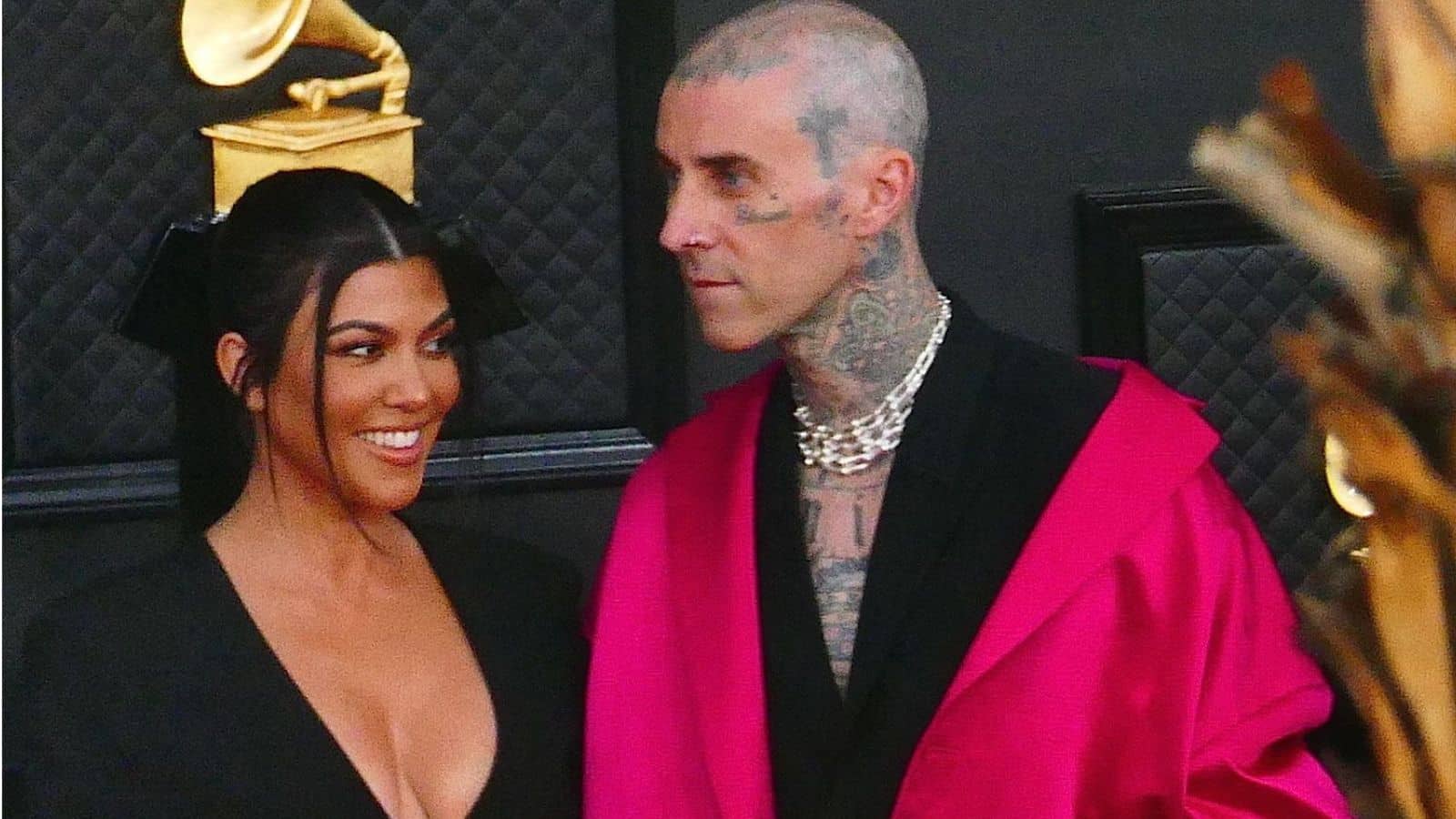
Eventually, with support from his family and his wife, Kourtney Kardashian, Barker decided he could not let the crash control his future forever.
In 2021, he flew again for the first time since the accident. The flight represented more than transportation. It represented taking back control over a fear that had shaped his life for more than a decade.
“I fly all the time now and I feel turbulence and I can’t even tell you what’s going on in my head. And I just look over and my wife’s perfectly OK,” he says. “My son loves airplanes and plays with airplanes and it’s so innocent. It’s so beautiful.”
A New Chapter After Survival
Barker’s story is not only about the night a plane crashed, it is about what happened in the years after.
The public saw a tragic headline in 2008.
Barker lived through the surgeries, the grief, the fear, and the process of rebuilding himself. He continued making music, became a father, built a new chapter of his personal life, and found ways to move forward while still carrying the memories of those he lost.
The scars from the crash remain part of his story, but they are not the only thing that defines him.
Today, Barker speaks about the experience because survival is more complicated than simply being the person who walked away.
It means carrying memories. It means accepting loss. And sometimes, it means learning how to live with questions that may never have perfect answers.
Nearly two decades after the crash, Travis Barker is still facing the question that follows many survivors: when you are the one who makes it out, how do you learn to live with why you did?





