

“I genuinely don’t understand how we are supposed to casually process this,” one viral post said after a glacier-linked disaster in Nepal killed hundreds and left thousands missing, sparking a wider debate over climate change and the massive infrastructure powering AI.
A glacier collapsed in Nepal.
More than 900 bodies have been recovered. More than 4,000 people remain missing.
But as the scale of the disaster became clearer, one viral X post captured a frustration that extended far beyond the Himalayas.
“I genuinely don’t understand how we are supposed to casually process that a glacier literally collapsed in Nepal, erasing 19 bridges and killing over 600 people, because the planet is too hot,” X user @Senpaisaysbye wrote.
The post quickly became part of a growing online backlash against the rapid expansion of data centers, the giant facilities powering artificial intelligence, cloud computing and many of the digital services people use every day.
The figures referenced in the original post have since been surpassed.
Nepalese authorities said Monday that 903 bodies had been recovered, while the country’s disaster agency listed 4,247 people as missing, including 592 foreign nationals. Around 10,000 people had been rescued, and the Nepal Red Cross estimated that more than 90,000 people had been affected by the flooding.
The disaster followed a glacier collapse near Nepal’s northern border with Tibet, sending ice, rock and debris through mountain valleys. At least 19 bridges and roughly 40 kilometers (25 miles) of roads were swept away, leaving communities isolated and complicating rescue efforts.
The AI Infrastructure Boom Is Bigger Than Many People Realize
I genuinely don’t understand how we are supposed to casually process that a glacier literally collapsed in Nepal, erasing 19 bridges and killing over 600 people, because the planet is too hot. And instead of stopping it, billionaires are building more data centres. It is…
— senpai (@Senpaisaysbye) August 29, 2026
The frustration behind the viral post comes at a moment when the world is building data centers at an unprecedented pace.
An estimated 12,000 data centers operate worldwide, though totals vary depending on how facilities are counted.
The next wave is even larger.
BloombergNEF counted 23.1 gigawatts of data-center capacity under construction across 831 sites globally at the end of 2025. The United States accounted for 15.9 gigawatts of that capacity, making it the largest market for new construction.
The International Energy Agency estimates global data-center electricity use will rise from 485 terawatt-hours in 2025 to 950 terawatt-hours by 2030, while electricity demand from AI-focused facilities is expected to triple during that period.
That growth has made data centers one of the most visible symbols of the AI race and one of the most controversial.
Related: 10 Common Myths About Artificial Intelligence
Americans Are Fighting Data Centers in Their Own Backyards
The backlash is not limited to social media.
Across the United States, residents have challenged proposed data-center projects over concerns about water use, electricity demand, noise and the transformation of local landscapes.
Save this article
In Arizona, residents have raised concerns about the water demands of large data-center developments in a state already dealing with long-term drought pressures.
In Virginia’s Loudoun County, one of the world’s largest data-center hubs, residents have debated the rapid growth of campuses, including concerns about power infrastructure, noise and the changing character of neighborhoods.
In Palo, Iowa, residents have challenged a proposed Google data center after the company announced plans for a roughly 545-acre campus. Public records cited in local reporting showed the project could draw as much as 14 million gallons of water per day from the nearby Cedar River.
The disputes reflect a broader question: who benefits from the AI boom, and who carries the cost of building it?
The Fight Is Not Only About Electricity
Much of the discussion around AI infrastructure focuses on power demand, but communities are also watching another resource closely: water.
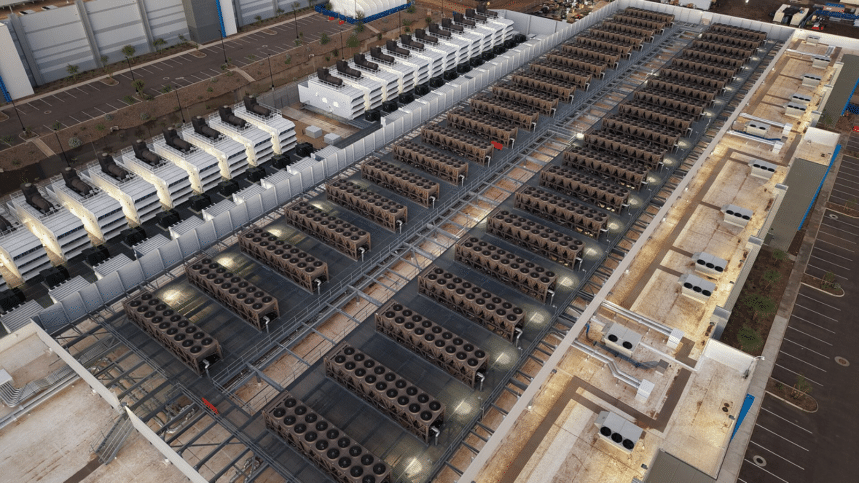
Data centers use cooling systems to prevent powerful computer chips from overheating. The International Energy Agency estimates that a typical 100-megawatt data center using water-based cooling can consume around 2 million liters of water per day.
That number becomes especially significant in places where water supplies are already under pressure.
In drought-prone regions, residents have questioned whether large technology facilities should receive access to major water resources while households, farms and local businesses are being asked to conserve.
The physical footprint has also changed.
Modern AI campuses can require hundreds of acres for server buildings, substations, backup systems and supporting infrastructure. Residents near proposed projects have raised concerns about farmland loss, traffic, and the disappearance of open land.
Noise has become another complaint. Cooling systems and equipment operating around the clock can create a constant industrial hum, leading some neighbors to argue that the technology boom is changing the communities around them.
Why the Nepal Post Struck Such a Nerve
The Nepal disaster and the data-center boom are not the same story.
No evidence shows that data centers caused the glacier collapse, and scientists are still studying the exact chain of events behind the disaster.
But the viral reaction shows why people linked the two issues.
The post captured a growing frustration: a world investing billions in the next generation of technology while communities still try to understand its environmental costs.
The AI boom is not slowing down.
The debate now is whether the infrastructure behind it can grow without creating new pressures on the places where it is built.
What environmental costs do you think society should be willing to accept as AI and data centers continue to expand?





