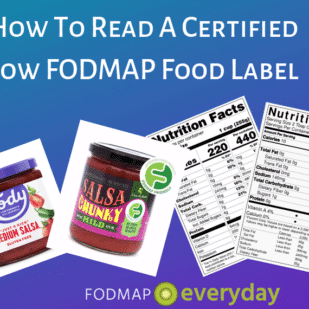
With whole foods like apples, artichokes, and milk, it’s easier to identify FODMAPs (we just use the Monash University and FODMAP Friendly smartphone apps, because they are the primary sources conducting the lab testing). It gets trickier when dealing with packaged and multi-ingredient foods. Food labels can be confusing for all consumers, especially those avoiding FODMAPs.
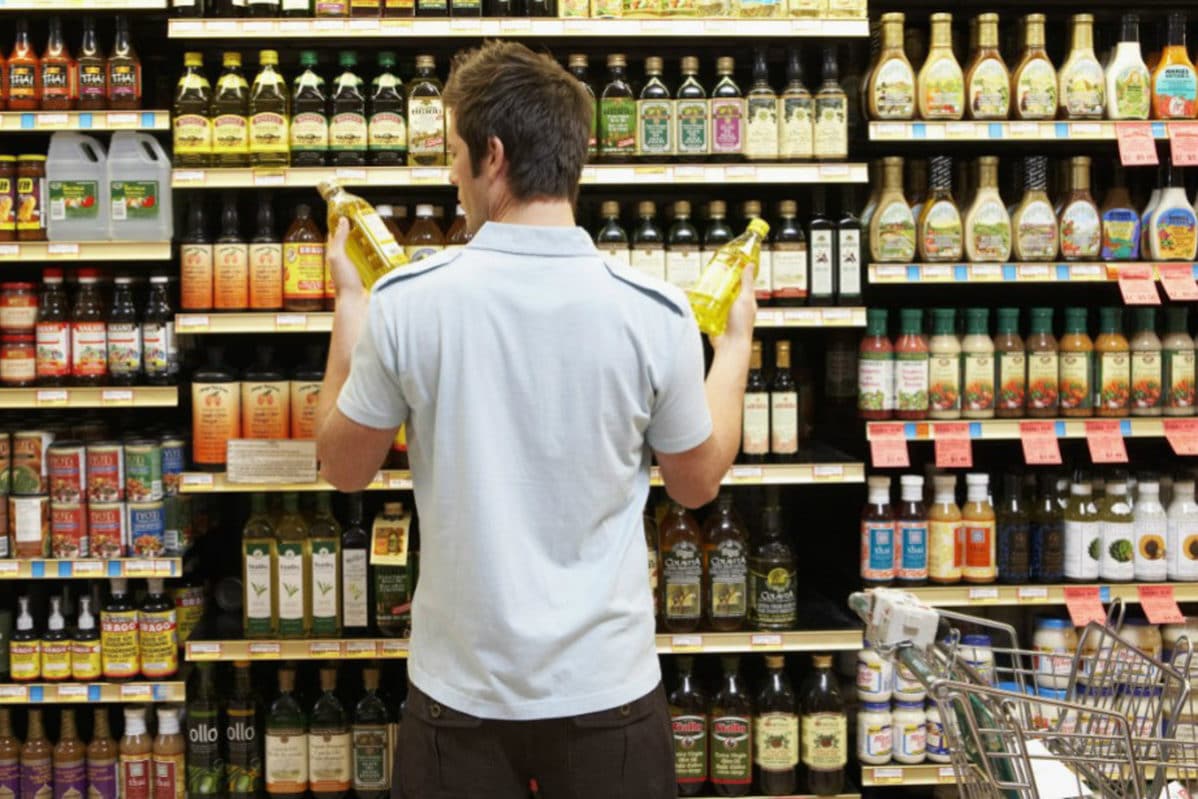
Image media bakery.
Here are a few tips to help detect FODMAPs in prepared foods.
During the Elimination Phase, it’s sometimes easiest to avoid foods that have high FODMAP ingredients listed on the package. Check the ingredients list for FODMAPs, such as:
Sugar alcohols including sorbitol, mannitol, xylitol, isomalt, and maltitol. Monash recently stated that erythritol was an exception since it is well absorbed in the small intestines and often produces no side effects.
Wheat, barley or rye (if listed as one of the top 3 ingredients[1])
Read From the Top Down
Keep in mind that food labels list ingredients in order of quantity, with the first ingredient having the highest quantity and the last ingredient having the lowest quantity. For example, if tomatoes are the first ingredient listed on a jar of marinara, there are more tomatoes than anything else in that food.
If a high FODMAP ingredient is listed as one of the last ingredients in a food and makes up a very small percentage of that food, you may choose to try that food during the reintroduction phase. Just keep an eye on your symptoms to see if you can tolerate it.
There are now also an increasing number of low FODMAP certified food products available in the U.S., including FODY Foods and Casa de Sante. While they may not be available yet in your local market, they are available for purchase online. Be sure to check out both the Monash and FODMAP Friendly websites and apps for the latest list.
And more recently there is a product scanning app to help you navigate the supermarket for products that are likely low FODMAP. You can read about The Spoonful App here.
I recently sampled the FODY Dark Chocolate, Nuts & Sea Salt bar at the Digestive Disease Week conference and it was tasty! As a dietitian, I promote whole, fresh foods whenever possible, but I also recognize the convenience of packaged foods, like snack bars.
It’s nice to have options that are nutritious and IBS-friendly!
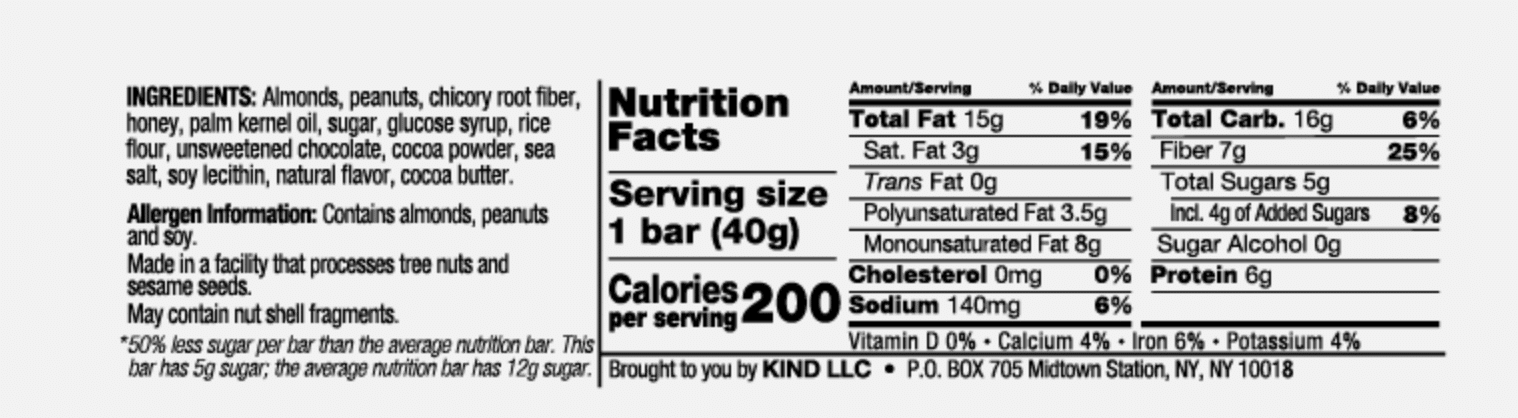
Let’s examine a few ingredients lists more closely. The following food label graphic is from a snack bar. Can you spot the FODMAPs?
Image Source: Kind Bar
A low FODMAP portion of almonds is 10 nuts; unfortunately, it is unclear how many almonds are in this bar from the ingredient list. Furthermore, honey and chicory root fiber are high FODMAPs. Soy lecithin, an emulsifier used in food manufacturing, should not be a source of FODMAPs.
The “natural flavor” in this particular product is unlikely to contain FODMAPs because it is a sweet food. (However, in a savory food, natural flavor may refer to high FODMAP onion or garlic. [2]) With almonds listed as the first ingredient and honey and chicory root fiber also listed as ingredients, this food product would be considered high FODMAP.
What Are Natural Flavors?
Natural flavors, natural flavoring, and flavors are common ingredients in an array of food products. The FDA defines natural flavors in CFR – Code of Federal Regulations Title 21as the essential oil, oleoresin, essence or extractive, protein hydrolysate, distillate, or any product of roasting, heating or enzymolysis, which contains the flavoring constituents derived from a spice, fruit or fruit juice, vegetable or vegetable juice, edible yeast, herb, bark, bud, root, leaf or similar plant material, meat, seafood, poultry, eggs, dairy products, or fermentation products thereof, whose significant function in food is flavoring rather than nutritional.
Should I Avoid Products with Spices?
The FDA defines the term spice means any aromatic vegetable substance in the whole, broken, or ground form, except for those substances which have been traditionally regarded as foods, such as onions, garlic and celery; whose significant function in food is seasoning rather than nutritional; that is true to name; and from which no portion of any volatile oil or other flavoring principle has been removed.
Spices include the spices listed in 182.10 and part 184 of this chapter, such as the following: Allspice, Anise, Basil, Bay leaves, Caraway seed, Cardamon, Celery seed, Chervil, Cinnamon, Cloves, Coriander, Cumin seed, Dill seed, Fennel seed, Fenugreek, Ginger, Horseradish, Mace, Marjoram, Mustard flour, Nutmeg, Oregano, Paprika, Parsley, Pepper, black; Pepper, white; Pepper, red; Rosemary, Saffron, Sage, Savory, Star aniseed, Tarragon, Thyme, Turmeric. Paprika, turmeric, and saffron or other spices which are also colors, shall be declared as “spice and coloring” unless declared by their common or usual name.
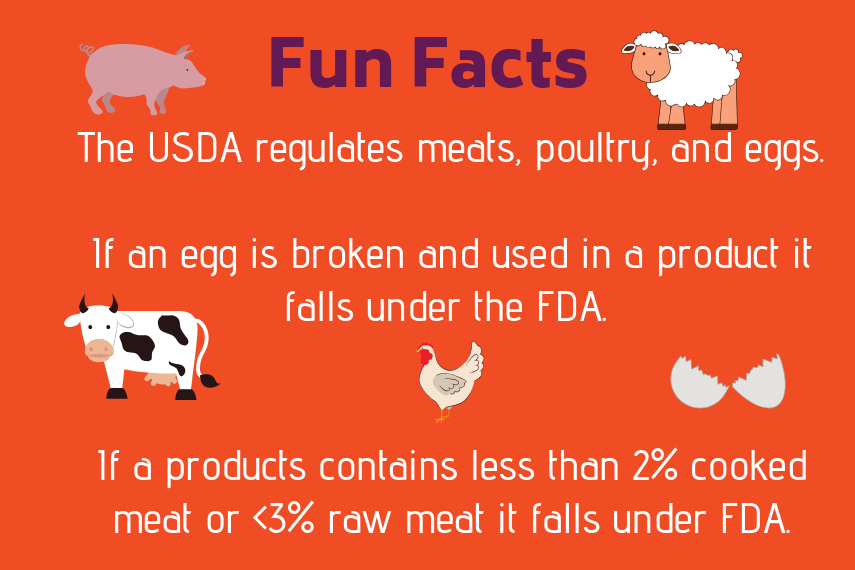
What does this mean? Basically foods that are regulated by the FDA must declare garlic and onion on the ingredient list and they CANNOT be contained within the spices.
Save this article
Enter your email address and we'll send it straight to your inbox.
What About Natural Flavors?
Garlic, garlic powder, onion and onion powder CAN be contained within the natural flavors in products that are regulated by the FDA. So what about foods that are regulated by the USDA?
The USDA does not allow garlic or onion to fall under natural flavors, however they allow garlic powder and onion powder since these are not considered foods!
Graphic FODMAP Everyday.
Several of these fun USDA facts were acquired from a lovely conversation I had with a woman from the USDA label department. The bottom line… it may behoove you to call or email a company to inquire about natural flavorings in a savory food product, FDA, or USDA. However, know that most of the time (almost all the time), flavorings are purchased from a third party, and the contents of the flavoring are proprietary to that company.
Our suggestion is that if you contact a company and ask about natural flavorings, you should specifically ask whether they buy their flavoring from a third party and whether you can see the ingredients list for that product.
What About Non Savory Foods with Natural Flavors?
Many low FODMAP-trained RDs do not consider natural flavors as potential high FODMAP ingredients, while others may recommend natural flavors if they are less than 2% of total ingredients in a food product. As a low FODMAP grocery list curator, I have had many conversations and sent many emails to companies about their natural flavors.
The majority of the time garlic and onion are contained in savory options. Chicory root may be used in the natural flavors. Natural flavors are a big business in the USA and they are proprietary blends that are created specifically for a company to make their food products have a unique flavor profile.
If a high FODMAP fruit was used in the process there is unlikely enough of the fruit to trigger a FODMAP response, especially now with the recent Monash fruit updates. It is best to discuss this topic with your dietitian or healthcare professional if you have concerns.
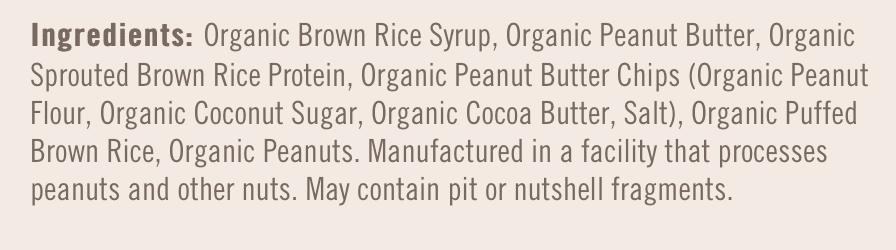
Now, below is an example of a snack bar with ingredients that many FODMAPers have tolerated well:
Image Source: GoMacro
This bar contains many recognizable low FODMAP ingredients. Brown rice syrup, peanut butter, and coconut sugar, puffed rice, and peanuts, for instance, can easily be looked up in the apps. Cocoa butter is also not listed on the app, but it is a pure fat (which means it contains no FODMAPs). By careful label reading and extrapolation, we can make an educated assessment that this would be low FODMAP and a good snack bar to try.
As always, go slowly and try foods that are new to you in small amounts and see how you tolerate them. You can become your own best advocate – and shopper – with some attention to detail.
The Takeaway
Reading labels has to become part of your FODMAP journey. It does take time and effort to learn, but it will help you make shopping decisions.
One caveat: while it is easiest to avoid many of the highest-FODMAP foods during Elimination, such as garlic, that approach can lead to over-restriction, which is a huge issue in itself and can lead to disordered eating patterns. This is why the diet was always meant to be undertaken under the guidance of a FODMAP-trained Registered Dietitian. The diet is very nuanced. For instance, Sriracha contains garlic, yet it has a low FODMAP serving size. If this sounds confusing, we get it, but we promise that the more you learn about the diet, the more it will make sense. Working alongside a dietitian can certainly take a lot of that uncertainty out of the process.
Use Our Exclusive Recipe FilterTo Find The Low FODMAP Recipe You Are Looking For Today!
We take low FODMAP recipes seriously at FODMAP Everyday®. That’s why Dédé oversees our Test Kitchenand makes sure that each and every recipe works. We base our recipes on the lab test results of ingredients from Monash University and FODMAP Friendly that are available at the time of initial publication. You can use any of the lab tested findings, new or older, from either Monash University or FODMAP Friendly as a baseline from which to begin to explore your relationship with FODMAPs, which will be unique.
Rest assured that you will not find more trustworthy or delicious low FODMAP recipes anywhere – 900+ and counting. Have questions about a recipe, or did you make a recipe? We’d love to see it.
Need a break from cooking? Wish you could just order a delicious low FODMAP certified meal and heat and eat? Well you can! And you can even order some of our very own meals over on Modify Health! And if you use our discount code you can get 4 meals for FREE! See details below.
And download Fig the low FODMAP supermarket shopping app and get 15% off of Fig+ when you use FE15 at check out.