

A car with no one behind the wheel rolled through Islamabad, headed toward a parked police van, and crashed.
The moment was meant to showcase a futuristic transportation idea. Instead, the footage quickly spread online as viewers debated whether they had just watched a self-driving car fail in real time.
The demonstration took place at D-Chowk in Islamabad, where journalist Muhammad Aalijah was inside the vehicle recording the test. Video from the event showed the car moving before striking a police vehicle. No injuries were reported, and the damage appeared minor.
But the viral clip left out an important detail.
The vehicle was not fully autonomous.
It was a remotely operated prototype, meaning a human operator was controlling the vehicle from outside through a communication system.
That put the focus on a different issue facing the future of driverless technology: how machines respond when the connection between a vehicle and the person controlling it breaks down.
The Crash Centered on a Communication Failure
The Islamabad demonstration depended on internet and satellite connectivity to transmit commands between the remote operator and the vehicle.
Speaking after the demonstration, Aalijah said the vehicle moved unexpectedly after an internet disruption affected the connection. Developer Ehsan Zafar Abbasi gave a different explanation, saying the vehicle received an incorrect left-turn command when it was supposed to turn right.
The exact cause has not been independently confirmed.
View this post on Instagram
Researchers studying teleoperated vehicles have long focused on the risks created by communication delays. A 2024 review found that latency, bandwidth limitations, and connection failures can affect operator performance and vehicle control, especially during situations requiring quick reactions.
The National Institute of Standards and Technology has recommended that remotely operated vehicles should be designed to move into a safe condition after communication failures rather than continuing without reliable control.
Related: Nancy Pelosi’s Husband Paul Faces Misdemeanor Charges After Napa Hit-and-Run Crash
Self-Driving Cars Have Faced Bigger Tests Before
The Islamabad crash wasn’t the first moment to expose the difficulty of building vehicles that can operate without a human driver.
In 2018, an autonomous Uber test vehicle struck and killed a pedestrian in Tempe, Arizona, marking the first known pedestrian death involving a self-driving test vehicle. The National Transportation Safety Board later found that the automated system detected the pedestrian but failed to correctly classify the situation and did not brake before impact.
Save this article
Cruise faced another major setback in 2023 after one of its autonomous vehicles struck a pedestrian who had already been hit by another vehicle. The California Department of Motor Vehicles later suspended Cruise’s driverless testing permits, citing safety concerns and issues related to the company’s reporting of the incident.
These incidents did not end the development of autonomous vehicles. They changed the questions companies had to answer.
The Industry Has Moved Far Beyond Early Experiments
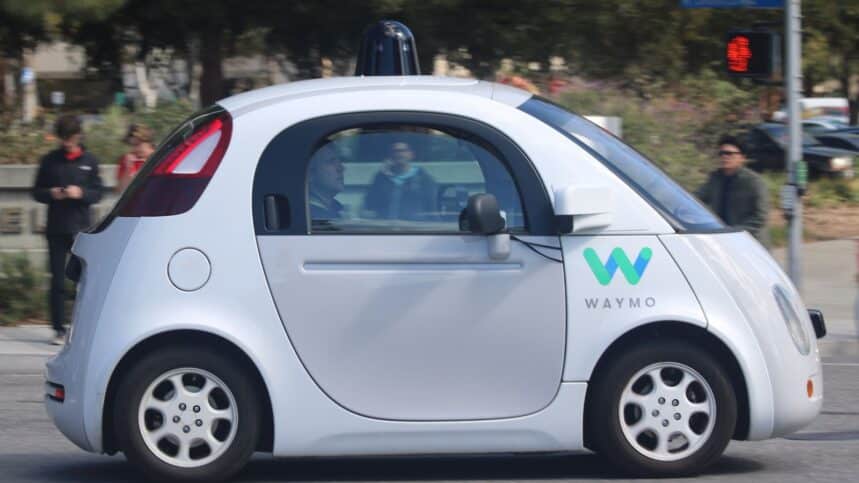
Despite safety concerns, autonomous vehicles are no longer limited to research labs.
Waymo has expanded commercial robotaxi services in several U.S. cities. The company says its vehicles have completed more than 220 million fully autonomous miles without a human driver.
That technology works differently from the vehicle shown in Islamabad.
A robotaxi uses onboard cameras, sensors, computing systems and artificial intelligence to make driving decisions. A remotely operated vehicle depends on a human sending commands from another location.
Both systems remove the traditional driver’s seat from the equation, but they rely on different safety approaches.
Regulators Are Still Watching How the Technology Performs
The U.S. National Highway Traffic Safety Administration tracks crashes involving automated driving systems and advanced driver-assistance technologies through its Standing General Order.
The agency has collected thousands of reports involving different levels of automation, but it warns that the numbers require careful interpretation because they include multiple technologies and do not automatically prove an automated system caused every crash.
The hardest situations remain the ones engineers cannot easily predict.
A vehicle may correctly identify a pedestrian, another car, or an obstacle. The harder task is deciding what action is safest when the situation doesn’t match what the system has seen before.
The Islamabad video lasted only moments, but it showed why public trust remains one of the biggest hurdles for driverless technology.
A vehicle can move without a person behind the wheel.
Would you trust a driverless vehicle on public roads today, or do you think human control should always remain part of the equation?





