

“The Emperor is a fan of Flock.”
For a moment, the words sounded like they belonged in a Star Wars script. Instead, they came from a San Diego City Council meeting, delivered by an unidentified man wearing a full Darth Vader costume.
The masked speaker stepped to the microphone on August 19 and sarcastically praised the city’s use of Flock Safety surveillance technology, joking that officials should continue using the cameras to “follow and surveil the rebel scum.”
The performance was funny because of the character he chose. The message behind it was much more serious.
By speaking as one of cinema’s most famous symbols of authoritarian power, the man turned a debate over license plate readers and government surveillance into a viral pop culture moment. His message was not a genuine endorsement of Flock cameras but a satire aimed at concerns over how far surveillance technology could expand.
The unusual appearance came as San Diego faces growing debate over its use of automated license plate reader systems, a network supporters say helps solve crimes and critics say raises difficult questions about privacy, oversight, and public trust.
The Darth Vader Speech That Turned a Policy Fight Into a Viral Moment
The appearance happened during public comment at the San Diego City Council’s Public Safety and Livable Neighborhoods Committee meeting.
The meeting itself was not a dedicated Flock hearing, and officials did not vote on the camera program. The Darth Vader comments came during the portion of the meeting where residents can address city leaders about issues affecting the community.
More than 30 people spoke against San Diego’s Flock contract during public comment, according to meeting records.
The unidentified speaker used humor throughout his remarks, adopting the language of the Galactic Empire as he criticized surveillance systems.
View this post on Instagram
“The Emperor is a fan of Flock, and we must continue utilizing Flock technologies so that we can follow and surveil the rebel scum,” he said.
He also mocked the idea of expanding surveillance by referring to cameras as a tool that could follow more than vehicles.
“Because we all know that the Flock cameras are not only following the license plate readers; they are following children,” he said.
The performance quickly gained attention online because it blended a familiar movie villain with a real-world debate about technology and government power.
Behind the Joke Is a Fight Over Hundreds of Cameras
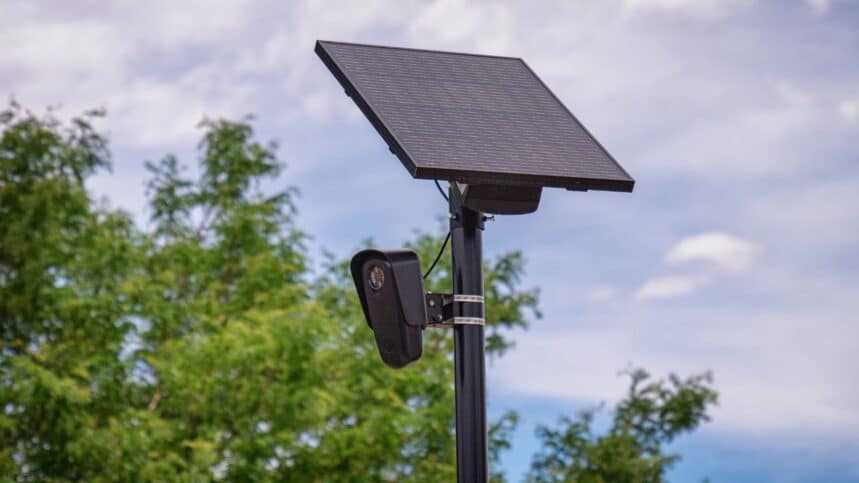
San Diego’s Flock debate centers around automated license plate readers, technology that captures vehicle information such as license plates, vehicle descriptions, and locations.
Supporters argue the cameras provide investigators with another tool to locate stolen vehicles, identify suspects, and solve crimes.
The San Diego Police Department’s own 2025 surveillance report highlights several benefits. The department said its automated license plate reader system included about 500 camera locations and generated more than 140,000 investigative searches in 2024.
According to the department, the technology helped support 208 arrests, recover 223 stolen vehicles, and assist investigations into 11 of San Diego’s 35 homicides in 2024.
Police officials also say the system includes safeguards, including employee training, access controls, and regular audits.
Save this article
But critics argue the debate cannot be measured only by arrests and recovered vehicles. They say the larger question involves how much information cities collect, how long it is stored, and who can access it.
A Surveillance Mistake Raised New Questions About Oversight
The concerns intensified after San Diego’s own review revealed a problem with its system.
According to the city’s 2025 ALPR report, a configuration error between December 29, 2023, and January 17, 2024, temporarily allowed other California law enforcement agencies to search San Diego’s automated license plate reader data.
The city reported that the issue resulted in 12,914 searches before officials discovered and corrected the error.
San Diego said the problem was identified through an internal audit and that the settings were fixed once officials became aware of the issue.
For privacy advocates, the incident became an example of why oversight matters when cities deploy powerful surveillance tools.
The question was not simply whether the technology works, but whether communities have enough control over how that technology is used.
Related: 8 Things We Should Avoid Doing When We Live Alone to Protect Our Peace and Safety
Flock Says Its Technology Is Helping Police Solve Crimes
Flock Safety has defended its systems, arguing that its cameras focus on vehicle information rather than facial recognition or biometric identification.
The company says its network has expanded to more than 120,000 cameras nationwide and serves more than 1,500 law enforcement agencies.
Flock has also announced new privacy measures as criticism has increased. The company said it would recommend a seven-day default retention period for license plate reader data, introduce stronger audit requirements, and create tools aimed at detecting unusual access activity.
The company has argued that misuse of its technology is unacceptable and that additional safeguards are intended to improve accountability.
Privacy groups remain skeptical.
The American Civil Liberties Union has criticized Flock’s approach, arguing that company policies alone cannot replace stronger government oversight and clear limits on surveillance use.
Related: 8 Everyday Tech Buzzwords That Have a Darker Past
Why the “Dark Side” Joke Resonated
The reason the Darth Vader appearance gained attention was not just the costume.
The joke worked because it captured a growing national debate in a way that was instantly recognizable. Instead of talking about contracts, retention policies, and data-sharing agreements, the speaker framed the issue through the language of the Star Wars universe.
The Empire was famous for watching everyone. That comparison made the criticism easy to understand.
At the same time, supporters of surveillance technology argue that real-world systems are far more limited than fictional dystopias. They point to crime investigations, stolen vehicle recoveries, and missing-person cases as examples of how cameras can help communities.
The debate is unlikely to disappear.
San Diego’s Darth Vader moment may have been entertaining, but the question behind the costume remains serious: how should cities balance public safety with the right to privacy?
Do you think surveillance cameras are a necessary tool for safer communities, or have cities gone too far in tracking people’s movements?





