The bread aisle can make a simple grocery run feel more complicated than it needs to be. One loaf says “multigrain,” another promises extra protein, and another is covered in seeds and words that make it sound like the obvious healthy choice.
The problem is that the front of the package does not always tell you much about what is actually inside. A bread can look wholesome and still rely heavily on refined flour, offer little fiber, or contain more added sugar than you expected.
Dietitians say a few types of bread stand out, but the real secret is knowing what to look for within each category. Here are three options worth considering and what experts say you should check before putting a loaf in your cart.
1. 100% whole-grain bread gives you a strong starting point
Whole-grain bread is one of the simplest places to start because it retains the bran, germ, and endosperm of the grain. That means you generally get more fiber and naturally occurring nutrients than you would from bread made mostly with refined flour.
Registered dietitian Morgan Walker recommends looking for bread made with 100% whole grains. She also suggests aiming for roughly 3 grams of fiber per slice.
That fiber matters. It can make bread more filling and helps make whole-grain options a more substantial part of a meal.
But shoppers still need to turn the package around.
Registered dietitian and certified diabetes care and education specialist Jennifer Rawlings cautions against relying on front-of-package terms such as “multigrain.” A loaf can contain several types of grains without those grains being whole.
Her advice is simple: check the ingredient list and look for whole wheat or 100% whole wheat near the top, ideally as the first ingredient.
Takeaway: Ignore the healthy-looking packaging and let the ingredient list and fiber content tell you what you are actually buying.
2. Sourdough has something regular sandwich bread may not
Sourdough earns its place for a different reason: fermentation.
Unlike many conventional breads made quickly with commercial yeast, traditional sourdough goes through a fermentation process involving naturally occurring yeast and bacteria. That process changes parts of the dough before the bread ever reaches your plate.
Registered dietitian and diabetes expert Susan Weiner says sourdough fermentation may improve digestibility and could help reduce the blood-sugar response compared with some other breads.
That does not mean every loaf labeled “sourdough” has the same nutritional profile. Some products still rely heavily on refined flour and may contain relatively little fiber.
Save this article
Look beyond the word sourdough. Check the flour used, fiber per serving, added sugar, sodium, and ingredient list. A whole-grain sourdough can give you the benefits of whole grains alongside the characteristics created through fermentation.
Related: 8 Fast-Food Meals You Should Avoid At All Cost
Takeaway: Sourdough can be a smart choice, but the name alone does not make a loaf nutritious. Its ingredients still matter.
3. Sprouted-grain bread packs more into each slice
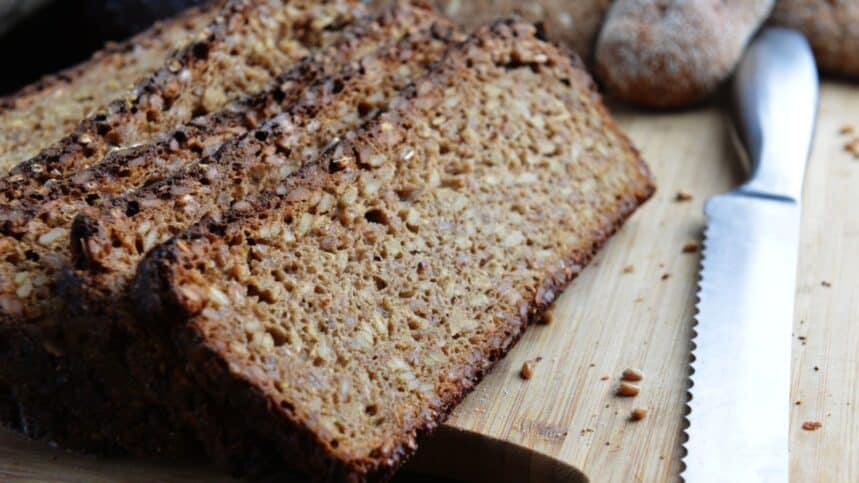
Sprouted-grain bread starts with grains that have begun the germination process before they are turned into bread.
Weiner notes that sprouting may make certain nutrients in grains more available for the body to absorb. Sprouted breads also often combine several whole grains, seeds, or legumes, giving some products an impressive mix of fiber and protein.
For example, some sprouted loaves provide around 3 grams or more of fiber per slice along with several grams of protein. That combination can make a slice feel more satisfying than a soft refined-flour bread.
There is one practical difference you will notice immediately: texture. Sprouted-grain breads can be dense, chewy, and less sweet than the sandwich bread many people grew up eating.
Toasting can make a big difference. Sprouted bread works especially well with eggs, avocado, nut butter, tuna, or other substantial toppings.
Again, read the label. “Sprouted” does not remove the need to check fiber, added sugar, sodium, and serving size.
Takeaway: Sprouted-grain bread can deliver plenty of fiber, protein, and whole-grain nutrition in a single slice.
The healthiest loaf may be easier to spot than you think
You do not need to memorize dozens of bread brands.
Start with the ingredient list. Look for whole grains near the top. Check how much fiber you are getting per slice. Keep an eye on added sugars and sodium. Then choose a bread you actually enjoy enough to eat regularly.
Whole-grain, sourdough, and sprouted-grain breads can all fit into a nutritious diet. What separates a strong choice from a loaf relying mostly on clever marketing is often right there on the nutrition label.
Question for you. Which bread do you usually buy: whole grain, sourdough, sprouted grain, or something else?