

General Mills has removed artificial colors from every cereal it sells in the United States, completing a companywide change that once seemed almost impossible for some of its most recognizable brands.
The company announced in late August that its entire U.S. cereal portfolio now uses colors from sources such as fruits, vegetables and spices instead of synthetic dyes.
The shift affects childhood favorites including Lucky Charms, Trix and many other familiar boxes lining supermarket shelves. General Mills says it worked to keep the appearance consumers recognize, but the move comes with a complicated history. A previous attempt to change Trix nearly a decade ago ended when the company restored the brighter, artificially colored version after strong customer backlash.
This time, the decision arrives during a much larger industry shift. With pressure coming from shoppers, retailers and regulators, the cereal aisle is changing. The big question is whether consumers will embrace the new colors or miss the ones they grew up with.
Every Box in the Lineup, From Lucky Charms to Cheerios
The change extends far beyond the colorful cereals that come to mind first.
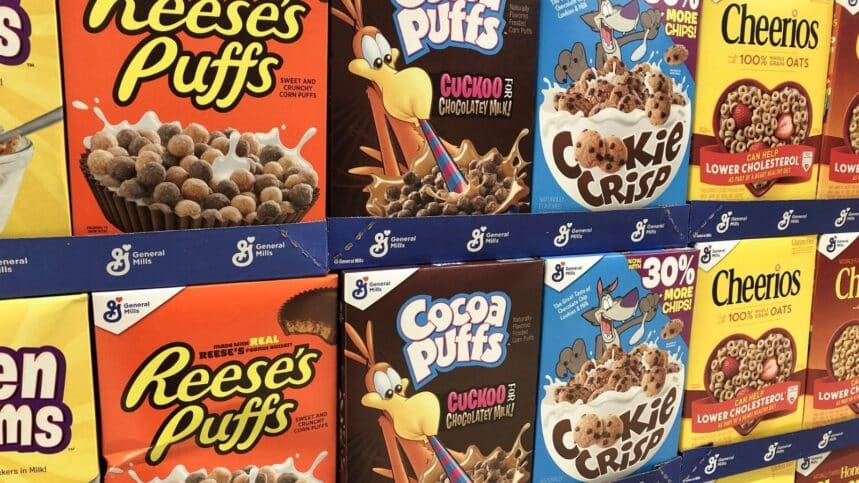
General Mills says all U.S. cereals are now free of what the company calls “certified colors,” its term for synthetic color additives. The transition includes colorful brands such as Lucky Charms and Trix, but it also covers Cinnamon Toast Crunch, Cocoa Puffs, Cheerios, Chex, Wheaties, Reese’s Puffs, Kix, and seasonal Monster Cereals.
General Mills specifically points to ingredients such as turmeric and paprika as part of the reformulation process.
The cereal change is also part of a broader effort across the company’s products. General Mills says about 90% of its U.S. retail portfolio has moved away from certified colors, with fruit snacks and baking products expected to complete the transition by the end of 2027.
Bethany Quam, president of General Mills’ Big G Cereal division, described the change as a response to shifting consumer expectations while keeping the products recognizable.
“This achievement reflects how we are evolving with consumer needs while continuing to offer food that tastes great, delivers quality and provides value,” Quam said.
View this post on Instagram
The Last Time Trix Went Natural, Shoppers Pushed Back
Trix has a complicated history behind this ingredient change.
General Mills first removed artificial dyes from Trix in 2015, replacing the bright synthetic colors with naturally derived alternatives. The reformulated cereal looked different, and many longtime fans were unhappy with the change.
By 2017, General Mills brought back an artificially colored “Classic Trix” after customers repeatedly asked for the original version. The company said fans had been “calling us, e-mailing us and reaching out to us on social media asking if we would consider bringing back the original formulation of Trix cereal with its vibrant colors.”
Save this article
That moment revealed something important about colorful foods. For products built around bright shapes and playful appearances, color is part of the experience. Consumers are not simply buying ingredients. They are also buying memories tied to how a product looks.
General Mills is attempting the transition again, but this time across its entire cereal lineup and during a period when many food companies face similar demands.
Related: 7 American Breakfast Ideas Beyond Cereal
A Change This Big Rarely Stays With One Company
General Mills is part of a much larger packaged-food shift.
In April 2025, the Department of Health and Human Services and the FDA announced an initiative to phase out petroleum-based synthetic food dyes from the U.S. food supply. The agency identified several commonly used certified colors, including Red No. 40, Yellow No. 5, Yellow No. 6, and Blue No. 1, as part of the phase-out effort, which is targeted to be completed by the end of 2027.
Major retailers have also taken steps. Target said it would stop selling cereals containing artificial colors by the end of May 2026. Walmart announced plans to remove certified color additives from its private-label products by January 2027, while Sam’s Club had already completed the transition across its Member’s Mark products.
The cereal maker’s move reflects a broader shift in how packaged food companies approach ingredients that have drawn public attention.
What a Newly Colored Bowl of Trix Will Actually Look Like
The reformulation is complete. The real test begins when shoppers open the boxes.
General Mills says its cereals are now made without synthetic colors and that the goal is to maintain the familiar appearance consumers expect. The company has not released product-by-product ingredient breakdowns or explained exactly how it will handle existing inventory moving through distribution.
That means shoppers could see a mix of formulations on store shelves during the transition period.
The company says fruits, vegetables, turmeric and paprika are helping recreate the recognizable look of its cereals. Whether those replacements deliver the same visual experience for consumers will become clearer over time.
The fruit snack and baking-product side of General Mills’ larger commitment still has time before its 2027 deadline.
For now, the cereal aisle has reached a turning point. General Mills has completed a change that once struggled with customer acceptance, and the next chapter depends on a simple question: will shoppers notice the difference, or will breakfast move on without looking back?
More Articles You Might Be Interested in:
8 Basic Foods That Were Once Believed To Be Magic
Kellogg Makes a Big Change to Popular Cereals by Removing Artificial Dyes
14 American breakfast cereals that disappeared quietly





