

For more than 50 years, Greenland has been one of the world’s most tempting energy mysteries. Geologists have long believed the Arctic island could hold enormous oil resources, but despite decades of exploration, not a single barrel of Greenlandic oil has ever been commercially produced, refined, or exported.
Now, a Texas-based company is attempting to revive that long-abandoned dream with a high-stakes drilling campaign in one of the planet’s most remote environments.
The project has already entered controversial territory.
Greenland Energy has moved heavy equipment onto Greenland’s eastern coast while the company’s drilling approvals remain under review, prompting Greenland’s government to issue a warning that the required authorization had not been granted. The dispute has placed a spotlight on a much larger question: is Greenland witnessing the beginning of a new Arctic energy era, or another expensive gamble chasing oil that may never become reality?
The controversy is unfolding as President Donald Trump continues to express interest in Greenland’s strategic importance and as investors connected to his political world have become involved with the company. Yet the biggest story may not be the politics surrounding the project. It may be the enormous gap between the promise of Greenland’s oil reserves and the difficult reality of extracting them.
A drilling project moves ahead before final approval
The immediate dispute began on July 29, when a Danish tugboat delivered a barge carrying an excavator and more than 15 containers of equipment to the port of Nerlerit Inaat in Jameson Land, an isolated region of eastern Greenland.
The equipment was intended to support Greenland Energy’s planned exploration campaign, but Greenland’s Ministry of Business and Mineral Resources said the company did not have the necessary approval from the Mineral Resources Authority before moving the materials into the area.
Greenland officials said an earlier landing permit had expired and had not been renewed.
The government did not order the equipment removed, saying such a step would not be proportionate, but officials issued a clear warning that future logistical activity must receive approval before taking place.
“All future logistical matters must be advised and approved by the mineral resources authority before they are carried out,” Greenland’s government said.
The drilling permit application itself remains under review.
That leaves the project in an unusual position: millions of dollars in equipment are already arriving, while regulators have not yet approved the full exploration operation.
The $1 trillion oil promise beneath Jameson Land
The reason Greenland Energy is willing to take such a risk is the potential size of the resource beneath Jameson Land.
The company has promoted the region as a possible oil giant, with executives suggesting the crude beneath the area could eventually represent up to $1 trillion in value.
A company-commissioned assessment by geological firm Sproule ERCE estimated the Jameson Land basin could contain about 13.03 billion barrels of gross, unrisked prospective recoverable oil resources across dozens of prospects.
But that number comes with important limitations.
A prospective resource is not the same as proven reserves. It does not mean the oil can definitely be extracted, transported, or sold profitably.
The Arctic creates some of the most difficult conditions in the world for energy production. Extreme weather, limited infrastructure, short operating seasons, environmental restrictions, and high transportation costs all make Greenland very different from traditional oil-producing regions.
Even industry reports have noted that not everyone believes the oil is commercially recoverable.
The company plans to spend about $60 million drilling exploration wells to determine whether the geological potential matches the expectations.
Greenland’s oil history is filled with expensive disappointments
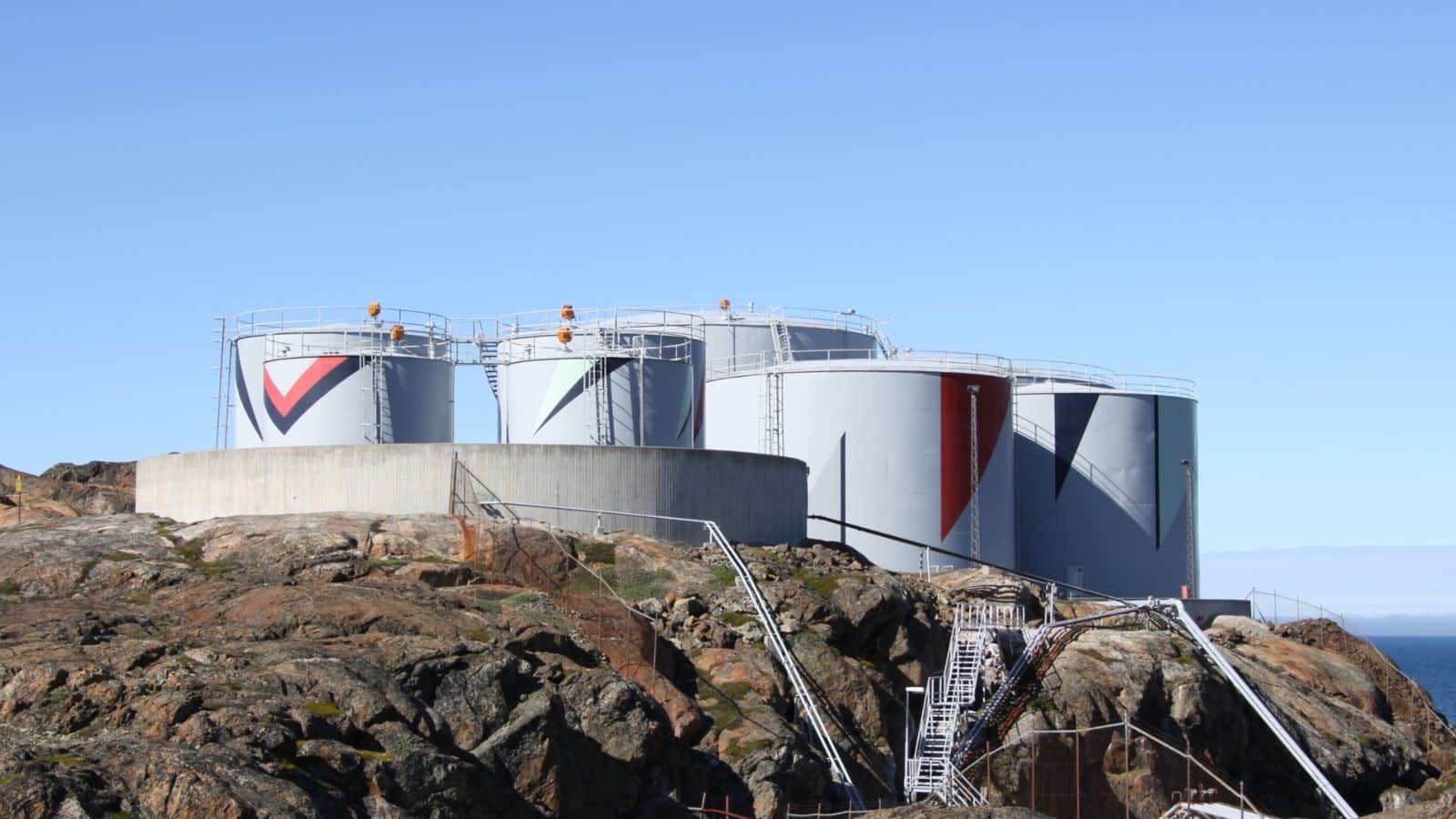
The current drilling push is not Greenland’s first attempt to find a major oil discovery.
Exploration began in the 1970s when international oil companies, including Amoco, ARCO, Chevron, Mobil, Total, and Ultramar, received offshore licenses.
Several wells were drilled, but commercial discoveries never followed.
Interest returned during the 2000s as rising oil prices encouraged companies to explore frontier regions. Greenland awarded multiple offshore licenses, and companies including Shell and Cairn Energy spent heavily searching for resources.
Cairn Energy alone invested more than $1 billion drilling eight wells between 2010 and 2014.
The results failed to produce a commercial oil field.
By 2021, Greenland’s government ended new oil and gas licensing, citing environmental concerns and the lack of economic justification after decades of unsuccessful exploration.
However, existing licenses were allowed to continue.
That exception created the opening Greenland Energy is now using.
Save this article
The company’s rights come from older licenses originally held by 80 Mile PLC, formerly known as Bluejay Mining. Greenland Energy later emerged through a 2025 merger involving March GL, Greenland Exploration, and Pelican Acquisition Corp.
The Trump connection adds political attention
The drilling campaign has attracted additional attention because of its connections to figures in Trump’s political network.
According to Guardian reporting, billionaire hedge fund founder Kenneth Griffin purchased a 9% stake in Greenland Energy in April 2026. Griffin, the founder of Citadel, donated $1 million to Trump’s second inauguration.
The company has also become part of broader discussions surrounding Trump’s repeated interest in Greenland, which he has described as strategically important for the United States.
However, there is no confirmed evidence that the U.S. government directed or coordinated the drilling project.
Some Greenland Energy investors have discussed a possible “Trump pump” effect, speculating that political attention could increase interest in the company’s stock. Those discussions represent investor speculation, not confirmed government support.
The company has declined to answer specific questions about the Guardian investigation.
The environmental battle is just beginning
Jameson Land is not an ordinary drilling location.
The region contains wetlands protected under the Ramsar Convention, an international agreement designed to preserve important ecosystems.
That raises another major question: how much environmental risk is acceptable when a potential oil discovery sits inside a globally recognized sensitive landscape?
Greenland’s government has already taken a different approach from many oil-producing nations by ending new exploration licenses in 2021.
Environmental concerns were central to that decision.
The company, however, argues that responsible exploration can unlock economic opportunities while following regulatory requirements.
The outcome could influence Greenland’s future relationship with resource development.
Why the Arctic matters to global energy markets
The Greenland project is arriving during a period of increased global concern about energy security.
The Arctic contains significant estimated oil resources. The U.S. Geological Survey has estimated that the broader Arctic region could hold about 90 billion barrels of undiscovered oil, although much of that remains inaccessible.
Recent global supply disruptions caused by the U.S-Israel war with Iran have also renewed discussions about reducing dependence on vulnerable energy routes.
But Greenland cannot solve immediate supply shortages. The company has not produced oil, completed exploration drilling, or proven commercial reserves.
Even if discoveries are made, bringing Arctic oil to market would likely take years.
The project represents a long-term possibility, not a quick solution.
Related: Trump Threatens to Seize Iran’s Oil Hub as Ceasefire Falters, Raising Global Stakes
The real test is not finding oil. It is proving it can be produced
Greenland Energy’s drilling campaign now faces several unanswered questions.
Will regulators approve the necessary permits? Will exploration confirm commercially recoverable oil? Can the company overcome Arctic logistics and environmental challenges? And will investors remain confident if the first wells fail?
For Greenland, the decision carries consequences beyond one company.
A successful discovery could transform economic opportunities in a territory seeking greater independence. A failed project could reinforce decades of skepticism about Arctic oil exploration.
The equipment has arrived. The political attention has arrived. The investment money has arrived.
The oil itself remains underground, waiting to prove whether Greenland’s latest energy dream is a breakthrough or another chapter in a long history of disappointment.
More Articles:
- U.S. and Iran Trade Strikes After Apache Helicopter Downing Near Strait of Hormuz
- 12 ways the Iran crisis could affect oil, food, and everyday prices
- 9 Critical Mistakes You Should Avoid While Pumping Gas
- Oil Prices Slide Toward Sharp Monthly Loss as Trump and Iran Send Conflicting Signals on Qatar Talks





