

Few foods are more deeply woven into American culture than a slice of American cheese.
It melts perfectly on burgers, turns grilled cheese sandwiches golden and gooey, and has been a lunchbox staple for generations. Yet behind its familiar orange appearance lies one of the most carefully engineered products in the modern food industry.
Processed cheese products were designed to solve specific problems: consistency, shelf stability, meltability, and affordability. Through a combination of dairy science, food engineering, and federal regulation, manufacturers created a product that behaves very differently from traditional natural cheeses.
Today, Americans consume millions of pounds of processed cheese every year, making it a multibillion-dollar industry. But many consumers are surprised to learn that some products marketed as “American cheese” cannot legally be labeled as cheese at all. Instead, federal regulations require terms such as “pasteurized process cheese food” or “pasteurized prepared cheese product” depending on their ingredients and manufacturing process.
Understanding how American cheese is made offers a fascinating look at how science, regulation, convenience, and consumer demand helped shape one of America’s most iconic foods.
Cheese Defined
The U.S. Food and Drug Administration (FDA) has strict definitions, and the scientific composition of this product places it into a class all on its own. This is not merely bureaucratic red tape; it is a necessary statement of what the product is and, more importantly, what the product is not.
By demystifying the science, history, and regulation that go into this popular food, you’ll have a rich appreciation for what you’re eating. This is your guide to becoming a more enlightened, better-educated consumer, slice by slice, expertly melted.
The Name Game: It’s Legally “Process Cheese,” Not Cheese.
That single, descriptive fact is the cornerstone upon which the entire American cheese war has been fought. That ubiquitous orange square isn’t the U.S. Food and Drug Administration’s (FDA) strict standard of identity for plain “cheese.”
To be so labeled in that plain sense, a product must be made primarily of milk, cream, or other milk solids, coagulated by enzymes or by acid. American cheese, however, is something different, the result of scientific invention.
It belongs to a specific category created in the Code of Federal Regulations, Title 21, Part 133. This is not just a semantic nicety; it constitutes a chemical and legal claim about the very content and provenance of an ingredient or product as part of the onus, i.e., it can be distinguished from seed blend, cheddar, Swiss, or provolone.
The federal government’s regulations exist to protect consumers against misleading labeling and to ensure that food items comply with the federal government’s product quality and ingredient specifications.
Moving into the legal realm, a very narrow hierarchy dictates the product name that is on the label, starting with “Pasteurized Process Cheese” which must derive from 51% or more real cheese;
“Pasteurized Process Cheese Food” which can include foods like Kraft Singles which are at least 51% cheese but can have some other stuff in there (e.g., whey, milk protein concentrate, emulsifiers); and below that “Pasteurized Process Cheese Spread” which has to have more water and is therefore more spreadable.
This legal differentiation is found on all packages and is a direct transference from the amount of ingredients and the procedure that produces homogeneity and legality, not tradition.
It Was Invented to Fix Something: Spoilage.
American cheese is a testament to sheer ingenuity, invented to address a nagging problem for cheese vendors around the beginning of the 20th century.
Natural cheese often tended to spoil, sweat, and become soft, especially during transit or in warm weather. In 1916, James L. Kraft, a Canadian-born Chicago cheesedistributor, came up with a groundbreaking new method of preventing this.
Kraft’s genius was to heat leftover scraps of various cheeses to a sterile temperature and add an emulsifying agent. It halted the aging of the cheese, mixed all of the components into a firm, uniform block, and greatly extended its lifespan.
It transformed the business, creating cheese into a mass-market, long-lasting product from a fresh specialty item. Not only did this invention prove itself to be well worth its vast value in the supermarket, but it also proved to be a precious asset to the U.S. military.
During World War I and World War II, millions of pounds of Kraft’s process cheese were purchased by the government for shipment overseas to soldiers. Its long shelf life and high caloric value made it an ideal ration for field troops where there was no refrigeration.
A 2021 history article in The Atlantic told how this wartime hug cemented process cheese’s place in the American psyche, associating it with patriotism, prudence, and domestic comforts. The war veterans who returned from battle took their affection for it back home, fueling its boom in popularity in post-war America.
The Perfect Melt Is Pure Science.
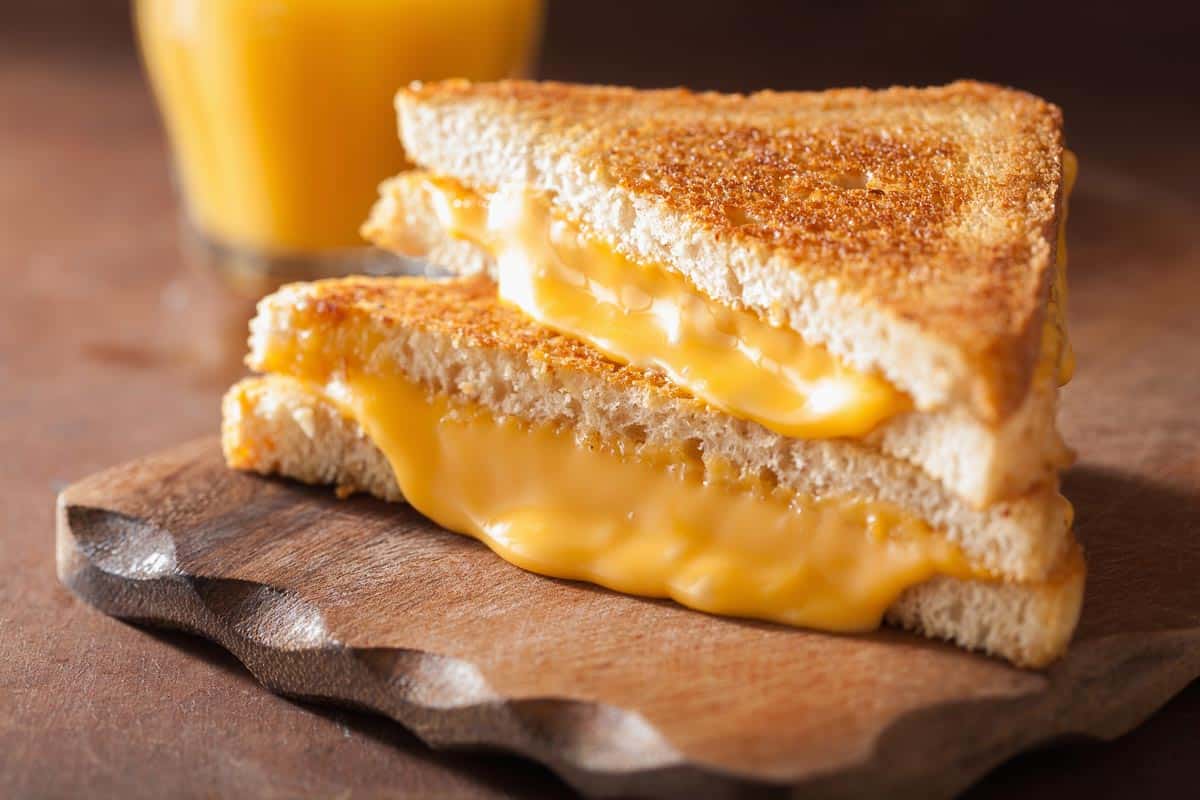
The single best attribute of American cheese is its flawless, liquid-gold melt, something natural cheeses can not accomplish. It is not sorcery; it’s chemistry. The secret lies in the use of emulsifying salts, typically sodium citrate or sodium phosphate.
In a block of natural cheese, milk proteins called caseins are bundled together, surrounding fat and water. When heated, these clumps break down irregularly, disrupting the fats and concentrating them into a greasy mess.
This is why an otherwise delicious grilled cheese sandwich made with cheddar can sometimes become oily. The emulsifiers in American cheese prevent this separation from ever happening. These salts act by breaking down the casein proteins into small, uniform fragments, making them more water-soluble.
They act as a small go-between, holding onto the fat and water molecules and forcing them to coexist peacefully with each other in a smooth, uniform emulsion. The process creates a protein matrix with a very low melting point and stability, which resists degradation, according to the Institute of Food Technologists.
What results is that characteristic, shiny, gooey texture covering a burger patty or oozing out of a sandwich that isn’t clumpy or greasy. It’s a food engineering wonder, explicitly designed to reheat in a way that natural counterparts can’t.
It Contains an Astonishingly High Level of Sodium.
Convenience and texture often come with a nutritional price tag, and American cheese is no exception. One of the principal ingredients shared between flavor and preservation is salt. A typical serving (around 21 grams) of a well-known American cheese has more than 300 milligrams of sodium.
In perspective, the American Heart Association’s guidelines for daily nutrition recommend 1,500 mg for most adults. Two slices in a grilled cheese sandwich could easily supply more than a third of that optimum limit before even considering the buttered bread.
This is due directly to its production process, which involves sodium-based emulsifiers and salt as primary ingredients. Compared to many older cheeses, American cheese tends to be much higher in sodium.
To illustrate, a similar portion of natural Swiss cheese contains approximately 55 mg of sodium, whereas mozzarella contains approximately 175 mg, according to the USDA’s FoodData Central database.
This places American cheese on the foods to monitor list for nearly half of American adults with hypertension, a disease the CDC directly links to excessive sodium consumption. Although it is a source of some calcium and protein, its high sodium content is the primary consideration for consumers in planning a balanced diet.
The Orange Color Is (Typically) an Additive.
The bright, almost cartoon-like orange color that is quintessentially American about American cheese is not a natural characteristic of the cheese itself. The majority of cheese, even orange-colored cheddar, derives its color from an additive.
The most common coloring in American cheese is annatto, a vegetable color based on the seeds of the achiote tree. Paprika is sometimes used as a topping as well.
It began centuries ago with English cheesemakers, adding annatto to cheddar to create a consistent rich color that became synonymous with quality in consumers’ minds (implying grass rich in beta-carotene consumed by the cattle).
James L. Kraft did likewise with his creation of process cheese, which met consumer demand for a “cheddar-like” product. The base for process cheese is often made up of a blend of cheeses, such as cheddar and Colby, with a color that varies from pale white to light yellow.
Without the coloring agent, the end product would have been very much less attractive, pale beige, and very spotty. The decision to cast it as a solid, fire-engine orange was primarily driven by marketing and consumer appeal.
Modern food manufacturing is built on such predictability; a 2023 report in Psychology Today on how we perceive food confirms that color significantly influences what we think the taste and quality will be before taking the first bite.
That bright orange color is a deliberate visual cue, ensuring the classic taste and melt that customers have grown to expect.
It’s a Pillar of American Fast Food.
The American fast-food industry was constructed on the pillars of speed, consistency, and affordability, and American cheese was tailor-made for the purpose. Its invention and large-scale production dovetailed perfectly with the development of drive-thrus and quick-service restaurants during the mid-20th century.
For chains such as McDonald’s and Burger King, employing American cheese was an obvious choice. It was inexpensive, came in neatly uniform, pre-sliced chunks that wasted nothing, and had a shelf life long enough to keep supply chain logistics simple.
Most importantly, it melted the same way every time, giving customers the gooey, satisfying texture they craved on their burgers. This cheese/fast food synergy cemented its status as a food icon in America. It remains the go-to cheese for millions of fast food menu items nationwide today.
American cheese is more than a dozen times more frequently showcased on U.S. restaurant menus as a burger cheese, per industry statistics from market research firm Datassential. Its unshakeable hold on this market is a testament to its unparalleled performance in an industrial kitchen environment.
While artisanal and natural cheeses are gaining popularity in the “better burger” fast-casual market, the classic American cheeseburger, sold by the millions each day, still relies on the unique qualities of the process cheese slice.
“Singles” Were a Packaging Revolution.
Process cheese was sold in large, solid blocks for many decades, which required the consumer to cut it up. This was all changed forever in 1956 when Kraft created and patented a new manufacturing process that enabled the production of separately wrapped portions, sold as Kraft Deluxe Slices.
Following this came the even more ubiquitous “Singles,” manufactured by moulding them onto the cellophane wrapping rather than cutting them from a block of chocolate.
It was a masterstroke in terms of convenience that catered to the new post-war consumer culture, which prized everything that saved time and effort in the kitchen. That it all came in one wrapper meant no knife was required. It kept all the slices from sticking together, making for a swift way to make sandwiches and burgers.
It was so practical and novel that it not only reinvented the product but also the consumer’s experience. This innovation in packaging is mainly responsible for the continued acceptance of this product in households.
A 2022 article in the industry publication Packaging Digest demonstrated how this shopper-led design addressed and solved a common consumer challenge, while also fostering incredible brand loyalty. This phenomenon continues to this very day.
The wrapper itself became what was claimed to be (not so obviously) the cheese and also a token, faddish, hassle-free way to prepare food.
It Has an Exceptionally Long Shelf Life.
One of the primary reasons for developing American cheese was to create a more resilient dairy product, and its longevity is also a key advantage.
Due to the process of pasteurization and the addition of preservatives and emulsifying salts, a sealed package of American cheese singles will remain fresh and prevent spoilage in a refrigerator for several months. The heat eliminates the active enzymes and bacteria that naturally mature, ripen, and spoil cheese.
The preservatives avoid mold and other microorganisms from forming, allowing the product to be safely consumed for far longer than fresh alternatives. Its incredible stability renders it an economically sound choice for both consumers and food service providers, as it significantly reduces food losses due to spoilage.
Compare this to fresh mozzarella or a soft goat cheese, both of which will expire within one to two weeks of purchase. This longevity is primarily due to its value proposition.
While some food purist complains about this element as proof of an “unnatural” or highly manufactured product, millions of consumers rely on its longevity to fill pantries and fridges, so there is always a core ingredient in reserve.
Certain High-End Chefs Secretly Consume It.
While it may be the antithesis of farm-to-table, craft food, a loyal following among certain of the world’s top chefs exists for American cheese. They don’t place it on a cheese board, but they’re passionate about it for one reason: the cheeseburger.
American chefs, from David Chang of Momofuku to the late Anthony Bourdain, have spoken publicly about the merits of American cheese, citing its unmatched melting properties and retro, umami flavor that enhances beef without overwhelming it.
Save this article
They feel that the so-called “fancy” cheeses, such as Gruyère or old cheddar, have too much character and fail to deliver the same creamy, uniform texture that makes an ideal burger.
They don’t view it as an ingredient that stoops to lowbrow status, but as the ideal tool for its intended purpose. Its engineered attributes, such as the low melting point, emulsified consistency, and salty burst, are precisely the things that make it exemplary in this instance.
This acceptance by the so-called food elite has given American cheese a new level of respectability, as something that is thought through and not just a shortcut, as long as it’s used correctly.
It Contains Less Real Cheese Than You’d Think.
The labeling as “cheese food” is an accurate indication of what’s in the item; the FDA requires a “Pasteurized Process Cheese Food” to contain at least 51% cheese. This suggests that the remaining portion of the product could be mixed with various other ingredients, up to 49%.
These different components typically include ingredients such as water, milk protein concentrate (or skim milk powder), whey (a liquid produced during cheesemaking), milkfat, salt, preservatives (such as sorbic acid), and emulsifying salts (like sodium citrate).
These ingredients are added to reduce costs, alter the texture, and enhance stability. This food is a world away from regular cheese, which is legally mandated to contain over 50% milk solids and whose application of additives is stringently limited.
The inclusion of items like milk protein concentrate and whey allows processors to use less of the more expensive natural cheese while creating a food that tastes and has the consistency of cheese.
For consumers, a significant portion of what they commonly refer to as cheese does not align with traditional definitions. Instead, it consists of a highly processed amalgamation of dairy components and synthetic ingredients that are engineered for large-scale production and predetermined performance attributes.
The “Real Cheese” Movement Is a Direct Response.
The ubiquity of process cheese generated a strong counter movement to America’s food culture. Starting in the late twentieth century and continuing into the 2000s, consumers and producers increasingly supported “real cheese.” This movement emerged alongside a cultural shift towards artisan, local, and unprocessed foods.
It emphasized traditional cheesemaking methods, the concept of terroir, and the skill of the cheesemaker over industrial efficiency.
Craft cheesemakers across the United States, from Vermont to Wisconsin to California, have gained national recognition for producing rich, complex cheeses that stand in stark contrast to the uniformity of American cheese.
A 2023 American Cheese Society report noted an explosive increase in the number of small creameries over the past twenty years. It’s not an ideology regarding taste; it’s an ideological movement.
It’s about promoting openness in ingredients, ancient methods, and a sense of greater intimacy with the food we eat, in stark contrast to the model that processed cheese represents.
It’s a Global Curiosity.
Outside the United States, American cheese is viewed with a mixture of interest, gentle amusement, and sometimes disdain. In countries with long traditions of cheesemaking, such as France, Italy, or Switzerland, the pasteurized process cheese is unfamiliar and often runs counter to established food traditions.
It’s commonly seen as an icon of industrial American food convenience, characterized by high processing and a lack of nuance or complexity compared to its European counterparts. Global media and food blogs feature stories unveiling the product to bewildered readers, dissecting its ingredients and legality.
Its influence continues to expand through the global commonality of American fast-food establishments. A McDonald’s cheeseburger tastes astonishingly good wherever you are in Tokyo, Dubai, or Rio de Janeiro, thanks in a considerable measure to the reliable performance of American-style process cheese.
It may not be featured on upscale European cheese platters anytime soon. Still, its position in the fast-food globalization has brought it to the attention of billions of consumers across the globe, making it one of America’s most recognizable, if not always admired, culinary exports.
Its Fat Composition Is Different.
Anything that American cheese shares with its natural equivalent is the type and composition of the fat. However, it contains milk fat, which is processed to alter its physical form significantly.
The emulsifiers accomplish more than combining water and oil; they distribute the fat uniformly in the microscopic droplets throughout the cheese matrix. This is why it will not “sweat” or ooze a puddle of grease when it is melted. The fat is dispersed throughout the creamy emulsion, contributing to its smooth texture.
Nutritionally, the source of the fat is also more varied. While the base cheese provides milkfat, manufacturers can add additional sources of fat, such as milkfat, cream, or vegetable oils (in lower-quality products), to achieve the desired texture and price.
The FDA’s standard of identity requires a minimum amount of milkfat; for example, “Pasteurized Process Cheese Food” requires at least 23% milkfat. This structured fat architecture is at the heart of its functionality and is a primary differentiator from natural cheese, where the fat is sheathed within a less rigid protein matrix.
Velveeta Is Its Cousin, Not Its Twin
Grouped as they usually are, Velveeta and American cheese slices are distinct products, legally speaking. Most American cheese slices are within the “Pasteurized Process Cheese Food” category.
Velveeta itself lost its “cheese spread” designation in 2002 when the FDA ruled that it no longer met the criteria because it had been mixed with milk protein concentrate, a product that wasn’t included on the list of ingredients up to that point.
Velveeta is now sold as a “Pasteurized Prepared Cheese Product,” a term that gives the company even more leeway in its ingredient selection. The category that Velveeta is classified under does not have a minimum cheese requirement, but it does guarantee certain moisture and fat content levels.
This makes Velveeta an even more processed food than the typical American cheese slice. It’s designed to melt best and be the creamiest, which is why it makes such a great dip or sauce, such as the classic queso.
Its primary components are milk, whey, milk protein concentrate, and modified food starch, which give it a characteristic, super-smooth texture that will not split or string when it is warmed. It is another step beyond antiquated cheese, engineered for a specific set of cooking requirements.
It is an irreproachable component of American Culture.
Although the law dictates otherwise and despite its health benefits, American cheese plays a central role in America’s identity.
It is the taste of childhood bed rest, sick days, grilled cheese sandwiches, the requisite topper for the summer barbecued burger, and the plain comfort food to which millions move instinctively without reflection.
Its provenance is American: an era of industrial ingenuity, wartime exigency, and the ineluctable influence of convenience. To render it as “not real cheese” is to disavow its profound significance in the American diet and culture.
Its longevity is an indication of its success in appeasing a particular consumer’s needs around uniformity, value, and performance.
As a 2022 Pew Research Center survey of American foodways revealed, consumers claim to be less interested in natural and healthy food, while price and convenience have a significant impact on their consumption. American cheese represents the pivot point for all of these cross-cutting values.
It is hated by gourmets and consumed by the masses; it is ambiguous and typical, a representation of the complicated and often contradictory eating culture of America.
Key Takeaways
In the end, the story of American cheese is really about untangling the subtleties in the stories and the stickers. It’s not a judgment to know that it is a “processed cheese food” and not “cheese”; it is knowledge, and it also provides insight into what you are eating: a scientifically engineered creation designed to function well.
It is not a matter of giving up comfort food, but being clear-minded. The next time you’re standing in front of the dairy cooler without navigating the cheese section, you can appreciate the complex story and science behind that lovely homogeneous piece of goodness.
Your newly acquired knowledge enables you to perceive the trade-offs between traditional and technological approaches, as well as between real and synthetic ingredients.
This knowledge empowers you to enjoy an artisanal cheddar while acknowledging the unique, undeniable role its processed counterpart plays in American eating culture.
More articles:
- 12 fruits that contain more vitamin C than oranges
- 12 reasons dragon fruit may be one of the healthiest fruits you’re not eating enough of
- Starting Your First Garden? Here Are the 10 Easiest Vegetables to Grow
Disclosure: This article was developed with the assistance of AI and was subsequently reviewed, revised, and approved by our editorial team.
Like our content? Be sure to follow us on Newsbreak.
The Best Root Vegetables for Better Vision
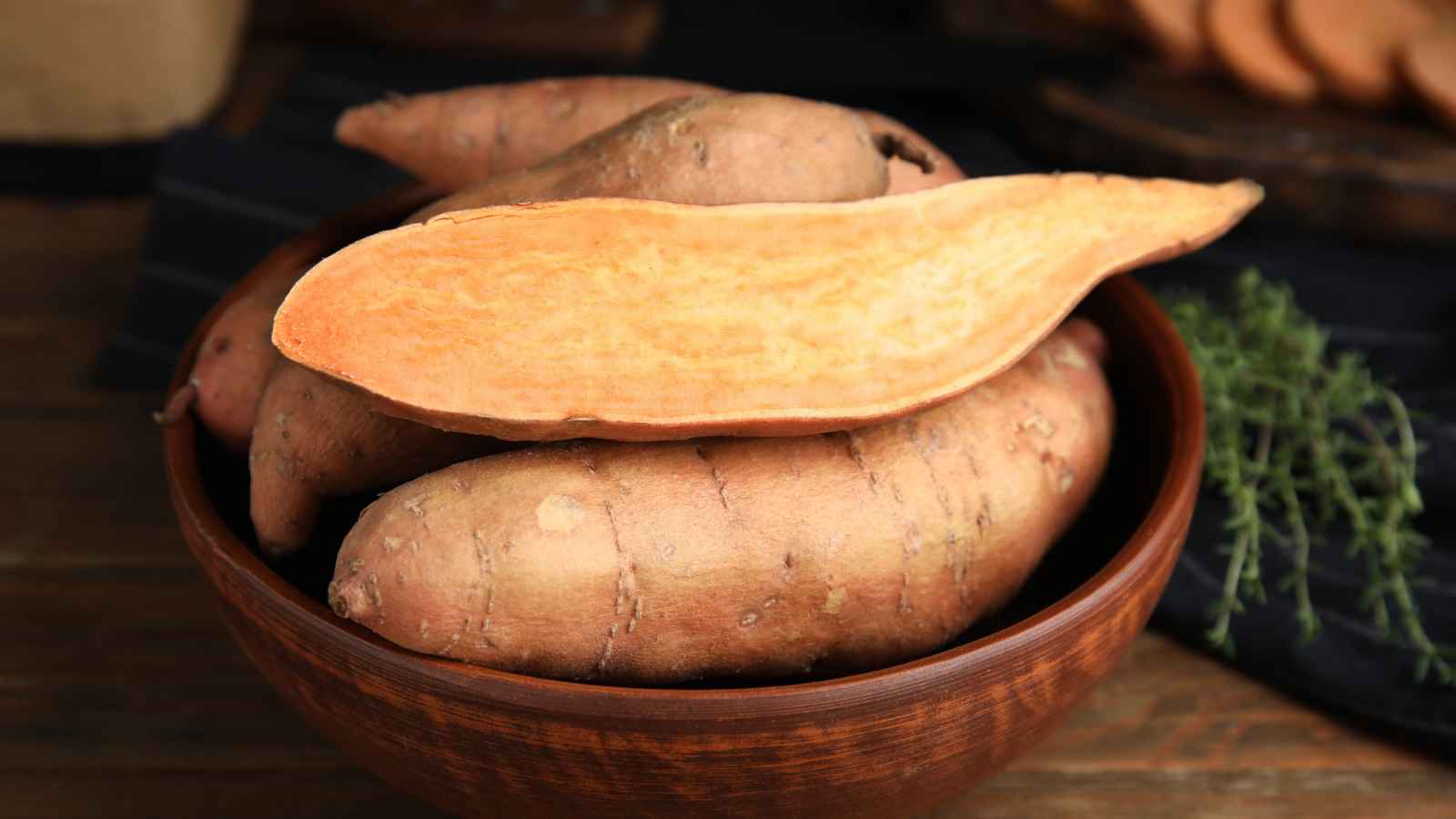
Around the world, most conversations about eye health focus on things like glasses, screen time, or supplements. But in public-health circles, the story actually starts much deeper—literally underground. Root vegetables, especially the ones loaded with carotenoids, play a major role in keeping our eyes healthy.
Vitamin A deficiency is still the leading cause of preventable childhood blindness around the globe, according to the World Health Organization. It contributes to an estimated 250,000 to 500,000 cases every year, especially in places where people don’t have access to foods rich in provitamin A. Learn more.
Common spices linked to colon cancer prevention

In the quiet routine of seasoning a meal, you may be adding small, powerful defenses against one of the most common cancers.
Your spice rack might actually be hiding some powerful health benefits. It turns out that a handful of common pantry staples pack a serious punch against serious illnesses. Medical researchers are looking closely at how everyday seasonings can fight back against cellular damage in the digestive tract. Learn more.
Which protein is actually better for arthritis, plant or animal?

With more than 53 million Americans living with arthritis, emerging research points to nutrient balance—not protein source alone—as the real driver of bone and joint health.
CDC estimates from 2019–2021 show about 21.2% of US adults (around 53.2 million people) report a doctor’s diagnosis of some form of arthritis (including osteoarthritis, rheumatoid arthritis, gout, lupus, etc.). Osteoarthritis (OA) is the most common joint disorder in the US (over 32.5 million US adults live with it), mainly affecting knees, hips, hands, and spine. Learn more.





