

Last year, I found myself standing in a grocery aisle, torn between two nearly identical apples. One, labeled “organic,” was priced at $3.99 per pound, while the other, a conventional option, cost just $1.49. At the time, I chose organic without hesitation. But as the weeks went by and my family’s grocery bill climbed to nearly $200 a week, I started to question whether this choice was sustainable.
In 2023, the organic food market reached a staggering $69.7 billion, with American consumers paying 20-40% more for organic products compared to their conventional counterparts. As I watched my budget spiral out of control, I began to wonder: Does the quality truly justify the higher price? This realization pushed me to dive deeper into the science behind organic farming, a journey that completely transformed the way I approach grocery shopping.
The Price Premium Became Unsustainable

A March 2015 study by Consumer Reports compared over 100 products to analyze the cost of organic foods. The findings revealed that the price difference varies widely.
In contrast, some fresh or individually priced organic items are only slightly more expensive, or even cheaper, than their conventional counterparts. Organic foods cost, on average, 47% more than non-organic options.
Nutritional Differences Are Minimal

A comprehensive Stanford University study analyzing 237 research papers found that organic produce contains virtually no additional minerals or vitamins in loose form compared to conventionally grown food.
The study revealed that while organic foods may have slightly higher levels of vitamins and nutrients, the difference is too minimal to impact human health significantly.
Pesticide Residues are Within Safe Limits

In 2023, the USDA’s Pesticide Data Program tested more than 10,000 food samples. It detected that 99 percent of conventional produce had pesticide residues that fell below the safety thresholds established by the EPA.
No more than 0.2% of samples did not comply with maximum tolerances, and most of them were eliminated from the marketplace rapidly.
Shorter Shelf Life Increased Food Waste
Organic fruits and vegetables rot 25% faster than conventional ones because they lack some preservatives and treatments. According to my food waste tracking, my family was throwing away about $40 in rotten organic vegetables each month.
The USDA suggests that 30% to 40% of food produced in the US ends up in the garbage, and organic food picturesquely breaks in on this wasteful party, amounting to a total of $161 billion worth of food in 2010.
Limited Availability Restricted Food Choices

Organic products make up to $69.7 billion of all food sales in the US as of 2023, and thus, selection and distribution are constrained. Only 30 percent of the items I typically bought were available in organic form at my neighborhood grocery store.
Within weeks at the height of the supply chain disruptions in 2022, the organic produce sections were always empty. This shortage forced me to shop multiple times or abandon my meal planning ideas.
The Taste Difference is Largely Psychological

Blind taste tests conducted by America’s Test Kitchen indicated that, on average, consumers only guessed correctly on the tests of organic produce. Any difference in taste from organic food is typically because the consumer believes it will taste better, and the company that provides it has convinced the consumer that it will.
A study by the Dyson School of Applied Economics and Management at Cornell University showed that people consistently rate food items that are perceived as “organic” more positively than they do identical products that are not labeled as organic. The family’s favor for organic food vanished the day I stopped announcing that the products were organic.
Processing Negates Many Organic Benefits

Organic food processing is the same as for non-organic foods. It does not have any requirement to meet a specific nutritional quality. When organic foods are heated, frozen, and packaged, many of the antioxidants and vitamins that justify higher prices are lost.
A 2023 Food Chemistry study found that organic and traditional processed foods had the same nutrition profile after manufacture. The costly organic cereals and snacks that I bought for my kids and myself gave us no discernible bang for our buck.
Conventional Farming Has Improved Significantly

Contemporary conventional agriculture utilizes precision farming, which has resulted in a 9% decrease in pesticide use. Driven by implements and drones, this approach enables farmers to target only the areas of their fields that require treatment, thereby reducing environmental impact.
In 2023, the committee’s Emerging Technologies Working Group focused on integrating new technologies to enhance pesticide safety and efficacy in agriculture. This has forced me to rethink my assumptions about conventional farming practices.
Organic Certification Lacks Rigorous Oversight

Save this article
The situation is as follows: the USDA’s National Organic Program relies on third-party certifiers, who inspect farms only once a year, creating an opportunity for fraud. According to OTA, organic food sales in the US exceeded $63 billion in 2021, as consumers are willing to pay a premium for goods they believe are free from pesticides and other pollutants.
The speed of growth of organic has exceeded the ability of authorities to keep pace, with the waiting time for inspection of new applicants now at 18 months. This lax monitoring had diminished my trust in the veracity of the organic label.
Health Claims Are Often Exaggerated

Harvard Health reports that organic foods have very few nutritional advantages over conventional foods. For example, extensive, long-term studies of more than 600,000 people for over 20 years found no difference in cancer rates between people who eat organic and non-organic food.
Marketing Creates False Urgency

The organic movement alone invests $100 million per year in marketing campaigns that push fear-mongering messages about non-organic agricultural practices. Companies often use terms like “clean,” “pure,” and “natural” without FDA regulation, causing potential misunderstandings.
It has been demonstrated by studies that a large percentage of consumers decide to buy based on emotion, rather than scientific evidence.
Storage and Transportation Increase Costs

Organic products require specialized warehousing and transportation systems, driving up retail prices by 15-20%. Inefficiencies in the organic supply chain mean these goods often travel longer distances and consume more resources to maintain freshness.
Additionally, cold chain operations demand significant energy, typically relying on non-renewable sources. This increases carbon emissions and also results in higher overall energy consumption.
Time Investment Becomes Overwhelming

Shopping for organic foods turned into a weekly ordeal, consuming 40% more time than usual. Finding factory farm-free chicken meant scrutinizing labels, comparing prices, and hunting for certified organic products; simple errands began to feel like arduous quests.
The constant research, price comparisons, and verification of organic claims demanded more mental energy than I could spare. Hours that could have been spent on other priorities were lost to this exhaustive process. At this stage in my life, it simply became too much to manage.
Key Takeaways

After a year and a half of only-organic shopping, I found that the payoffs seldom outweighed the price, sweat, and restrictions. The scientific evidence consistently demonstrates that conventionally produced foods offer the same nutrition, quality, and safety as organic foods when prepared normally.
My family’s health was glowing back on conventional products, and our grocery bill went down by 35% overnight. And the time I saved on shopping, I was able to use towards creating my own, fresh, diverse meals, instead of seeking out overpriced organic products. Most importantly, it taught me that making intelligent food choices has much more to do with eating food that is whole and from diverse sources than with anything a list disguised as an organic seal is marketing.
Disclaimer – This list is solely the author’s opinion based on research and publicly available information. It is not intended to be professional advice.
16 Grocery Staples to Stock Up On Before Prices Spike Again
16 Grocery Staples to Stock Up On Before Prices Spike Again
I was in the grocery store the other day, and it hit me—I’m buying the exact same things I always do, but my bill just keeps getting higher. Like, I swear I just blinked, and suddenly eggs are a luxury item. What’s going on?
Inflation, supply-chain delays, and erratic weather conditions have modestly (or, let’s face it, dramatically) pushed the prices of staples ever higher. The USDA reports that food prices climbed an additional 2.9% year over year in May 2025—and that’s after the inflation storm of 2022–2023.
So, if you’ve got room in a pantry, freezer, or even a couple of extra shelves, now might be a good moment to stock up on these staple groceries—before the prices rise later.
6 Gas Station Chains With Food So Good It’s Worth Driving Out Of Your Way For
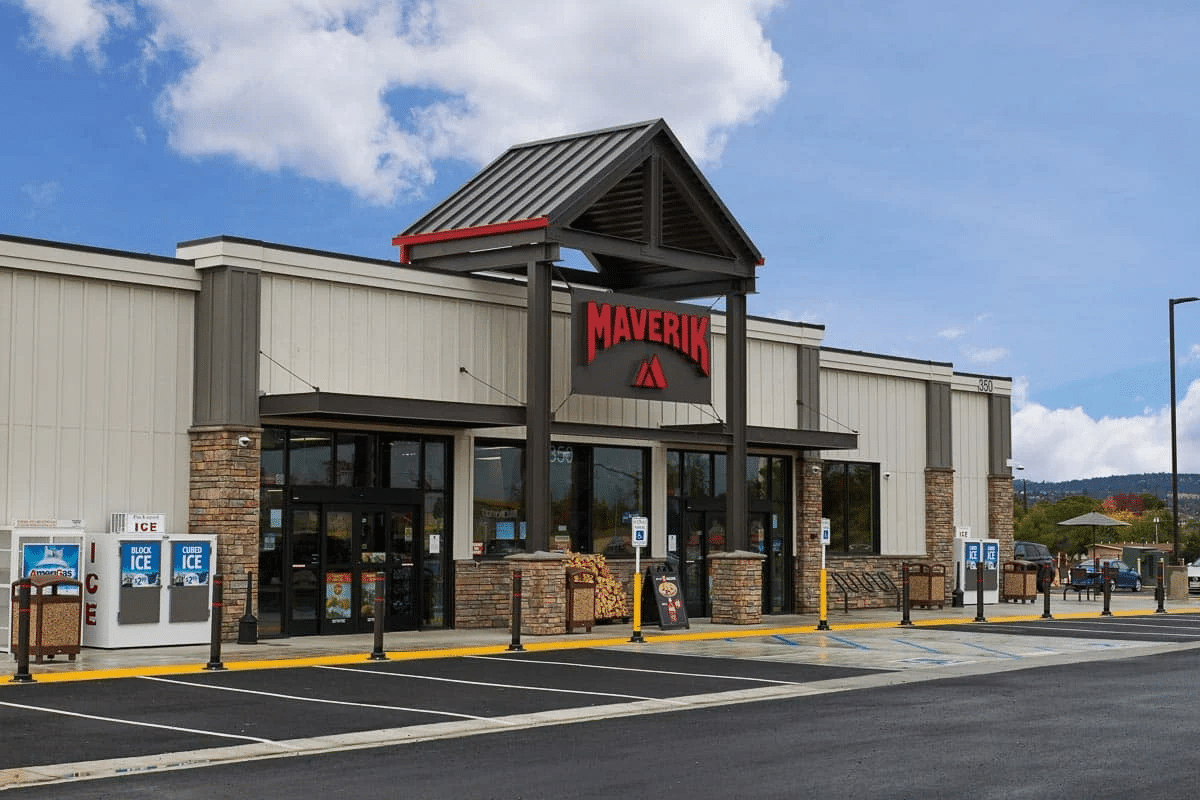
6 Gas Station Chains With Food So Good It’s Worth Driving Out Of Your Way For
We scoured the Internet to see what people had to say about gas station food. If you think the only things available are wrinkled hot dogs of indeterminate age and day-glow slushies, we’ve got great, tasty news for you. Whether it ends up being part of a regular routine or your only resource on a long car trip, we have the food info you need.
Let’s look at 6 gas stations that folks can’t get enough of and see what they have for you to eat.





