Kombucha has long been wellness culture’s favorite fermented fizz, praised as a drink that might support gut health, immunity, stress management, and overall wellbeing.
Bottles now line supermarket refrigerators across the United States and Europe, while wellness influencers have helped turn the drink into a lifestyle product.
But despite its popularity, the science behind many of kombucha’s biggest claims has lagged. When researchers at Aberystwyth University tested whether kombucha could help people handle stress, they focused on a question the category has often struggled to answer: does drinking it create measurable benefits in humans?
Their eight-week, double-blind, placebo-controlled trial found that kombucha did produce biological changes in participants. However, the expected stress-related improvements did not appear.
The gap between those findings shows why the latest research is more complicated than a simple yes or no.
Eight Weeks, 40 Adults, One Big Question
Rigorous human research on kombucha is newer than the product’s wellness reputation, and until recently, there was almost none.
Forty healthy adults took part in a randomized experimental trial. One group drank 330 milliliters of a controlled kombucha every day for eight weeks, while the other consumed a flavor-matched placebo.
The kombucha used in the study was made with organic green and black teas and underwent four weeks of controlled fermentation. Conwy Kombucha, a North Wales company, developed it with funding from Innovate UK.
Researchers collected blood and urine samples before and after the intervention. They examined metabolic compounds, including those associated with tea polyphenols, and found measurable shifts in small molecules that suggested biological activity.
The stress results, however, told a different story.
The Stress Test That Involves Cold Water and Mental Math
The researchers did not hand participants a mood survey and call it data. They put them through something considerably less pleasant.
To measure stress responses, participants were required to place one hand in ice water while completing timed mental arithmetic aloud in front of researchers.
The study tracked several responses, including salivary cortisol, sweating, heart-rate variability, and participants’ own reports of mood and emotional state.
After eight weeks of daily kombucha consumption, the results showed no meaningful advantage over placebo. The Conversation highlights: “The data do not support the idea that eight weeks of kombucha clearly improves acute stress responses or recovery in healthy adults.”
The team also observed that participants appeared to become more accustomed to the second stress test, a pattern commonly seen with repeated laboratory testing rather than evidence of a kombucha effect.
The metabolic findings have been published, while the stress results remain under peer review. That distinction matters when interpreting what the study does and does not show.
The Research Was Always Playing Catch-Up
Kombucha’s reputation accumulated far faster than any supporting science, and the human research base was thinner than most people buying it probably realized.
Dr. Emma Short, a consultant histopathologist involved in the research, noted that before 2025 she believed fewer than 10 human-based kombucha studies had been conducted.
Save this article
Earlier reviews highlighted just how limited the evidence had been. A 2003 systematic review found no clinical studies demonstrating efficacy and cited case reports involving suspected liver damage and metabolic acidosis. In 2019, another review examined more than 300 articles and found only one human study with empirical data on kombucha.
Much of the positive discussion around kombucha came from laboratory and animal research, but they did not establish benefits in people.
More human research is now appearing. A 2024 trial in Scientific Reports followed participants using commercial kombucha for four weeks. After withdrawals and exclusions, 16 people in the kombucha group and eight in the control group completed the analysis.
Researchers found modest changes in gut microbiome composition, but no significant differences between groups for major markers such as fasting glucose, blood pressure, triglycerides, and cholesterol.
The Kombucha on the Shelf Is Not the Kombucha in the Study
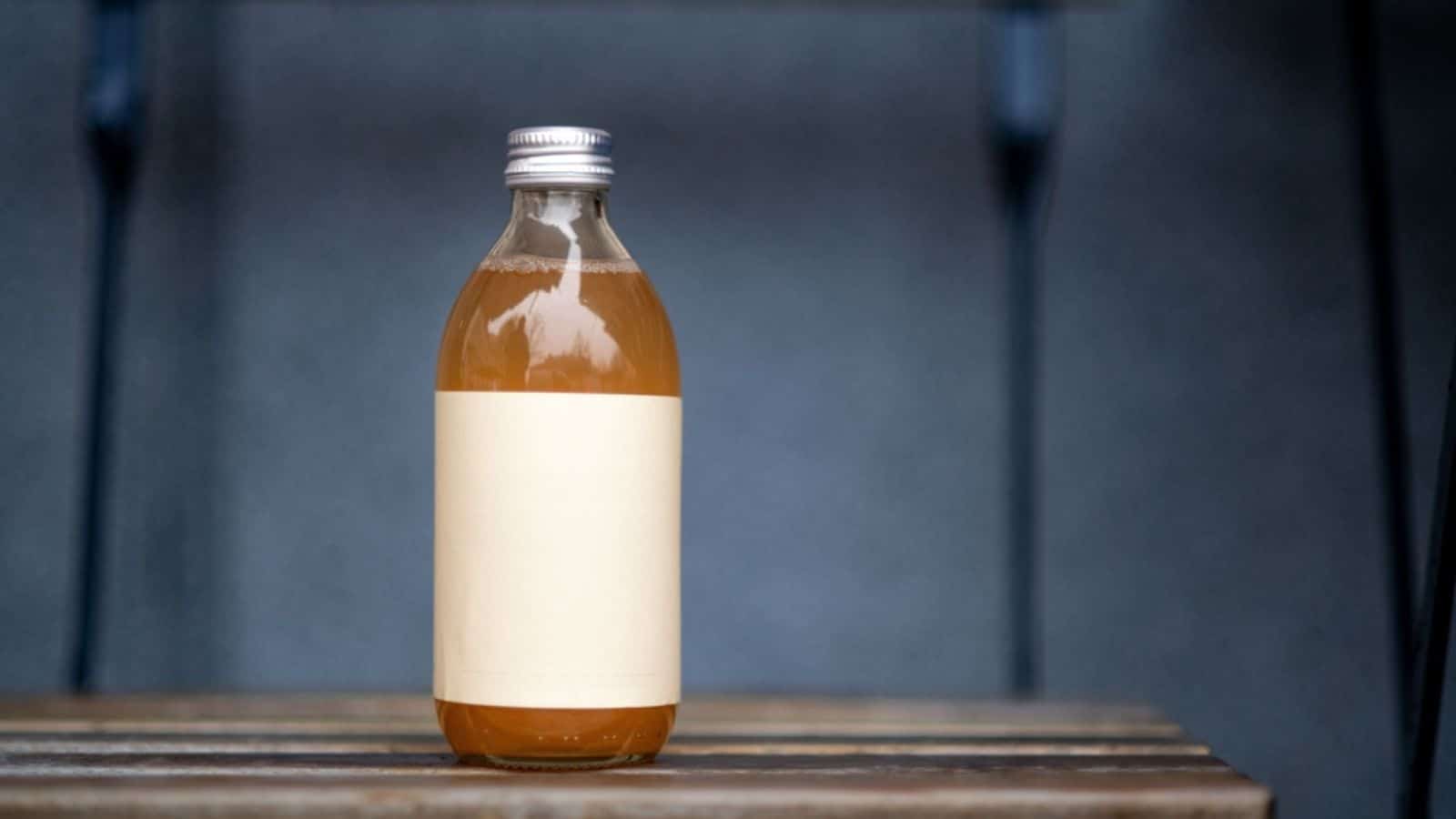
Not every bottled kombucha is the same, and a finding about one formulation is really a finding about that formulation alone.
Kombucha can vary depending on the tea, sugar content, microorganisms in the SCOBY, fermentation time and temperature, filtration, pasteurization, and storage conditions. A controlled research product and a commercial bottle from a grocery store are not automatically equivalent.
Sugar is another factor worth noting. Some commercial kombuchas contain meaningful amounts, which makes simple health claims harder to apply across the entire category.
A kombucha may still work as a replacement for a sugary soda, but that comparison is different from proving that the drink itself creates health improvements. It has been widely recommended that kombucha include only tea, sugar, and the SCOBY.
Related: Why Your Coffee Leaves You Tired Instead of Energized
What the Researcher Actually Recommends
If you are going to drink it, the lead researcher had clear advice about what to look for and what most commercial products are not.
Dr. Lloyd told the BBC that she isn’t immune to wellness trends herself, but she pointed consumers toward traditional live kombucha. “Look for a traditional live kombucha where the microbiota is alive in it. It’s going to have a different taste to what you’d buy in a commercial fizzy drink. You want something that’s naturally carbonated, not artificially carbonated.”
The researchers also identified what future studies need to improve: larger participant groups, longer interventions, more detailed heart-rate-variability measurements using ECGs, and people who begin with higher levels of stress.
That last point may matter. Healthy adults may have less room for measurable improvement, making it harder to detect benefits in this type of group.
For years, kombucha has existed in a space where enthusiasm moved faster than evidence. This trial does not erase the drink’s popularity. Still, kombucha can create biological changes, but those changes are not the same as proven stress relief or a shortcut to better health.
More carefully designed human studies will help clarify where kombucha fits. For now, it remains what it has always been at its simplest: a fermented tea that may be enjoyable, but is not a substitute for the basics of a healthy diet.
Do you drink kombucha regularly, and have you ever noticed a real difference, or is it more about the ritual than the result?
More Articles You Might Be Interested in:
- 7 Healthier Drinks to Finally Replace Your Diet Coke
- 10 Of The Worst Tasting Drinks People Pretend To Like
- 7 Foods People Pretend to Love Just Because Everyone Else Does