

A child’s first day of kindergarten usually brings a familiar set of worries for parents: Will they make friends? Will they feel comfortable in a new classroom? Will they remember where they put their lunchbox?
But across the United States, some families are starting the school year with another question in mind: How much agreement should there be over the health decisions that shape a shared classroom?
A new CDC report shows that 4.2% of U.S. kindergartners had at least one vaccine exemption during the 2025–26 school year, the highest rate recorded in recent years. The figure represents roughly 155,000 children and has renewed a national conversation about childhood vaccines, trust, and the growing influence of online information.
For some parents, vaccine decisions are about personal choice and confidence in their own research. For others, rising exemption numbers raise concerns about protecting children who depend on high vaccination rates around them.
The question now is not just how many exemptions exist, but why more families are choosing them.
Vaccine Exemptions Reached Another Record High
The CDC data shows a steady climb in kindergarten vaccine exemptions over the past several years.
The exemption rate rose from 2.2% in the 2020–21 school year to 4.2% in 2025–26, marking a sharp increase compared with the years before the pandemic.
During the latest school year, exemptions increased in 41 states and Washington, D.C. Twenty-four states reported exemption rates above 5%.
At the same time, vaccination coverage for several routine childhood vaccines dipped slightly. Kindergarten coverage stood at:
- 92.4% for MMR vaccines, which protect against measles, mumps and rubella
- 92.0% for DTaP vaccines, which protect against diphtheria, tetanus and pertussis
- 92.4% for polio vaccines
About 280,000 kindergartners also lacked documentation showing completion of the two-dose MMR series, though that figure does not mean every child was unvaccinated. Some children may have missing records or incomplete documentation.
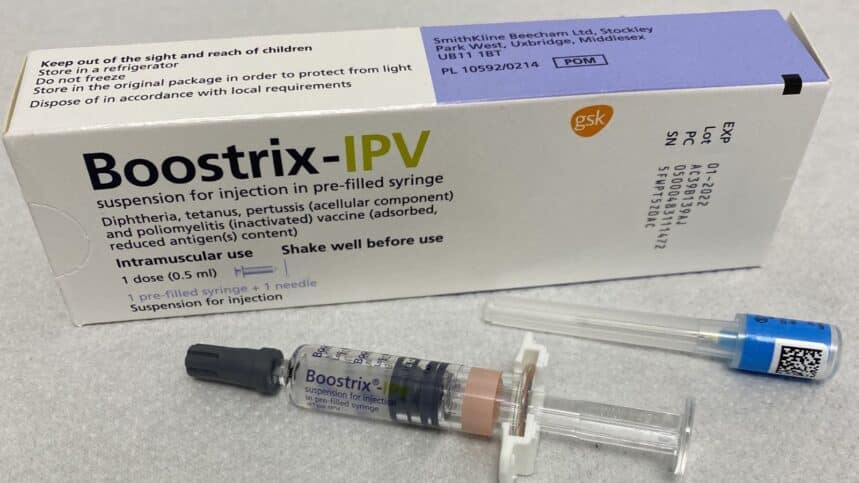
Why More Families Are Choosing Exemptions
No single explanation accounts for the increase in exemptions.
Some families cite personal beliefs. Others point to concerns about vaccine safety, changing trust in medical institutions, or difficulty accessing regular healthcare.
Dr. David Margolius, director of the Cleveland Department of Public Health and chair-elect of the Big Cities Health Coalition, told ABC News that the increase is concerning but said the reasons behind it are difficult to separate.
“It is concerning,” Margolius said, while explaining that the trend may involve several factors, including confusion, access issues, and changing attitudes toward vaccines.
Research also shows that nonmedical exemptions account for most of the recent growth. Medical exemptions remain a small portion of overall exemptions (about 0.2% of U.S. kindergartners).
The growth has largely come from exemptions based on personal or religious beliefs, though the exact reasons families seek those exemptions vary.
Save this article
How the Internet Changed the Vaccine Debate
A generation ago, many childhood vaccine conversations happened privately between parents and pediatricians.
Now, those conversations often begin online.
A parent searching for answers can quickly encounter medical advice, personal stories, influencer opinions, and conflicting claims from thousands of sources. For some families, online communities provide support and information. For others, researchers warn that misleading claims can create confusion and increase uncertainty.
Research has linked exposure to vaccine misinformation with lower vaccine confidence, but experts caution against blaming one platform or one type of content for the national trend.
A post on Facebook, TikTok, or another platform may influence how someone views a health issue, but decisions are also shaped by personal experiences, relationships with doctors, family beliefs, and trust in institutions.
The challenge is that online discussions often turn complex medical decisions into simple arguments, leaving parents to navigate a flood of information that’s hard to evaluate.
Why Measles Is Back in the Conversation
The exemption debate has gained urgency as measles cases have increased.
The CDC had counted 2,566 confirmed measles cases in 2026 as of August 14, surpassing the 2,289 cases recorded during all of 2025. The report also noted that 93% of cases involved people who were unvaccinated or whose vaccination status was unknown.
Measles is highly contagious, and outbreaks can spread quickly in communities where fewer people have immunity.
Dr. James Campbell, chair of the American Academy of Pediatrics’ Committee on Infectious Diseases, told The Washington Post: “Measles and other infectious diseases don’t stop at the classroom door.”
That concern is why vaccination debates often become community debates. A decision made by one family can affect the environment shared by hundreds of students, teachers and staff members.
Related: 10 Microorganisms and Pathogens That Help Treat Diseases
The Debate That Is Unlikely To Disappear
The latest CDC figures arrive amid declining trust in many institutions and growing reliance on online communities for health information.
But the numbers alone cannot explain every family’s decision. What they do show is that childhood vaccination has become one of the most visible examples of a broader American conversation about personal choice, public responsibility, and who people trust when making important decisions.
As another school year begins, parents are left questioning: How should communities balance personal choices with protecting children who share the same classrooms, playgrounds, and schools?





