

Miami reached 100 degrees Fahrenheit on Tuesday, August 18, and the number carried a surprising piece of history.
The reading, recorded at 2:47 p.m. at Miami International Airport, tied the city’s all-time temperature record that had stood since July 21, 1942.
For a place famous worldwide for intense summer heat, Miami has reached triple digits only twice in more than 130 years of official records dating back to 1895.
The unusual milestone was not simply about a hotter-than-normal afternoon. It revealed how much Miami’s coastal location usually protects it from extreme thermometer readings. The Atlantic Ocean typically acts as a natural cooling force, but on Tuesday, that familiar advantage faded.
A combination of atmospheric conditions pushed temperatures into territory Miami almost never reaches, turning an ordinary summer day into a historic weather event.
The Humidity Paradox Behind Miami’s Rare 100-Degree Days
Miami’s famous humidity, the same factor that makes summer feel exhausting, also helps the city avoid extreme air temperatures.
In humid environments, some of the sun’s energy goes toward evaporating moisture instead of directly heating the air. That helps explain why dry cities in the Southwest can regularly exceed 110°F, while Miami often feels more unbearable but rarely sees the thermometer reach similar levels.
The difference becomes clearer when comparing Miami with other Florida cities. Fort Myers, which sits farther inland and lacks Miami’s direct Atlantic influence, has reached 100°F or higher eleven times since local records began in 1902. That includes seven straight days in June 1981. Miami’s total, despite having a much longer record, remains at two.
The coastal microclimate that normally keeps Miami’s temperatures lower failed to provide its usual protection on August 18.
The Heat Index Told a More Uncomfortable Story
The 100°F reading was historic, but the conditions people felt outside were even more intense.
Miami’s heat index climbed higher than 110°F on the record-setting day, combining temperature and humidity to measure how hot conditions feel to the human body. Tuesday’s high also broke the previous August 18 record of 96°F, set in 2022, and was about nine degrees above Miami’s typical mid-August high of 91°F.
The National Weather Service reportedly issued an extreme heat warning for South Florida through Wednesday, with projected heat index values between 105°F and 112°F across the region. Residents were advised to drink plenty of water, reduce outdoor activity during the hottest afternoon hours, wear light clothing, and use air conditioning whenever possible.
Health officials also urged people to check on children, elderly neighbors, and pets as the dangerous heat continued.
Save this article
Nearly Two Weeks of Heat Alerts Led to the Record
Tuesday’s temperature was the peak of a longer period of dangerous heat that had already settled over South Florida.
Miami-Dade, Broward and Palm Beach counties had been under heat advisories since at least August 14, with forecasts warning of repeated feels-like temperatures above 100°F through the following weekend. Even before the official air temperature reached triple digits, residents experienced extreme heat day after day.
The record followed nearly twelve consecutive days of heat alerts, according to Florida Public Radio. A heat dome over the Southeast had limited rainfall and reduced cloud cover, creating conditions that allowed temperatures to keep building.
By Tuesday afternoon, the usual sea breeze that helps cool Miami had not arrived soon enough. That missing relief became the deciding factor in whether the city would reach a temperature it had achieved only once before.
Relief Was Coming, but the Heat Was Not Finished
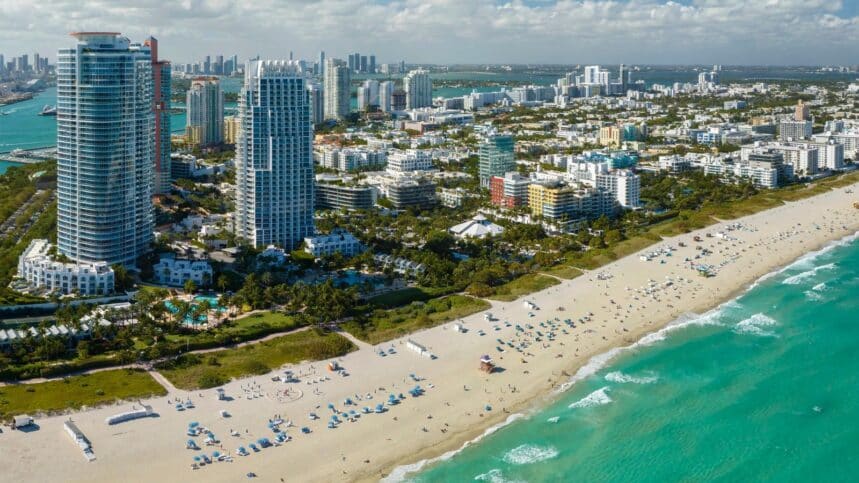
South Florida remained under an extreme heat warning Wednesday, with another potential test for Miami’s temperature record.
The National Weather Service forecast Miami near 97°F, with about a 10% chance of another 100°F day. Much depended on the timing of the Atlantic sea breeze at Miami International Airport, the same factor that played a major role in Tuesday’s record.
More noticeable relief was expected beginning Thursday as increasing moisture and earlier afternoon thunderstorms were forecast to bring temperatures down into the low-to-mid 90s. However, forecasters still expected uncomfortable heat conditions before storms arrived, with elevated rain chances continuing into the weekend.
The historic number on the thermometer may have passed, but the summer heat pattern remained firmly in place.
Miami’s Rare Record Points to a More Common Heat Problem
The unusual part of Tuesday wasn’t the heat itself, but how rare it was for Miami’s official temperature to reach 100°F.
Climate Central analysis reported by National Geographic found that Miami now averages 83 more days per year at 90°F or above than it did in 1970. That represents nearly three additional months of serious heat compared with previous decades, and Miami ranked highest among the cities included in that analysis.
Climate Central’s briefing in June also identified Miami among Florida cities where more than 20 June days were at least twice as likely to occur because of human-caused climate change, based on the organization’s Climate Shift Index methodology.
No formal attribution study has determined exactly how much climate change influenced the August 18 temperature record. But the broader pattern is clear. A 100°F day in Miami remains extraordinarily rare, happening only twice in more than a century of records. Long stretches of 90-degree heat, however, are becoming a much more familiar part of life in the city.
When temperatures spike, do you trust the heat index more than the official high, or does the thermometer number still drive your plans?
Related Articles:
- Heat Dome Expands Across Central U.S., Putting 80 Million Americans at Risk From Dangerous Temperatures
- U.S. heat just broke a record that stood since the Dust Bowl
- 8 Ways Scorching Temperatures Could Be Aging You Prematurely
- 10 Money Problems Tied to Rising Temperatures





