

Years before Michael Johnston became the face of the hit horror movie Obsession, he was playing a gay teenager on Teen Wolf while privately struggling to accept his own sexuality.
Johnston, now 30, has opened up about the strange timing of his breakthrough television role and his personal journey. He joined MTV’s Teen Wolf in 2015 as Corey Bryant, a queer high-school student who eventually became romantically involved with Mason Hewitt, played by Khylin Rhambo. Johnston was only 19 at the time, and although Corey was already comfortable being gay on screen, Johnston was still trying to understand himself away from the cameras.
The actor has described the experience as frightening, particularly because he grew up in Rutherfordton, North Carolina, which he characterized as part of the Bible Belt. He was not yet publicly out, and he has now acknowledged that he was dealing with significant denial about his own sexuality while portraying a character who was living openly.
The irony was hard to miss: Johnston was giving audiences a young man who had already found part of himself while the actor playing him was still trying to do exactly that.
Corey Bryant Became More Than a Television Role
Johnston never expected Corey to become connected so closely to his own personal story.
When Corey first appeared on Teen Wolf, the character was dealing with far more than his sexuality. Corey was a supernatural chimera who struggled to fit in and eventually became an important member of the show’s central group. His relationship with Mason gave viewers a queer romance integrated into the larger story, rather than making his sexuality the only thing defining him.
Johnston has previously explained that he approached Corey like any other character, focusing on the person’s humanity rather than making sexuality the entire performance. That attitude later became especially meaningful when he realized how many young LGBTQ+ viewers were watching him.
The actor has revealed that he received thousands of messages and letters from fans thanking him for playing Corey. Some viewers told him that seeing the character helped them feel better about themselves or gave them the courage to come out to their parents. Johnston had no idea that simply doing his job could become part of somebody else’s coming-out story.
He Was Scared Because He Was Still in Denial
Behind the scenes, Johnston’s relationship with his own sexuality was much more complicated than audiences could see.
In a recent appearance on Cosmopolitan‘s Blind Date series, he recalled being “in complete and utter denial” at the time. He has explained that he began coming to terms with his sexuality privately during the Teen Wolf years, while also continuing to play Corey.
That was particularly difficult because of his background. Johnston has spoken about growing up in North Carolina and the fear he associated with being openly gay in the environment he knew. Playing a queer character publicly while still struggling privately created a strange emotional contradiction.
He has described the experience as “terrifying,” but he also believes the role ultimately gave him confidence and helped him move closer to accepting himself. The character who was supposed to be pretending for a television audience ended up helping the actor become more honest with himself.
His Public Coming-Out Came Years Later
Johnston did not publicly come out when Teen Wolf was airing, which makes his recent reflections especially revealing.
He came out publicly in early 2023, several years after Corey Bryant’s story had ended. He had already spent years working through the fears and uncertainty that had surrounded his sexuality.
Johnston has since spoken openly about being proud of who he is and about how surprising it was to discover that his portrayal of Corey had affected so many people. He has also emphasized that the impact worked both ways: while viewers found encouragement through Corey, Johnston gradually found greater confidence through the experience.
Save this article
That does not mean Teen Wolf magically solved everything for him. His journey continued long after the show ended. But the role gave him something he did not realize he needed at the time, a glimpse of what it could feel like to exist openly.
Then Came Obsession
Today, Johnston is reaching audiences in a completely different way.
In Obsession, he plays Bear, a socially awkward young man whose desperate desire to be loved by Nikki leads him into a supernatural nightmare. Curry Barker directed the film, which became a breakout success and made Johnston one of the year’s most talked-about young actors.
Bear is a dramatic departure from Corey. Instead of playing a character whose sexuality is part of a larger coming-of-age story, Johnston is now carrying a dark psychological horror film as a morally complicated lead.
He has said he deliberately avoided judging Bear, even when the character makes disturbing decisions. Johnston wanted audiences to understand the character’s emotional logic rather than label him a villain.
That performance has also introduced him to a much wider audience, many of whom are only now discovering that the actor behind Bear once played Corey on Teen Wolf.
He Wants the Next Queer Story to Mean Something
Johnston does not appear interested in treating his Teen Wolf history as something he has moved past and forgotten.
Instead, he has said he would like to take on another meaningful queer project, one where the character’s sexuality can be part of a powerful story rather than simply a plot device. He has even suggested that if the right story does not come to him, he might eventually create one himself.
That desire seems connected to what he learned from the fans who contacted him years ago. Their messages showed him that entertainment can reach people during moments when they feel isolated, confused, or afraid.
For Johnston, the value of representation is therefore not just about putting a gay character on screen. It is about creating someone audiences can recognize as human.
From Fear to Freedom
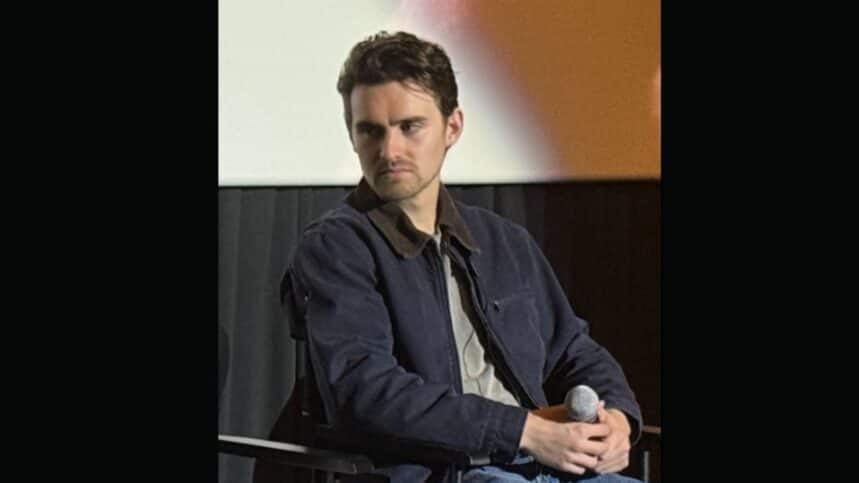
Johnston’s story has come full circle in a way he could never have planned at 19.
He once stood in front of cameras playing a gay teenager while privately struggling to accept his own sexuality. Today, he is openly gay, speaking candidly about that period and taking on increasingly ambitious roles.
The path between those two points was not immediate or easy. It involved denial, fear, complicated emotions, and years of personal growth.
But the most remarkable part is that Johnston’s performance helped other people before he fully understood how much he needed that same encouragement himself.
Can playing a character who reflects something you are struggling to accept about yourself help you understand who you really are?
Read More:
- Twenty Years Later, Clay Aiken Is Ready to Talk About the Week That Nearly Broke Him
- How Companies Can Foster Safer, More Inclusive Workplaces for LGBTQ+ Employees
- Queen Camilla and Harry Potter author JK Rowling Sparked Massive Backlash on the Last Day of Pride Month
- 11 things Boomers should own proudly, no regrets





