

Rising accident counts at some of the world’s prettiest coastlines reveal how a beach day can shift from calm to peril in seconds.
Sun, sand, and surf. That’s the vacation image we all chase, right? We dream of warm sand between our toes and the salty spray of the ocean. However, not all beaches are paradises; some hide serious dangers beneath the waves. A bad day at the beach usually means a sunburn, not a trip to the ER. Forgetting your sunscreen is one thing, but ignoring the warning signs at these locations could be the last mistake you make.
We aren’t just talking about a strong tide. The threats at these global hotspots range from aggressive wildlife to invisible, deadly currents. Even pollution and local crime can turn a dream trip into a complete mess. Before you pack that cooler, you might want to check if your destination is on this list. It’s always smart to know what you’re getting into before you dip your toes in the water.
Gansbaai, South Africa

If New Smyrna is the “Shark Bite Capital,” Gansbaai is the “Great White Shark Capital.” This spot is the center of the cage-diving industry for a reason. A channel of water between two islands, known as “Shark Alley,” is a buffet for these massive predators. They gather here to hunt the large seal population.
You wouldn’t just stroll into the water here for a casual swim. While attacks on casual swimmers are rare (because casual swimmers have the good sense to stay away), the concentration of apex predators is chilling. Cage diving operators know this is one of the most reliable places on Earth to see a great white shark. It’s their territory, and you’re just visiting… in a cage.
New Smyrna Beach, Florida

Welcome to Florida, home of sunshine and… sharks. Lots of sharks. New Smyrna Beach, in Volusia County, holds the dubious title of “Shark Bite Capital of the World.” If you’ve spent time swimming here, locals say you’ve probably been within 10 feet of a shark. The sheer number of juvenile bull sharks and blacktips hunting baitfish in the murky surf zone is astounding.
It’s not that they are trying to hunt humans; it’s a case of mistaken identity. According to the International Shark Attack File, Volusia County recorded eight bites in 2024, representing 57% of Florida’s total. Still, the bites are rarely fatal; they are usually just a quick “grab and release.” That’s a small comfort when you’re the one getting stitches.
Hanakapiai Beach, Hawaii

This beach on Kauai’s stunning Na Pali Coast looks like a movie set. It’s remote, beautiful, and accessible only by a difficult hike. But swimming here is a terrible idea. There is no reef barrier to slow down the ocean’s power.
Powerful rip currents hide just below the surface, ready to pull swimmers out to sea. A grim sign at the trailhead warns hikers that the bodies of at least 15 drowning victims have yet to be recovered from these waters. These currents are no joke, and the signs are there for a very good reason.
Reunion Island, France

This French territory in the Indian Ocean was once a surfing paradise. That all changed in the 2010s, when the island experienced a massive and terrifying spike in shark attacks. It became the most dangerous place in the world for shark encounters, especially involving surfers. The government eventually had to ban swimming and surfing at most beaches.
Experts believe bull and tiger sharks are the main culprits. Between 2010 and 2020, 11 fatal shark attacks were recorded on the island. Shark nets and patrols are now in place, but the reputation remains. It’s a tragic example of how nature can reclaim a space.
The Beaches of Kilauea, Hawaii

Some beaches are dangerous because of what’s in the water; others are dangerous because of what’s right next to them. The black sand beaches near the Kilauea volcano on the Big Island are beautiful but perilous. This is one of the most active volcanoes on the planet. The 2018 eruption completely reshaped the coastline.
Swimming here means dealing with water that can be heated to dangerous temperatures by volcanic vents. Harmful volcanic gases, like sulfur dioxide, can also be present, which are hazardous to breathe. You are literally swimming on the edge of a land-forming, destructive giant.
Save this article
Praia De Boa Viagem, Brazil
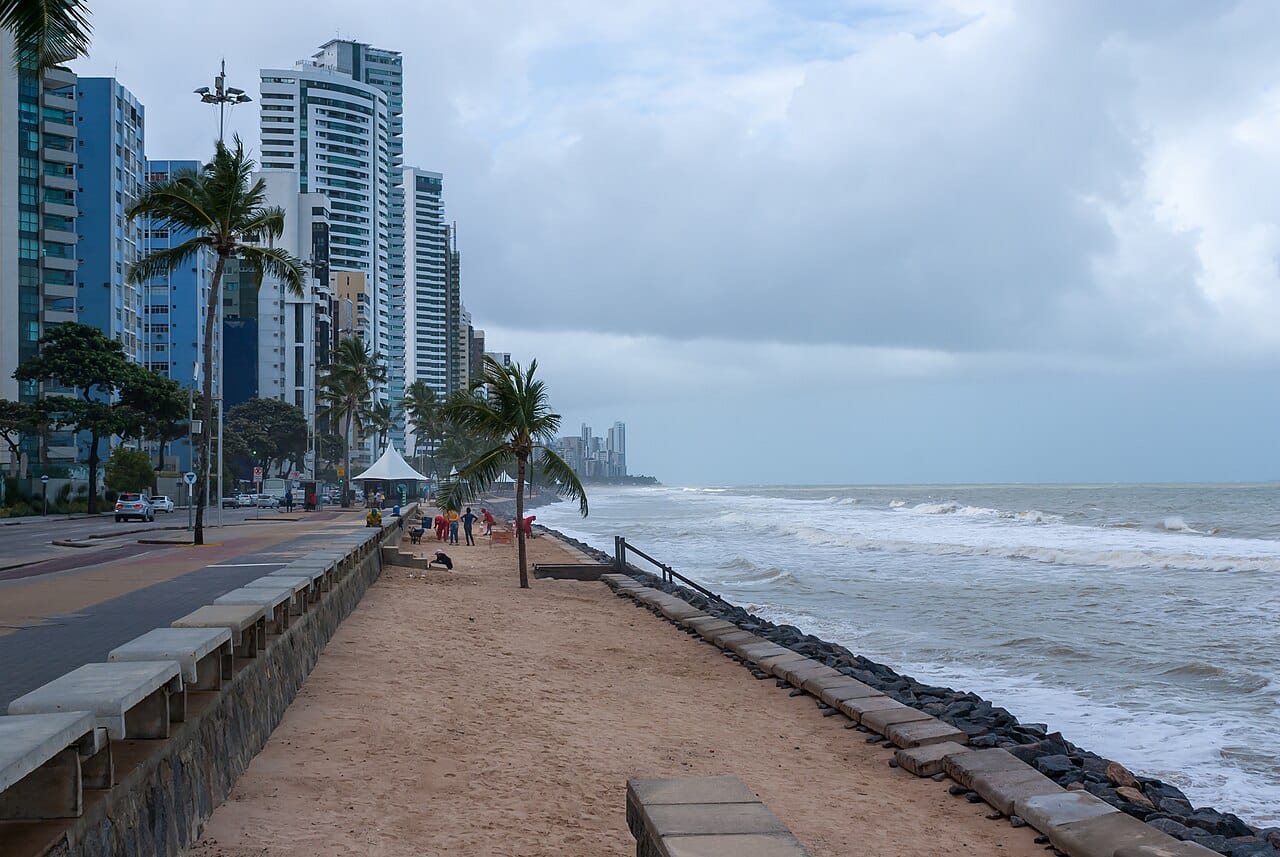
This popular urban beach in Recife, Brazil, looks inviting, but it has a serious shark problem. Environmental disruption is blamed for pushing tiger and bull sharks closer to shore. There are numerous warning signs, but tourists often miss them or underestimate the risk.
This isn’t a new problem. This stretch of coast has seen dozens of shark attacks since 1992, with a high fatality rate. As if that weren’t enough, visitors also face high rates of urban crime. It’s a place where you need to be aware of dangers both in and out of the water.
Fraser Island (K’gari), Australia

This is the world’s largest sand island and a UNESCO World Heritage site. It’s gorgeous, wild, and not safe for ocean swimming due to the presence of sharks and strong currents. But the most famous danger on the island is the dingo, Australia’s wild dog.
While the dingoes resemble medium-sized family pets, they are, in fact, wild predators. A fatal dingo attack on a nine-year-old boy in 2001 led to much stricter management of the animals. Feeding them is strictly forbidden, as it makes them aggressive and bold.
Chowpatty Beach, India

The danger at Mumbai’s Chowpatty Beach isn’t wildlife. It’s pollution. This is one of the most polluted beaches in the world. The water is a toxic mixture of raw sewage, industrial waste, and city garbage. It is absolutely not safe for swimming.
Despite the health risks, the beach is a popular local gathering spot. The fecal coliform levels of Chowpatty Beach, India, are far above the standard considered safe for swimming. Just walking barefoot on the sand can be a risk.
The Amazon River Beaches, Brazil

A beach in the jungle? Yes, the Amazon River has sandy banks that resemble ocean beaches. But the water is hiding some of the scariest creatures imaginable. You don’t have to worry about sharks, but you do have to worry about piranhas.
While piranha attacks on humans are rare, they do happen. You also have to contend with electric eels, anacondas, and the candiru, a tiny parasitic catfish that is rumored to swim into human orifices. This is one swimming hole that is best left to the locals.
Disclaimer – This list is solely the author’s opinion based on research and publicly available information. It is not intended to be professional advice.
Like our content? Be sure to follow us.
How Total Beginners Are Building Wealth Fast in 2025—No Experience Needed

How Total Beginners Are Building Wealth Fast in 2025
I used to think investing was something you did after you were already rich. Like, you needed $10,000 in a suit pocket and a guy named Chad at some fancy firm who knew how to “diversify your portfolio.” Meanwhile, I was just trying to figure out how to stretch $43 to payday.
But a lot has changed. And fast. In 2025, building wealth doesn’t require a finance degree—or even a lot of money. The tools are simpler. The entry points are lower. And believe it or not, total beginners are stacking wins just by starting small and staying consistent.
Click here and let’s break down how.