

On Tuesday, President Donald Trump said the United States was giving “serious consideration” to renaming Lake Ontario “Lake America,” turning a diplomatic dispute into a visual statement. He posted a map on Truth Social showing the original name crossed out and replaced with large gold lettering, alongside a U.S. flag over the lake. No executive order followed, but the post came during one of the tensest periods in recent U.S.-Canada relations.
The move came after trade negotiations collapsed and new tariffs triggered Ottawa’s retaliation. What began as an economic dispute has expanded into a broader argument about sovereignty, culture, language, and how both countries view their relationship.
Lake Ontario remains internationally recognized under its existing name. The body of water between New York State and Ontario has a history that stretches back centuries, long before either modern nation existed.
How a Trade Fight Became a Map Post
The naming graphic became the most visible moment of a trade dispute that had already reached a serious breaking point.
Trade talks between the United States and Canada collapsed on August 21 after Prime Minister Mark Carney reportedly said the U.S. introduced last-minute changes to a deal that had been close to completion. By Saturday, the Trump administration’s 50% tariffs on roughly $20 billion in Canadian imported goods had taken effect.
On Monday, Trump told Canadian leaders to “fall in line” or face consequences “far WORSE.” He also threatened 50% tariffs on Canadian cars, trucks, auto parts and steel beginning January 1, 2027.
Canada responded Tuesday by announcing retaliatory duties on more than 700 American goods. The measures, scheduled to begin September 8, would range from 15% to 50% and were designed to match new U.S. tariffs dollar for dollar.
Carney said Canada had been prepared to reach an agreement before the negotiations changed direction. “This was not our choice. We were ready and close to having a comprehensive agreement that would be fair to both countries. But they made changes, including threats on the French language and Quebec culture and Canadian culture. That is not acceptable. That would never be acceptable,” Carney said.
Trump rejected the claim about French-language concerns, calling it a lie created by “a weak and ineffective Prime Minister in an attempt to gain political support.” He also described Canada as the most difficult negotiating partner among the countries he deals with.
When the Trade Fight Became a Sovereignty Argument
The Lake Ontario proposal was only one piece of a much larger dispute over how Canada sees its relationship with the United States.
Canada’s trade minister Dominic LeBlanc said to CNBC that the government had already decided not to engage with “the daily social media posts of either the president or his Cabinet secretaries.”
Ontario Premier Doug Ford took a more direct approach. He described the renaming idea as “a lot of rhetoric” but emphasized that Ontario’s economy remains closely connected with American states. He also defended Canada’s independence.
Save this article
The dispute has also included repeated comments about Canada’s place in relation to the United States. In January 2026, Trump referred to Carney as “Governor Carney,” language connected to earlier remarks suggesting Canada could become the 51st U.S. state.
Vice President J.D. Vance referred to Canada as a “state” during a political event Monday before describing it as a “Freudian slip.” Carney pushed back against treating Canada as subordinate. He said the U.S. approach reflected “an attitude at the negotiation table that Canada is a subsidiary of the United States.” He added that this was “not something we’re going to accept.”
Related: Poll Finds More Americans Question Whether Trump Is Too Old for the Presidency as Age Debate Returns
A Name That Predates Both Countries
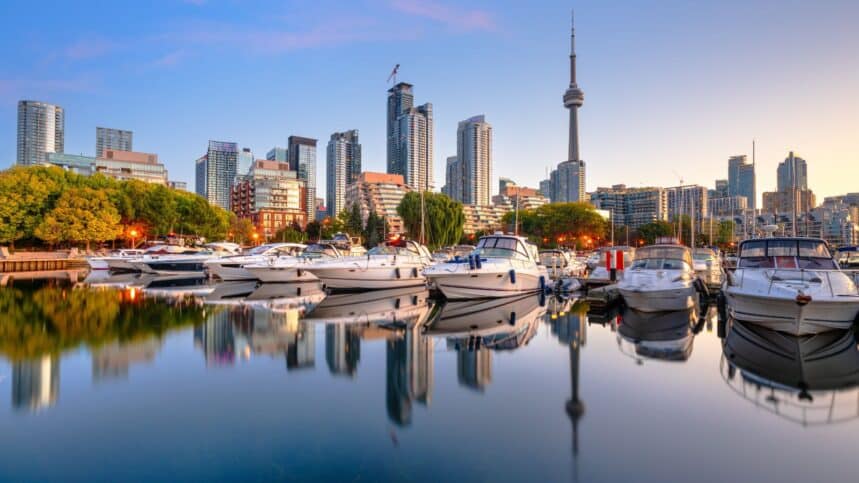
Before the United States and Canada existed, Lake Ontario already carried a name connected to the people who lived around it.
Dartmouth College’s digital collections identify “Ontario” as a Haudenosaunee/Iroquois word meaning “beautiful great lake.” The name existed before either country was created. Ontario’s geographic naming principles recognize that place names often reflect the histories and languages of the communities that shaped them. Indigenous, French, and English traditions have all influenced the province’s geography.
Canadian composer Lorne Betts titled a 1966 orchestral work *Kanadario*, using a Haudenosaunee word for the lake. The reference reflects how deeply the name has existed in the region’s cultural memory.
Changing a name is not simply replacing one word with another. In places shaped by centuries of history, names often carry stories, identities, and connections that go far beyond a map.
The Dates That Actually Matter
The “Lake America” proposal may dominate headlines, but the trade deadlines are the events already moving forward.
No formal federal action has changed Lake Ontario’s name. It remains unclear whether Trump will issue any directive or whether the Truth Social post represents the full extent of the proposal. The more immediate timeline involves tariffs. Canada’s retaliatory measures are scheduled to begin September 8, while the threatened 50% duties on Canadian vehicles and steel are targeted for January 1.
A U.S. naming directive would not change what Canada calls the lake, what international organizations recognize or what many maps around the world display. The Gulf of America dispute demonstrated those limits.
Lake Ontario has carried its name longer than either country has existed. The political fight surrounding it may change quickly, but the history behind the name is much harder to rewrite.
If the U.S. formally adopted “Lake America” in federal maps and documents, would it change what you call the lake, or would Ontario stick with its name regardless?
More Articles You Might Be Interested in:
- Taylor Swift’s Music Keeps Going Silent on Trump Videos. Nashville Knows Why the Fight Matters
- Trump Promises ‘Hard Reset’ for U.S. Schools With New Tax Credit Putting Parents ‘Back in Charge’
- Trump Puts Every U.S. Public School on Notice: ‘Telling Children They’re Trapped in the Wrong Body Is Child Abuse’





