

A morning workout doesn’t necessarily give you a free pass to spend the next 10 hours in a chair.
For years, health advice largely divided people into two groups: those who exercised and those who didn’t. Research into sedentary behavior has complicated that picture.
Scientists now distinguish between being physically inactive and being sedentary. You can meet recommended exercise targets and still spend a surprisingly large portion of your waking life sitting.
That doesn’t make your workout pointless. Far from it. But it does suggest that what happens during the other 23 hours of your day deserves attention, too.
Exercise and sitting aren’t opposites
Imagine two people who both take a brisk 30-minute walk every morning.
One spends the rest of the day moving around a store, climbing stairs, cooking and doing household tasks. The other works at a computer for eight hours, drives home and spends the evening on the couch.
Both exercised for 30 minutes. Their total daily movement is dramatically different.
Meeting an exercise goal doesn’t automatically mean you’re moving enough throughout the rest of your day.
That’s one reason the CDC’s physical activity guidance for adults contains a wonderfully simple message: “Move more, sit less.”
Adults are generally advised to get at least 150 minutes of moderate-intensity aerobic activity each week, along with muscle-strengthening activity on at least two days.
But the guidance also emphasizes that some activity is better than none.
Long periods of sitting change what your muscles are doing
When you sit for long stretches, large skeletal muscles—particularly those in your legs—are doing relatively little work.
Muscle contractions aren’t important only for locomotion. They also participate in glucose uptake, energy use and other metabolic processes.
That helps explain why researchers became interested in whether interrupting sitting could produce measurable metabolic effects.
A body that exercises for 30 minutes and then remains nearly motionless for hours is experiencing a different pattern of muscle activity than a body that keeps moving intermittently all day.
This doesn’t mean sitting itself is toxic. Humans need rest, and nobody needs to pace around the house continuously.
The concern is prolonged sedentary behavior as a dominant feature of everyday life.
Sitting has been associated with poorer health outcomes
Large observational studies have linked greater sedentary time with higher risks of cardiovascular disease, type 2 diabetes and premature death.
But those findings require context.
People who sit more may differ from people who sit less in diet, occupation, overall activity, income, health status and numerous other ways. Researchers attempt to adjust for those differences, but observational studies can’t eliminate every possible confounding factor.
The evidence supports an association between very high sedentary time and poorer health outcomes; it doesn’t mean every hour you spend sitting directly causes disease.
There is also an important piece of good news: physical activity appears to substantially modify the risk.
The U.S. Physical Activity Guidelines review evidence showing that higher amounts of moderate-to-vigorous physical activity can reduce risks associated with substantial sitting time.
In other words, your workout absolutely still counts.
Tiny movement breaks may have real value
One of the most practical areas of research involves breaking up prolonged sitting.
Save this article
Instead of asking people to replace an eight-hour desk job with eight hours of standing, researchers have studied brief interruptions: walking for a few minutes, standing or performing light activity at intervals throughout the day.
Studies have found that breaking up sitting can produce short-term improvements in measures such as post-meal glucose, although the size of the effect varies depending on the activity, population and study.
The emerging message isn’t “never sit.” It’s “don’t remain completely inactive for enormous uninterrupted stretches if you can avoid it.”
That makes the advice surprisingly achievable.
Walk while taking a phone call. Refill your water. Carry laundry upstairs. Take a two-minute lap around the office. Stand up between television episodes. Park farther from the store.
Individually, these movements seem trivial. Collectively, they change the movement pattern of an entire day.
Standing isn’t automatically exercise
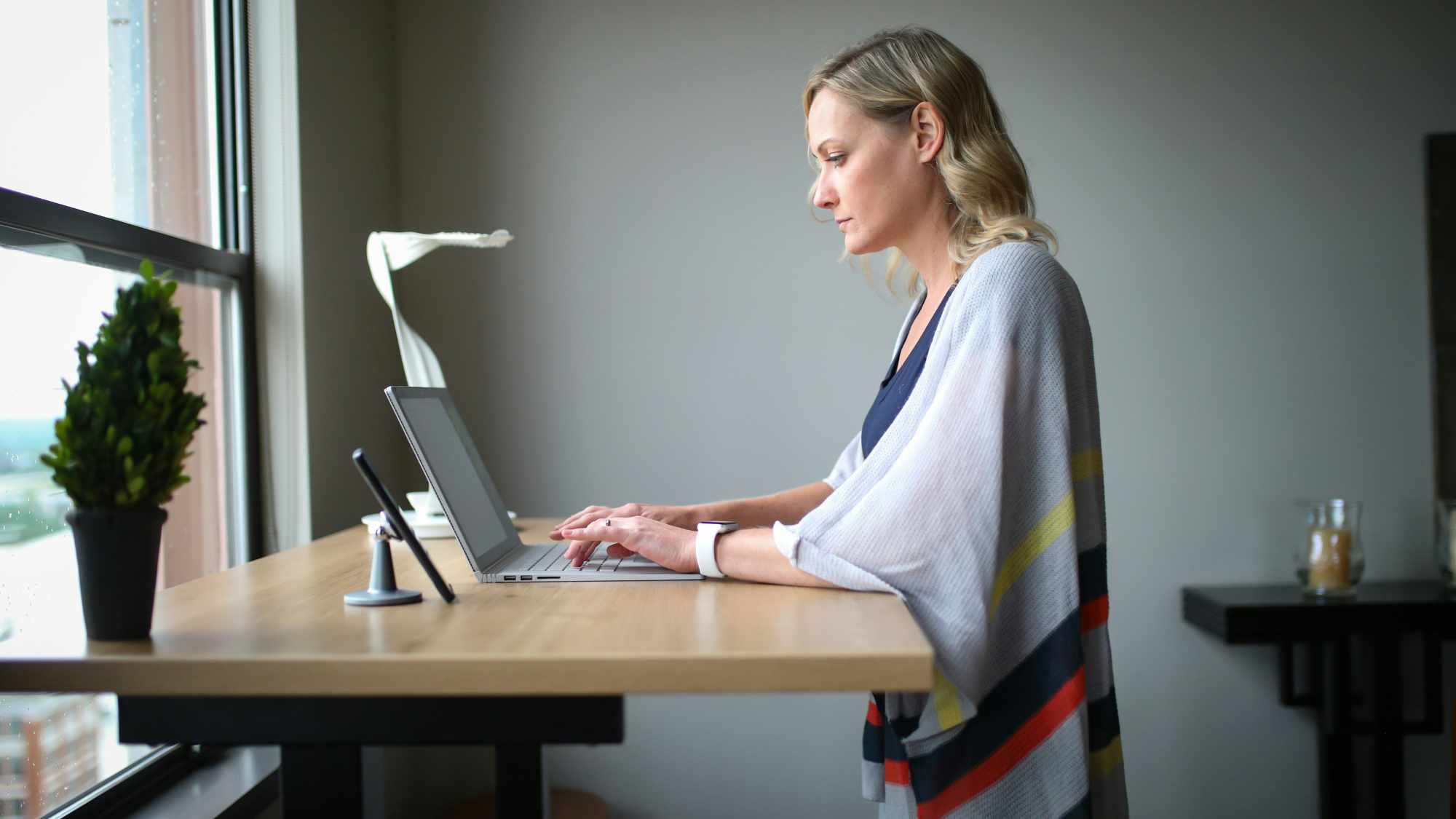
Standing desks have become a popular response to concerns about sedentary behavior, but simply replacing sitting with standing isn’t the same as being physically active.
Standing uses somewhat more muscular activity than sitting, but walking produces a much larger change.
The goal shouldn’t necessarily be to stand all day; it should be to create more opportunities to move.
And standing for prolonged periods can bring its own discomfort for some people.
A sit-stand desk may be useful primarily because it encourages changing positions rather than because standing itself is a magical health intervention.
Your workout is still enormously important
None of this should be interpreted as evidence that exercise “doesn’t count” if you have a desk job.
Regular physical activity is associated with extensive health benefits, and greater amounts of activity can offset at least some of the risk associated with sedentary time.
The mistake would be assuming exercise and everyday movement are interchangeable.
Think of structured exercise and reducing sedentary time as complementary rather than competing goals.
You can exercise intentionally and also look for small opportunities to move throughout the day.
You may want to read: Trainers reveal the top 10 gym mistakes killing your gains
Final word
Modern life has removed movement from places where previous generations couldn’t avoid it. We can order groceries from a chair, attend meetings without leaving a desk and watch hours of entertainment without standing up.
That convenience isn’t going away—and it doesn’t need to.
What the research suggests is that our bodies still benefit from something modern life has made optional: frequent movement.
You don’t need to turn every workday into a fitness class. You may simply need to stop thinking of exercise as the only movement that matters.
Thirty minutes at the gym can be an excellent investment in your health. So can the dozens of small decisions that keep your body from spending the remainder of the day parked in one place.