

You’ve probably had a conversation with an older relative that left you wanting to toss your phone into the nearest body of water gently.
It’s a familiar feeling. But this isn’t really a “generation war.” It’s more like a series of cultural misunderstandings happening on a massive scale. For the first time in history, we have five generations working side by side, and the friction is real.
A Pew Research Center survey found that a whopping 79% of the public believes there’s a significant “generation gap” in viewpoints. In the workplace, this isn’t just a feeling—it’s a problem. One study from the Society for Human Resource Management (SHRM) revealed that 67% of companies face conflicts between different age groups.
These aren’t just random annoyances; they’re artifacts of a world that no longer exists, shaped by vastly different economic realities, technological landscapes, and social norms. This isn’t about pointing fingers. It’s about decoding the “why” behind the groan.
Here are the 12 habits that cause the most concern.
Insisting on a phone call for something that could be a text

You see your phone light up with a familiar name. Your heart sinks just a little. You know this five-second question about dinner is about to become a 20-minute conversation. Why not just text?
This isn’t just a simple preference; it’s a clash of communication philosophies. Boomers tend to favor direct, real-time interactions, such as phone calls, where they can hear vocal nuances that convey sincerity and commitment. For them, a call feels efficient and personal.
But for Millennials and Gen Z, who grew up juggling constant notifications, asynchronous communication is king. They prefer texts and instant messages because they allow them to respond on their own schedule. An unscheduled call feels like a demand for their immediate attention.
So while they think they’re being personal, younger generations just feel like their time isn’t being respected.
Giving unsolicited—and outdated—financial advice

“Just get a good job with a pension.” “If you stopped buying lattes, you could afford a house.” If you’ve heard these, you’ve probably had to physically restrain yourself from rolling your eyes.
This kind of advice comes from a completely different economic universe. Baby Boomers (born between 1946 and 1964) entered the workforce during a period of post-war prosperity. A single income could often support a family, and pensions were a realistic expectation.
Today, things couldn’t be more different. According to a study by Bank of America, 73% of Gen Z respondents say the current economy has made it much harder to save money.
The “just buy a house” advice is especially tough to hear. For many Boomers, homeownership was an attainable goal. But for younger generations drowning in student debt and facing historically high housing costs, it feels like a fantasy. As financial consultant Kevin Miles puts it, “Housing is completely different compared to what it was 70 years ago”.
Their advice isn’t just unhelpful; it ignores the fact that they’re playing Monopoly with the classic rules while everyone else is playing the version where the bank owns Park Place from the start.
Dismissing mental health struggles as ‘being too sensitive’

Ever tried to open up about feeling anxious or burned out, only to be met with a lecture about how “people are too sensitive these days”? Or that you just need to “suck it up”? It’s a classic conversation-killer that highlights a massive generational divide.
A Forbes Health survey found that 56% of adults aged 18-26 rank mental health as more important than physical health. For people aged 59-77? That number is just 10%.
Boomers grew up in an era where mental health was deeply stigmatized. It was seen as a private struggle, a character flaw, or a sign of weakness. Psychiatrist Dr. Judith Joseph explains that older generations often “repress emotions and have a survival-mode way of approaching life”.
As a result, they are far less likely to seek professional help. Data from the American Psychiatric Association shows that while 37% of Gen Z have received therapy, only 22% of Baby Boomers have.
What they see as encouraging toughness, younger generations hear as a complete lack of empathy and an ignorance of modern psychology.
The ‘reply all’ apocalypse in work emails

Your inbox dings. It’s a company-wide announcement. A minute later, another ding. A Boomer colleague has replied to all 300 people with a simple “Thanks!” Then another does it. And another.
Your focus is shattered. Your inbox is now a graveyard of pointless notifications.
This habit is a perfect example of the gap in digital communication etiquette. Boomers, who tend to value more formal and structured communication, might see a “reply all” as a polite, public acknowledgment—a way of being transparent.
Younger generations, who treat email as a tool for peak efficiency, see it as digital clutter that wastes everyone’s time.
They think they’re keeping everyone in the loop, but they’re actually just creating digital noise that hijacks everyone else’s productivity.
Sharing blatant misinformation on social media

You’re scrolling through Facebook and you see it: a post from an older relative claiming a miracle cure made from lemon peels or a political meme that was debunked five years ago. You’re stuck between correcting them (and starting a fight) or just hiding their posts forever.
Boomers grew up in a world with a few trusted media gatekeepers (like major TV networks and newspapers). The internet, on the other hand, is a chaotic, decentralized free-for-all where the old signals of trust no longer apply. This leads to a dangerous paradox.
Their trust in ‘a friend of a friend’ over established sources turns their social media feeds into a breeding ground for fake news.
Over-explaining incredibly simple things

You ask a simple question, like “How do I reset the Wi-Fi?” and you get a ten-minute lecture on the history of the internet, the physics of radio waves, and a detailed biography of the person who installed the router in 2003. This habit usually comes from a good place—a genuine desire to be helpful and a “teaching instinct”.
Boomers were conditioned to share knowledge through direct, detailed instruction because, for most of their lives, that’s how information was typically passed down. But for younger generations, who are used to finding information instantly on Google, it can feel incredibly patronizing. The annoyance isn’t about the information itself; it’s about the unspoken assumption that they’re incapable of figuring things out on their own.
This is a direct collision between two different eras of information access. For Boomers, knowledge was a scarce resource held by experts. Being the person with that knowledge was a valuable social role. For younger generations, information is an abundant commodity. The valuable skill isn’t knowing everything, but knowing how to find and filter it quickly.
They believe they’re generously sharing their wisdom, while younger folks just wish they’d trust them to use Google.
The surprise, unannounced visit

The doorbell rings. You’re in sweatpants, the house is a mess, and you were mentally preparing for a quiet evening of doing absolutely nothing. It’s an older relative, here for a “pop-in.” Your social battery instantly drains to zero.
For many Baby Boomers, dropping by unannounced is a sign of warmth and a strong sense of community. They grew up in an era of open-door policies, where spontaneity was seen as friendly and neighborly.
But for younger generations, it’s a significant source of anxiety. Modern culture values personal space, clear boundaries, and planning things out with a quick text. An unexpected visit can feel like a massive intrusion, especially with more people working from home and needing their space to decompress from an overstimulating world.
The pop-in violates the sanctity of that space, forcing an unplanned social performance when someone might have zero emotional energy for it. What they see as a warm, spontaneous gesture feels like a boundary violation to a generation that views their home as a much-needed sanctuary from an overwhelming world.
Save this article
Glorifying the ‘good old days’ and a ‘workaholic’ ethic

You mention that you’re feeling burned out, and you get a lecture about how “back in my day, we worked 60 hours a week and were grateful for it.” The implication is clear: your struggle is a sign of weakness, not a symptom of a broken system.
Boomers are often described as work-centric and competitive, equating long hours with dedication and loyalty. Their motto was “Work hard, and you’ll get ahead,” and for them, it was often true. This clashes hard with younger generations. Work-life balance is the number one factor for Gen Z when choosing a job. Millennials, too, prioritize it to an “unprecedented degree”.
The notion that younger people are “job-hoppers” because they lack loyalty is essentially a myth. A study from the National Institute on Retirement Security found that the job tenure of younger workers is nearly identical to that of Baby Boomers at the same age. As the institute’s director, Dan Doonan, said, “The real drivers of turnover are the economy, benefits, and job opportunities, not generational differences”.
They’re nostalgic for an era when hard work actually paid off, failing to see that for many today, it’s just a fast track to burnout.
Using ALL CAPS and weird ellipses (…) in texts and emails

You get a text from your mom: “ARE YOU COMING FOR DINNER…” You immediately wonder what you did wrong. Is she mad? Is this a passive-aggressive trap? It turns out she just wanted to know if you’re hungry.
For Baby Boomers, who are often referred to as “digital immigrants,” these are usually just stylistic choices. ALL CAPS is for emphasis, and ellipses are a way to create a pause, like in a spoken conversation. They’re often completely unaware of the heavy subtext these symbols carry in modern digital culture.
For “digital natives,” these symbols are a whole, nuanced language. ALL CAPS IS YELLING. An ellipsis can signal passive-aggression, sarcasm, or an ominous pause.
This creates what has been called “translation fatigue” for younger people, who must constantly decode every message to determine the intended emotion. It’s a prime example of the communication gaps that often lead to age-related workplace conflicts.
What they intend as harmless emphasis, younger generations receive as a series of confusing and emotionally charged landmines.
Talking loudly on the phone in public spaces

You’re in a quiet cafe, a waiting room, or on a train. Suddenly, a Boomer nearby starts a phone conversation at full volume, and now you know way too much about their cousin’s gallbladder surgery. You slide on your headphones and pray for it to end.
This habit is less about intentional rudeness and more about being conditioned by a pre-mobile-phone world. Conversations were public by default. You spoke at full volume on a landline or yelled across the street to a friend because there was no other way.
Modern etiquette, shaped by smartphones and open-plan offices, values respecting shared auditory space. Technology, such as headphones, has allowed us to create private bubbles, even when people surround us.
They’re operating by the old rules of a shared public square, while everyone else is trying to maintain their private bubble in a crowded world.
Complaining about technology that makes life easier

“Why do I have to download an app for everything?” “This even shouldn’t be a touchscreen!” You’ve heard the complaints, often while you’re trying to help set up the very device that’s causing all the frustration.
There is a massive technology adoption gap between generations. While 93% of Millennials own a smartphone, only 68% of Boomers do. A study found that 72% of Boomers trust human agents more than automated systems.
Their frustration is often rooted in a feeling of losing control. Boomers grew up with physical knobs, buttons, and dials that provided direct, tactile feedback. Touchscreens and apps can feel abstract, unreliable, and create a sense of perpetual incompetence.
While younger people may see this as stubbornness, Boomers are, in a way, defending a more human-centric world.
Their frustration isn’t just about being ‘bad with computers’; it’s a protest against a world that demands constant adaptation and often replaces simple, reliable systems with frustratingly complex ones.
Hoarding physical objects ‘just in case’

You open a closet at your parents’ house. You are met with an avalanche of 30-year-old magazines, every instruction manual for every appliance they’ve ever owned, and enough plastic containers to supply a small army.
This habit is often rooted in the economic scarcity that shaped their lives or those of their parents. Growing up in the shadow of the Great Depression and World War II, the mindset was to save everything “just in case,” because you never knew when you might need it again.
Younger generations, who grew up in an era of on-demand access and often value experiences over possessions, see things differently. For them, physical objects are usually a burden. Space and flexibility are the scarce resources, not stuff.
This creates a massive inheritance problem. Boomers are often “leaving a huge amount of material things behind,” like collectibles and antiques that their children don’t want or have room for.
They’re holding onto things because it gives them a sense of security, while their kids see the clutter as the very thing that’s holding them back.
Key Takeaway

At the end of the day, the “generation gap” is less about personal flaws and more about the world each generation was handed. Boomer habits were forged in an analog world of economic stability, centralized information, and face-to-face community.
The habits of younger generations are a rational response to a digital world defined by economic precarity, information overload, and the need for protective boundaries. The groans and eye-rolls come from a place of misunderstanding, but a little empathy for these vastly different formative experiences can go a long way in bridging the divide.
Disclaimer – This list is solely the author’s opinion based on research and publicly available information. It is not intended to be professional advice.
Like our content? Be sure to follow us
6 Gas Station Chains With Food So Good It’s Worth Driving Out Of Your Way For
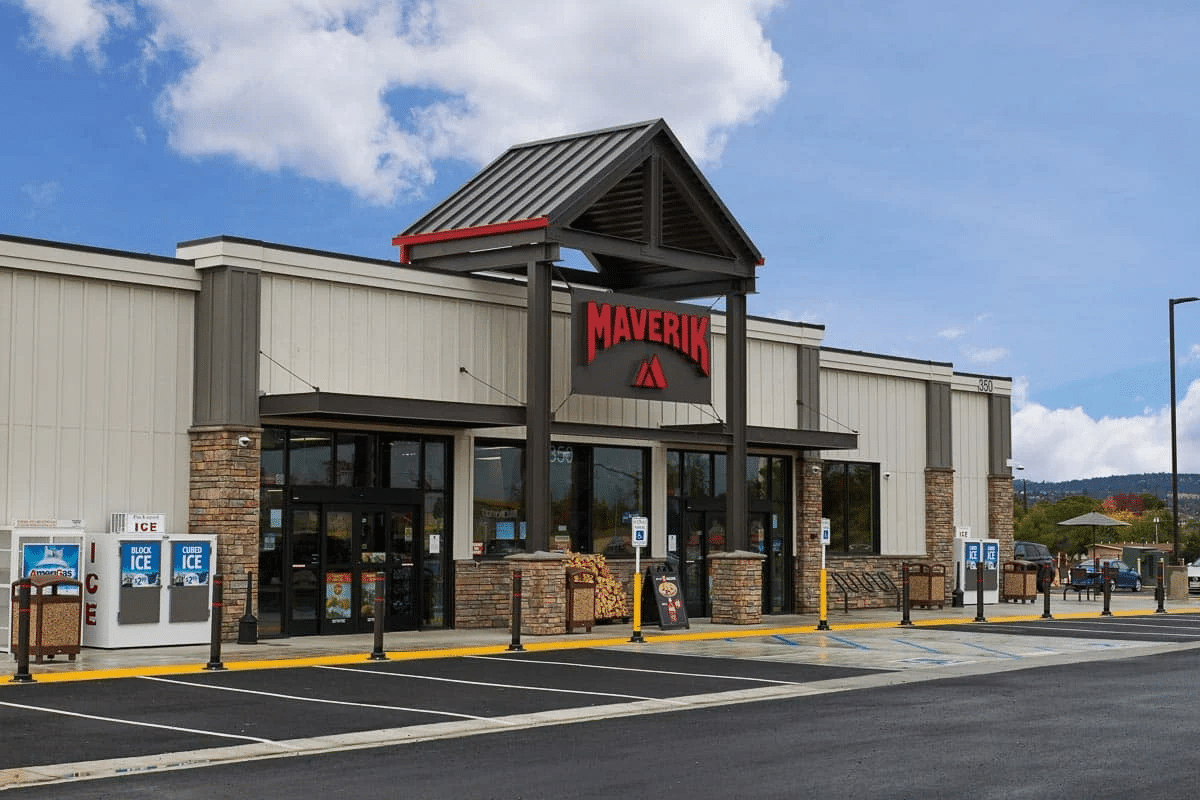
6 Gas Station Chains With Food So Good It’s Worth Driving Out Of Your Way For
We scoured the Internet to see what people had to say about gas station food. If you think the only things available are wrinkled hot dogs of indeterminate age and day-glow slushies, we’ve got great, tasty news for you. Whether it becomes part of a routine or your only resource on a long car trip, we have the food information you need.
Let’s look at 6 gas stations that folks can’t get enough of and see what they have for you to eat.
16 Grocery Staples to Stock Up On Before Prices Spike Again

16 Grocery Staples to Stock Up On Before Prices Spike Again
I was in the grocery store the other day, and it hit me—I’m buying the same things I always do, but my bill keeps getting higher. Like, I swear I just blinked, and suddenly eggs are a luxury item. What’s going on?
Inflation, supply-chain delays, and erratic weather conditions have modestly (or, let’s face it, dramatically) pushed the prices of staples ever higher. The USDA reports that food prices climbed an additional 2.9% year over year in May 2025—and that’s after the inflation storm of 2022–2023.
So, if you’ve got room in a pantry, freezer, or even a couple of extra shelves, now might be a good moment to stock up on these staple groceries—before the prices rise later.





