

Ever feel like early retirement is a myth? Something reserved for tech moguls or people who won the lottery? You see the headlines. You hear the chatter. Everyone’s behind, nobody’s ready, and the goalposts keep moving. It’s enough to make you want to give up and just order the expensive coffee.
But what if I told you that a lot of that anxiety is just noise? Believe it or not, a whopping 77% of Americans experience positive emotions, such as happiness and gratitude, when they think about retirement, according to a survey by Wealth Enhancement. The dream is very much alive.
The secret is to stop thinking of retirement as an age, such as 65. Instead, think of it as a state of being. You might be much further along in buying back that freedom than you think. Here are 12 signs you’re already on the fast track.
You treat debt like an emergency

You see high-interest debt for what it is: a five-alarm fire in your financial house. This mindset is surprisingly rare. Ramsey’s State of Personal Finance report shows that more than a third of Americans (37%) actually have more credit card debt than they do in retirement savings. They’ve accepted debt as a normal part of life.
But you know better. You understand what financial expert Dave Ramsey preaches: your income is your single greatest wealth-building tool, and every dollar you send to a credit card company is a dollar that can’t be invested to build your future.
It’s why you attack it with what Ramsey calls “gazelle intensity,” maybe even using the debt snowball method—paying off your smallest debt first for a quick psychological win to build momentum.
But here’s the real magic: getting rid of debt does more than free up cash. It frees up your mind. A Ramsey Solutions study shows people with debt are far more likely to feel “overwhelmed, worried and stressed”. That stress eats up mental energy. By clearing your debts, you’re clearing your mind to focus on offense—building wealth—instead of constantly playing defense.
You have a “just in case” fund that’s actually robust

You don’t just have a few hundred bucks stashed away. You have a serious cash cushion, and it’s your financial superpower. Most people are flying without a net. A Bankrate survey found that only 46% of U.S. adults have enough savings to cover even three months of living expenses.
But you’re playing a different game. You’re likely aiming for the benchmark set by finance guru Suze Orman, who says three to six months isn’t nearly enough in today’s world. She pushes for an emergency fund that can cover at least eight months of essential living expenses.
You see this fund not as money that’s lazily sitting around, but as your “courage fund.” It’s the firewall that stands between an unexpected layoff and a mountain of high-interest credit card debt. Orman considers it so vital that she says, “I don’t care what debt you have. You have to have that emergency [savings] account”.
This fund does more than just cover emergencies. It makes you a better investor. When the market inevitably crashes, most people panic and sell at the worst possible time because they’re scared or need the cash. But your eight-month cushion means you don’t have to sell. It gives you the stability to ignore the panic and follow Warren Buffett’s famous advice to be “greedy when others are fearful.”
Your savings rate is consistently in the double digits

You get it. The single most important number for retiring early isn’t your salary—it’s the percentage of it you save. You’re already in an elite club. The U.S. personal savings rate has cratered to around 3.7%. So if you’re saving 10%, 15%, or more, you’re crushing it.
You’re instinctively using the core principle of the FIRE (Financial Independence, Retire Early) movement, where followers often save 50% or more of their income. As investor J.L. Collins puts it, “The greater the percent of your income you save and invest, the sooner you’ll have F-You Money.”
A high savings rate forces you to be intentional. You can’t spend mindlessly. You must decide what truly adds value to your life and eliminate the rest. You’re not depriving yourself; you’re curating your life around what actually makes you happy. You’re practicing the art of a happy retirement long before you actually get there.
You put your money to work automatically

You’ve taken willpower out of the equation. Your financial progress happens in the background, like clockwork. You’re living what finance author Ramit Sethi calls a life “outside the spreadsheet”. You’ve set up an automatic money flow: your paycheck hits your account, and a portion is immediately sent to your 401(k), your IRA, and your savings before you can spend it. What’s left over is yours to spend, completely guilt-free.
This isn’t just a neat trick; it’s a proven strategy. A study by the Pension Automation Council reveals that automation significantly enhances retirement savings. It’s so effective that the SECURE 2.0 Act is now making auto-enrollment in 401(k)s the standard.
As Sethi says, “Automation is not just lazy, it’s powerful”. It’s a behavioral circuit breaker. It protects you from your own worst impulses, like procrastination or panic. Your investment occurs on the 2nd of the month, regardless of the market’s headlines generated on the 1st. It makes building wealth the path of least resistance.
You know your “freedom number” (or are trying to figure it out)

You’ve moved past a vague dream and into a concrete plan. You have a target. The FIRE movement calls this your “FIRE number,” and it’s a game-changer. The simple rule of thumb is to save 25 times your annual expenses. If you live on $50,000 a year, your number is $1.25 million.
This is based on the “4% rule,” which suggests that you can safely withdraw 4% of your portfolio each year without depleting your funds. Northwestern Mutual’s study found that the average American thinks they need around $1.26 million, but the magic isn’t in the specific number. It’s in the act of calculating it. Knowing your number is the plan.
The process of finding your number forces a huge mental shift. You stop defining yourself by your income (“I make six figures”) and start focusing on your expenses (“It costs $5,000 a month to be me”). You realize that cutting your spending is often more powerful than earning more, because every dollar you cut from your annual budget reduces your target number by $25.
You get a raise, and your lifestyle barely budges

You get more money, but you don’t suddenly need more things. You’ve dodged the silent wealth killer: lifestyle creep. This is a massive accomplishment. According to the U.S. Bureau of Economic Analysis, between 2020 and 2024, wages rose by over 21%, but personal savings rates were nearly cut in half. As a nation, we’re earning more and saving less.
Lifestyle creep is why nearly half of households making over $100,000 a year still live paycheck to paycheck. As their income grows, what used to be luxuries become necessities.
But you’re different. You see a raise not as a license to spend more, but as a chance to buy your freedom faster. By avoiding lifestyle creep, you put your journey to financial independence on hyperdrive. If you save $20,000 a year and then get a $20,000 raise that you also save, you’ve just doubled your savings rate overnight. You’re hitting the fast-forward button on your retirement timeline.
You’re more interested in your net worth than your paycheck

You’ve graduated. You’re no longer just tracking what you earn; you’re tracking what you own. Net worth is the ultimate financial report card. It’s a simple formula: what you own (assets) minus what you owe (liabilities).
For context, the Survey of Consumer Finances shows that the median net worth for American households was $192,200 in 2022. For those under 35, it was just $39,000.
A paycheck tells you how much you made this month. Your net worth tells you how much progress you’ve made in your life. Tracking your net worth quarterly turns wealth-building into a game. It simplifies every decision: “Will buying this increase or decrease my net worth?” It stops you from playing financial whack-a-mole—like paying down your mortgage while racking up credit card debt—and aligns all your efforts toward a single, powerful goal.
You invest like a tortoise, not a hare

Save this article
You’re not trying to get rich quickly. You’re getting rich for sure. You’re channeling the spirit of Warren Buffett, who famously said, “The stock market is a device for transferring money from the impatient to the patient”.
His strategy is simple: buy good companies at a fair price and hold on. He’s not interested in timing the market or chasing trends on Reddit. His favorite holding period? “Forever”. In his words, “If you aren’t willing to own a stock for 10 years, don’t even think about owning it for 10 minutes”.
This “boring” strategy wins because it protects you from the two biggest wealth destroyers: fees from over-trading and emotional mistakes. By setting a simple, long-term course—like consistently buying a low-cost S&P 500 index fund—you design a system that protects you from your own worst instincts.
You’d rather buy a plane ticket than a new watch

You instinctively know that the best things in life aren’t things. Research from the McCombs School of Business at the University of Texas at Austin shows that people derive more lasting happiness from spending money on experiences—such as travel, concerts, or even just a meal out with friends—than on material possessions.
Why? We get used to our stuff. The thrill of a new phone or car fades quickly. But the memory of an experience can actually grow fonder over time.
Choosing experiences over things is a financial cheat code. Material goods are easy to compare—who has the bigger TV or the faster car? This fuels the “Keeping up with the Joneses” trap. But experiences are personal. They’re harder to compare, which naturally insulates you from the social pressure that drives so much wasteful spending.
You’ve stopped trying to keep up with the Joneses

You’re running your own race because you realize the other one is rigged. Author Morgan Housel perfectly explains why with his “Man in the Car Paradox.” When you see a Ferrari, you don’t think, “That driver is so cool.” You think, “If I had that car, people would think I’m cool”. You admire the car, not the person in it. It’s a futile attempt to gain respect.
You understand Housel’s other brilliant insight: “Wealth is what you don’t see”. It’s the money in the index fund, not the financed luxury car in the driveway.
Besides, keeping up is a losing game. As Housel notes, “The ceiling of social comparison is so high that virtually no one will ever hit it”. There will always be someone with more. By opting out, you get to define “rich” on your own terms. It’s no longer about having more than your neighbor; it’s about having enough for you. That shift is the very definition of financial freedom.
You have more than one way of making money

You’re building a financial table with more than one leg. You aren’t totally dependent on your 9-to-5. This is a classic trait of the wealthy. Richard Corley, author of “Rich Habits: The Daily Success Habits of Wealthy Individuals”, analyzed IRS data and found that 75% of millionaires have multiple income streams.
This doesn’t mean you’re working 80 hours a week. For most, it starts with a solid primary job. Then, you add a second stream—often through investing. Your money starts earning its own money through dividends and growth. That’s the first step. Later, it might be a small side business or rental income.
Having more than one income stream is about more than just extra cash. It’s about leverage. When you’re not 100% reliant on your main job, you operate from a position of power, not fear. You’re more likely to negotiate a raise, take smart risks, and have a healthier relationship with your career—long before you’re ready to leave it.
You see market downturns as a sale, not a crisis

This is the final boss of financial mindsets. When the market tanks and everyone else is panicking, you see a “20% off” sign. You’re living Warren Buffett’s most legendary piece of advice: “Be fearful when others are greedy, and greedy when others are fearful.”
He loves it when prices drop because it’s a chance to buy wonderful businesses at a discount. As he says, if your favorite store had a massive sale, you wouldn’t run away screaming—you’d load up your cart.
This mindset is the ultimate sign you’re on the right track, because it’s only possible if you’ve mastered the other 11 signs. Your robust emergency fund provides the cash to invest. Your lack of debt means you have the cash flow. Your long-term perspective gives you the patience. This isn’t a personality trait; it’s the earned reward for years of discipline. It’s the moment you graduate from simply saving money to actively building life-changing wealth.
Key takeaway

Early retirement isn’t about a single winning lottery ticket. It’s about consistently making small, smart choices that compound over time. It has far less to do with the size of your paycheck and far more to do with the power of your habits.
Be the Tortoise: If you see yourself in even a few of these signs, you’re playing the long game with patience and wisdom. And guess what? You’re winning. You are much, much closer to true financial freedom than you realize.
Mindset is Everything: Progress explodes when you define retirement as “freedom,” treat debt as a threat, and run your own financial race.
Build a Financial Fortress: A large emergency fund and a high savings rate are your non-negotiable shields against uncertainty and the bedrock of your wealth.
Automate Your Success: The easiest path to wealth is the one you don’t have to think about. A “set it and forget it” system for saving and investing will always beat willpower.
Disclaimer – This list is solely the author’s opinion based on research and publicly available information. It is not intended to be professional advice.
16 grocery staples to stock up on before prices spike again

16 Grocery Staples to Stock Up On Before Prices Spike Again
I was in the grocery store the other day, and it hit me—I’m buying the exact same things I always do, but my bill just keeps getting higher. Like, I swear I just blinked, and suddenly eggs are a luxury item. What’s going on?
Inflation, supply-chain delays, and erratic weather conditions have modestly (or, let’s face it, dramatically) pushed the prices of staples ever higher. The USDA reports that food prices climbed an additional 2.9% year over year in May 2025—and that’s after the inflation storm of 2022–2023.
So, if you’ve got room in a pantry, freezer, or even a couple of extra shelves, now might be a good moment to stock up on these staple groceries—before the prices rise later.
6 gas station chains with food so good it’s worth driving out of your way for
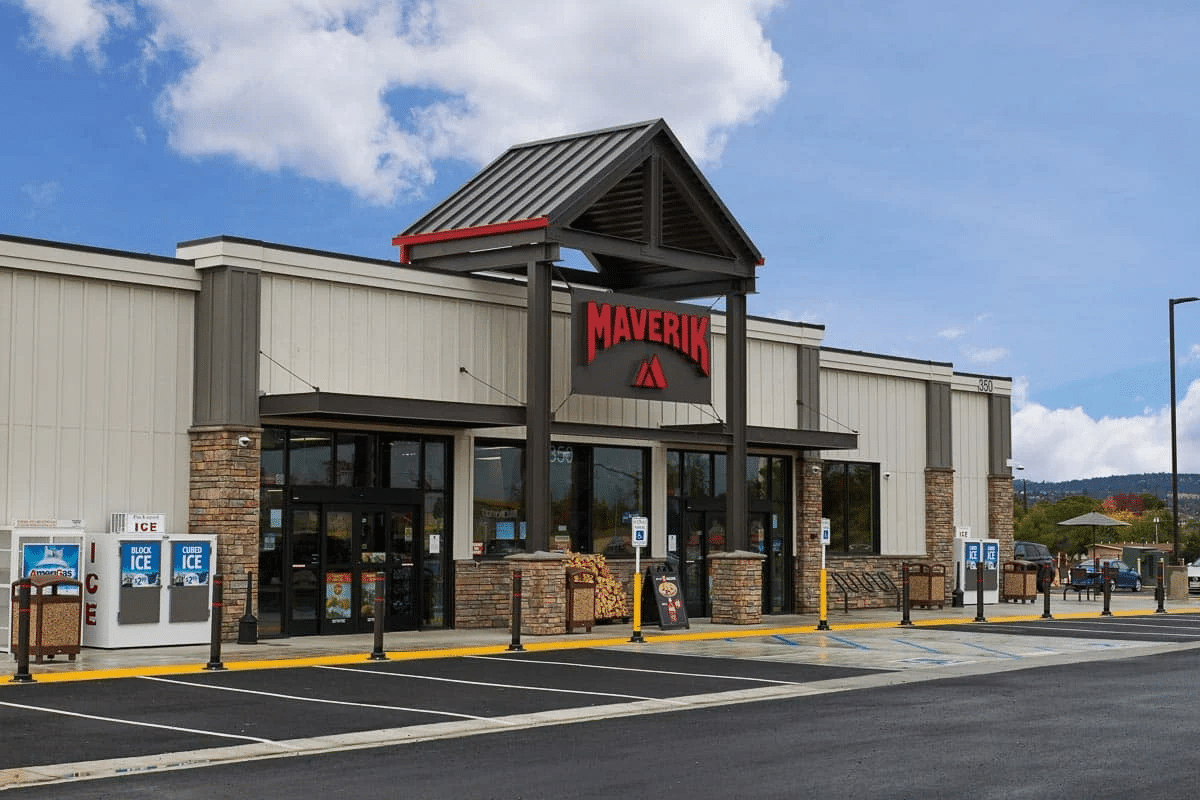
6 Gas Station Chains With Food So Good It’s Worth Driving Out Of Your Way For
We scoured the Internet to see what people had to say about gas station food. If you think the only things available are wrinkled hot dogs of indeterminate age and day-glow slushies, we’ve got great, tasty news for you. Whether it ends up being part of a regular routine or your only resource on a long car trip, we have the food info you need.
Let’s look at 6 gas stations that folks can’t get enough of and see what they have for you to eat.





