

The “generation gap” feels more like a canyon these days. It’s not just about different tastes in music or weird slang; it’s a fundamental disconnect in how we see the world. We talk past each other about everything from work ethic to homeownership, and it often ends in frustration.
But what if the root of this conflict isn’t attitude, but arithmetic? A 2022 study published in PNAS found that while a perceived threat to their values drives Baby Boomers’ resentment toward younger generations, Millennials’ resentment is fueled by something far more concrete: “practical concerns over their life prospects.”
The world we grew up in is fundamentally different from yours, and that shapes everything about how we live, work, and think. This isn’t a list of complaints. It’s a plea for context, backed by the data that defines our reality.
The economy we inherited is not the one you built your life on

The “pull yourself up by your bootstraps” advice doesn’t compute when you can’t afford the boots. We hear the jabs about “avocado toast” and Starbucks, but the numbers tell a much different story. While it’s true that overall purchasing power has increased by about 63% since 1973, that statistic hides a brutal truth: the cost of the things that build a stable, middle-class life has “skyrocketed”.
Housing is the biggest one. According to ConsumerAffairs, median home prices have exploded since 1973. The median age for a first-time buyer rose more moderately, from 29 in 1981 to 32 in 2018. According to NBC News, this has climbed more sharply since then, reaching 38 in 2025, up from 35 in 2023, and is almost a decade older than it was in the 1980s.
As University of Tampa economics professor Michael Coon puts it, buying the same house today versus just five years ago means you’d pay “approximately twice the monthly mortgage payment”.
Student loan debt isn’t a small hurdle; it’s a mountain

For many of us, our adult lives began with a mortgage-sized debt, but for a degree that no longer guarantees the same return it once did. This isn’t a personal failing; it’s a systemic crisis we were born into.
The average Millennial borrower owes over $40,000 in student loans. Gen X actually holds the highest average balance at over $44,000, often from helping their kids. And Gen Z, the youngest in the workforce, is already starting with an average debt of nearly $23,000—a balance that’s growing faster than any other generation’s.
This isn’t just an abstract number on a spreadsheet. It has devastating real-world consequences. A report by the Education Data Initiative indicates that 84% of Gen Z and 83% of Millennial borrowers say they’ve had to put off significant life investments—like buying a home or starting a business—because of their loans.
This financial anchor is tied to the soaring cost of education. Adjusted for inflation, public college tuition has jumped 177% since the 1970s.
This debt fundamentally alters the trajectory of a young person’s life. By delaying homeownership, the primary vehicle for wealth creation in America, by five or ten years, we miss out on a critical period of asset appreciation. That lost time can’t be recovered, creating a permanent financial handicap that widens the wealth gap between generations.
Our definition of a “good job” has completely changed

We don’t see work as our entire identity, and that’s a feature, not a bug. For many Baby Boomers, a career was defined by loyalty, long hours, and climbing the corporate ladder within a single company. For us, a good job is determined by balance, purpose, and mental well-being.
Baby Boomers are often motivated by traditional perks such as title, prestige, and job security. In contrast, Millennials and Gen Z prioritize flexibility, work-life balance, and purpose-driven roles.
A Deloitte survey found that less than half of Gen Z see work as central to their identity, a significant drop from 62% of Millennials. Gen Z puts their money where their mouth is: 55% prioritize working for companies that align with their social beliefs, and 53% would flat-out reject a job offer if the company’s values clashed with their own.
This isn’t entitlement. It’s a logical pivot. The old corporate contract, loyalty in exchange for a pension and lifelong security, is broken. We watched our parents get downsized after decades of faithful service.
Since the promise of long-term financial security is gone, we’ve replaced it with a demand for psychological and ethical rewards. If a job won’t guarantee our retirement, it should at least not destroy our mental health or compromise our values.
We’re not “job-hopping” for fun; we’re chasing stability and growth

The “job-hopper” stereotype completely misses the point. In an economy with stagnant real wages and disappearing pensions, changing jobs is often the only way to get a meaningful raise and develop new skills.
The Great Resignation was overwhelmingly driven by Millennials and Gen Z, who were the most dissatisfied with their jobs. The top reasons weren’t frivolous—they were wage stagnation, a lack of career advancement, and hostile work environments.
This is a pragmatic financial strategy. Gen Z’s average job tenure is a mere 1.1 years, as they are likely to move if a workplace offers no growth or purpose. With real wages falling behind inflation, staying put can mean falling behind financially.
This has also fueled the “quiet quitting” trend. It’s not laziness; it’s a silent protest. It’s about doing the job you are paid for and nothing more, rejecting the unspoken expectation of giving unpaid “discretionary hours” to a company that won’t invest back in you. This is the new career ladder—a series of strategic jumps between companies to gain skills and salary bumps that are rarely offered internally.
Mental health is health, period

We talk about anxiety and depression openly because we grew up with the language and understanding to do so. For many older generations, these topics were often taboo, whispered about, or seen as a personal failing. For us, it’s just part of the human experience, and we’re not ashamed of it.
A study noted that Millennials grew up hearing about mental illness and are therefore more accepting of it. Gen Z is pushing this even further, with 92% of recent graduates saying they want to be able to discuss mental health at work.
However, this openness is born out of necessity. According to the National Institutes of Health, major depression has doubled among teens and young adults since 2011. Jean Twenge, a psychologist and author of Generations, argues this isn’t because Gen Z is “coddled,” but because their social lives are entirely different. In-person hangouts have plummeted while online life has taken over, creating a new landscape of social pressures.
We’re not lazy; we’re burnt out

We are, to put it simply, exhausted. The relentless pressure to succeed, combined with profound financial instability and an “always-on” digital culture, has led to staggering levels of burnout that are hitting us decades earlier than they hit you.
A 2025 survey by Seramount was a massive warning flare: 67% of all American workers are experiencing burnout, but it’s an epidemic among the young. A shocking 77% of Millennials and 72% of Gen Z report burnout symptoms. The well-being gap is just as stark. Fewer than half of Gen Z (45%) and Millennials (47%) rate their personal well-being as above average. For Boomers, that number is 84%.
For younger Americans, financial worries are the number one driver of this burnout. In fact, “burnout and lack of work-life balance” is the second biggest reason Gen Z quits a job, right after an unsatisfactory salary.
When over 70% of two entire generations are running on fumes, it’s not an individual problem—it’s a systemic failure.
Climate change isn’t a distant threat; it’s our present reality

For us, this isn’t a political debate; it’s an existential crisis. We are the first generation to grow up with the full, terrifying knowledge that the planet we are inheriting is in peril, and that knowledge colors our entire future.
The data shows a clear generational divide in urgency. Six in 10 Millennials and Gen Z view climate change as a “critical threat” to the U.S., compared to just over half of Boomers (59% vs. 51%).
For older generations, such as Gen X and Boomers, climate change doesn’t even make the top half of their list of national concerns. For Millennials and Gen Z, it’s their second-biggest worry.
This “eco-anxiety” isn’t just an abstract fear; it’s a filter through which we make major life decisions. It influences whether we have children, where we choose to live (avoiding areas prone to fires or floods), and what careers we pursue. It adds a layer of existential dread to future planning that Boomers, who built their lives in a more stable environmental context, never had to consider.
Our social values aren’t a rebellion; they’re a reflection of our world

Save this article
Our profound commitment to diversity, equity, and inclusion isn’t a “woke” agenda. It’s the natural, logical result of growing up in the most diverse America in history. Gen Z is the most racially and ethnically diverse generation the U.S. has ever seen. Only 52% of Gen Zers are non-Hispanic white, compared to 61% of Millennials at the same age.
This lived experience directly shapes our worldview. Gen Z and Millennials are far more likely than older generations to say that Black people are treated less fairly than whites, and they overwhelmingly support interracial and same-sex marriage. A 2024 survey by the United Way of the National Capital Area found that 70% of Gen Z prioritize racial equity, with strong support for gender equity (58%) and LGBTQ+ rights (57%) as well.
For many Boomers, diversity was a concept to be integrated into a society that was primarily seen as a default. For Gen Z, a multicultural, multi-ethnic, and gender-diverse peer group is the default. Our demand for inclusion isn’t a radical political act; it’s a demand for our institutions to reflect the reality we already live in.
Technology isn’t an add-on; it’s the air we breathe

We’re not “addicted” to our phones; we were raised in a world where our phones are the primary tool for nearly everything. It’s not an accessory; it’s an extension of our lives.
Gen Z has little to no memory of a world before smartphones. The iPhone launched in 2007, when the oldest Gen Zers were just 10 years old. As Michael Dimock of the Pew Research Center puts it, for Millennials, constant connectivity was something they had to adapt to.
“But for those born after 1996, these are all largely assumed”. This has fundamentally changed everything. Up to 95% of teens use social media, with a third using it “almost constantly”. It shapes our communication preferences at work (we’ll send a Slack message before we pick up the phone) and even how we watch TV (the majority of young people use subtitles, while less than a quarter of Boomers do).
A Boomer might perceive a Gen Z employee using their phone as disrespectful, whereas that employee views it as an efficient means of problem-solving. The conflict isn’t about the phone; it’s about clashing cognitive styles shaped by entirely different worlds.
The path to “adulthood” looks completely different now

We aren’t “immature” or “failing to launch” because we’re hitting traditional milestones later. The entire timeline of life has slowed down, and it’s a rational response to our new reality.
The data is undeniable. Young adults today are delaying marriage, homeownership, and having children at rates that are shocking compared to when Boomers were the same age. According to Motley Fool Money research, at the age of 30, only 33% of Millennials were homeowners, a stark contrast to 48% of Boomers at the same age.
Psychologists refer to this as a “slow life strategy.” 31 Because people are living longer and higher education requires more time and money, the entire developmental path has become stretched out. Sociologists now refer to the period from the late teens to the late 20s as “Emerging Adulthood,” a distinct life stage that did not exist for Baby Boomers, who often followed a much clearer script: finish school, get a job, get married, and buy a house.
The conflict arises when the standards of the old one judge our new, more fluid life script. Delaying milestones isn’t a personal failure; it’s an adaptation.
We’re not anti-social; we’re just social differently
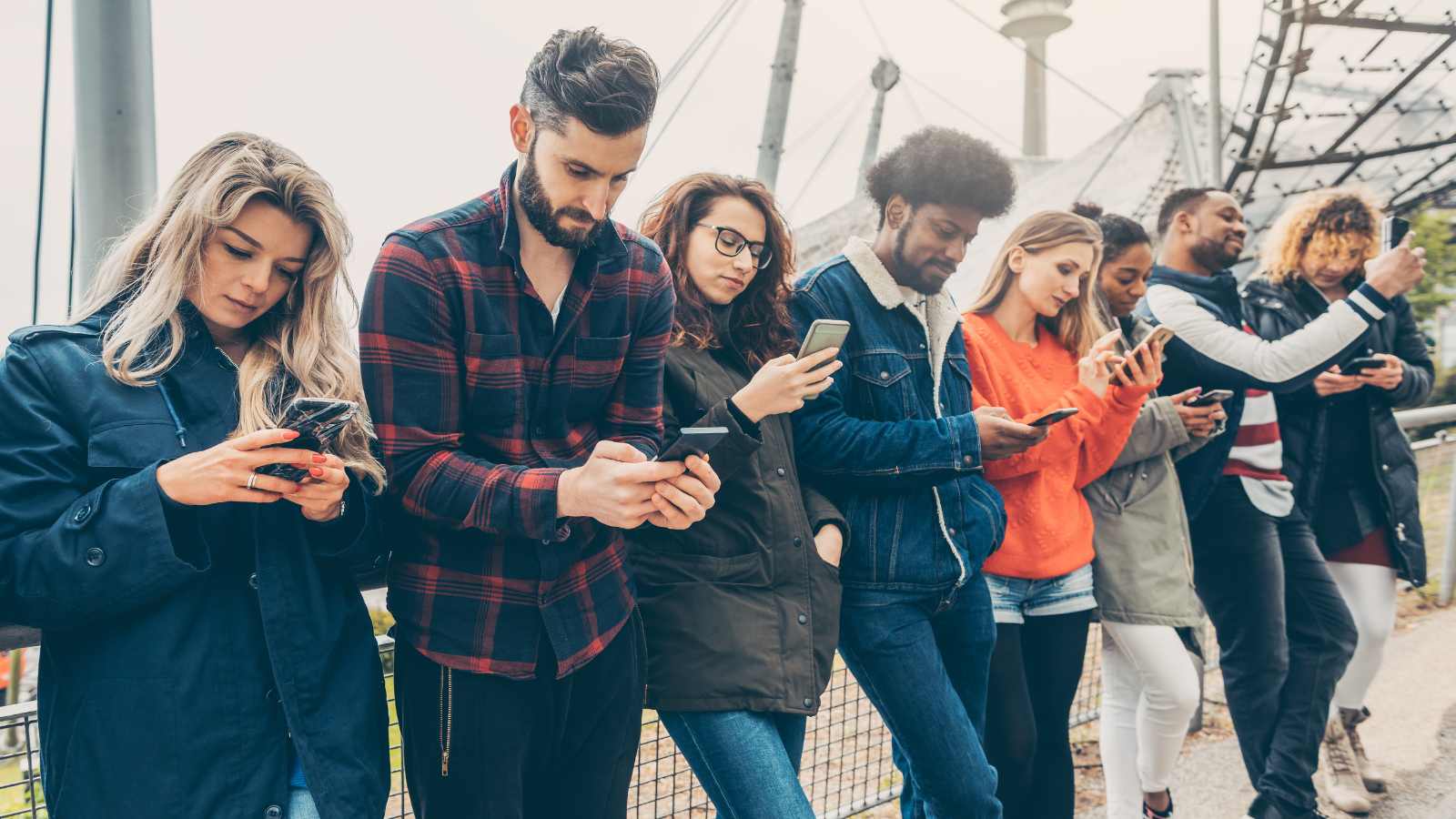
Our friendships and communities are just as real as yours, even if many of them live online. But we’re also facing a loneliness crisis that’s directly tied to this digital shift.
While older generations often prefer face-to-face conversations, younger generations have become adept at digital communication. As one Gen Z Reddit user explained, “We’re having a lot more contact with our friends than previous generations had, the way we have contact has changed, however”.
But there is a devastating dark side to this. Gen Z is officially the loneliest generation. A recent Gallup poll found that 27% of remote-capable Gen Z employees felt lonely “a lot of the day yesterday,” compared to just 15% of Gen X and 10% of Boomers.
This is directly linked to a steep decline in in-person interaction. The casual hangouts that defined Boomer teenage years—”driving around with friends” or “parties on the weekends”—have plummeted for today’s teens. We’ve traded social depth for social breadth, creating a paradox where we are more connected than ever on the surface, yet feel more isolated at our core.
We actually want to connect, but the rulebook is different

At the end of the day, most of us want the same things: a stable life, meaningful connections, and a better future for our kids. The conflict we feel comes from a place of fear—on both sides.
A fascinating study on intergenerational tension identified the core psychological drivers of this conflict, and they differ for each group.
- Boomers tend to feel a symbolic threat: A fear that a younger generation is erasing their values, culture, and legacy with a different moral code.
- Millennials and Gen Z tend to feel a realistic threat: A fear that Boomers are hoarding economic and political power, physically blocking their path to a stable future.
Understanding this is everything. You’re worried we’re destroying the world you built. We’re afraid we won’t be able to survive in the world you’re leaving behind.
We don’t need you to solve our problems. We just need you to hear that they are real, that they are different from the ones you faced, and that we are doing our best to navigate a world that follows an entirely different set of rules.
Key Takeaway

- It’s the Economy: The massive increase in the cost of foundational assets, such as housing and education, combined with stagnant real wages, is the primary driver of generational anxiety and delayed life milestones.
- Work Has Changed: Younger generations reject the “live to work” ethos, instead demanding flexibility, purpose, and mental health support from employers, as the traditional rewards of loyalty and security are no longer available.
- Different Worlds, Different Values: Growing up as digital natives in a more diverse and environmentally precarious world has profoundly shaped the social and political values of Millennials and Gen Z, from their perspectives on inclusion to the urgency of addressing climate change.
- It’s Not Personal, It’s Structural: Many behaviors stereotyped as laziness, disloyalty, or immaturity are, in fact, rational adaptations to a profoundly different economic, social, and technological reality.
Disclaimer – This list is solely the author’s opinion based on research and publicly available information. It is not intended to be professional advice.
Like our content? Be sure to follow us
6 Gas Station Chains With Food So Good It’s Worth Driving Out Of Your Way For
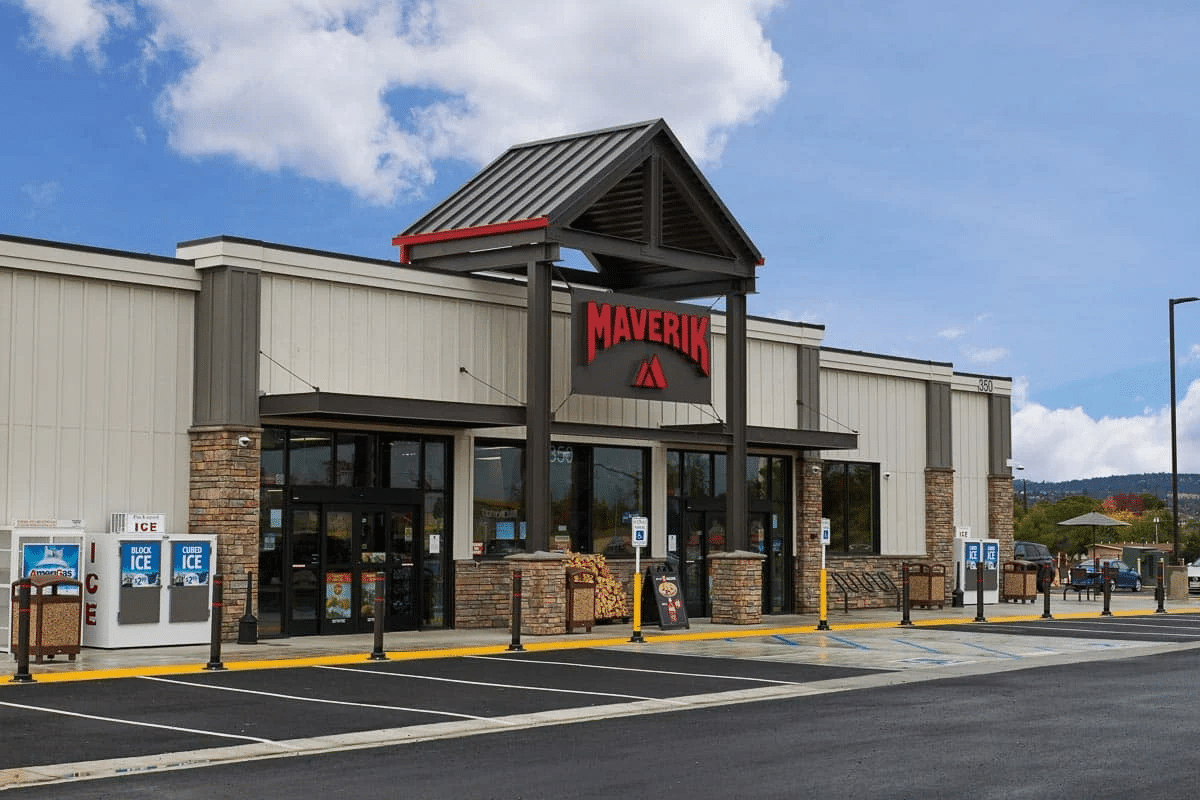
6 Gas Station Chains With Food So Good It’s Worth Driving Out Of Your Way For
We scoured the Internet to see what people had to say about gas station food. If you think the only things available are wrinkled hot dogs of indeterminate age and day-glow slushies, we’ve got great, tasty news for you. Whether it becomes part of a routine or your only resource on a long car trip, we have the food information you need.
Let’s look at 6 gas stations that folks can’t get enough of and see what they have for you to eat.
16 Grocery Staples to Stock Up On Before Prices Spike Again

16 Grocery Staples to Stock Up On Before Prices Spike Again
I was in the grocery store the other day, and it hit me—I’m buying the same things I always do, but my bill just keeps getting higher. Like, I swear I just blinked, and suddenly eggs are a luxury item. What’s going on?
Inflation, supply-chain delays, and erratic weather conditions have modestly (or, let’s face it, dramatically) pushed the prices of staples ever higher. The USDA reports that food prices climbed an additional 2.9% year over year in May 2025—and that’s after the inflation storm of 2022–2023.
So, if you’ve got room in a pantry, freezer, or even a couple of extra shelves, now might be a good moment to stock up on these staple groceries—before the prices rise later.