

Picture this: you’re standing in the grocery store, grabbing your usual bunch of yellow bananas without a second thought. But what if I told you that the simple fruit in your hand has survived diseases that wiped out entire varieties, sparked trade wars, and even changed the course of history?
The global banana market hit a staggering $125.8 billion in 2025, and it’s climbing toward $155 billion by 2034. That’s not just fruit money—that’s serious economic power packed into a curved yellow package. Still, most people are unaware of the unbelievable stories behind each bite.
Bananas have a long and adventurous history. The 13 anecdotes will examine the way you perceive your next banana forever.
The banana that disappeared overnight

You open your eyes on a morning to discover that your favorite fruit is no longer available in all the grocery shops. That’s precisely what happened with the Gros Michel banana in the 1950s. This variety was the king of bananas—sweeter and more flavorful than today’s Cavendish bananas. It also inspired artificial banana flavoring, which is why banana candy no longer tastes like modern bananas.
A vile soil fungus known as Panama disease ravaged plantations all over the world and eradicated commercial Gros Michel production. Entire countries lost their main export crop practically overnight. The banana industry was forced to find an alternative quickly, and the Cavendish variety became the preferred choice in the current times. But here’s the kicker—the same disease is now threatening Cavendish bananas through a new strain called Tropical Race 4.
Alexander the Great’s tropical discovery

Long before bananas became a grocery store staple, they caught the attention of one of history’s most famous conquerors. Alexander the Great came across the bananas on his campaigns in India in 327 BCE. His troops were said to have marveled at these sugary, tasty shrub-grown fruits that hung in massive clusters.
Greek writings from that era describe bananas as “wonderful fruits” that could feed an army on the march. The fruit proved so remarkable, and it even found reference in historical writings that stood the test of time. Alexander’s discovery helped introduce bananas to the Western world, though it would take many more centuries before they became globally popular.
Bananas aren’t fruits—they’re berries

Here’s something that’ll blow your mind: bananas are technically berries, while strawberries aren’t. Botanical definitions suggest that a berry is a fruit that forms the result of several flowers, meaning that it has one ovary. Bananas are the most brilliant example to match this description, not to mention grapes and eggplants.
The banana “tree” isn’t even a tree—it’s the world’s largest herb. That stem you observe is a mass of pressed-up leaves, and that actual stem is an underground growing stem. This giant herb grows to heights of 20 feet and bears those bunches that we adore. Each lot contains 50 to 150 individual bananas, making it one of nature’s most generous plants.
The banana republic connection

The term “banana republic” didn’t come from political science textbooks—it came from real countries whose economies depended entirely on banana exports. Other corporations, such as United Fruit Company (today it is called Chiquita), enjoyed such control over states in the Central American region that the companies swayed governments and even, in some cases, induced political turmoil.
Such corporations had gigantic plantations; they dominated the means of transportation and even had more power than local authorities sometimes. The phrase “banana republic” became shorthand for politically unstable countries dominated by foreign corporations. This is a dark history of bananas, which illustrates how bananas have been intertwined with colonialism and economic exploitation.
Bananas as nuclear radiation detectors

Bananas serve as a casual measure of radiation among the scientists. The “banana equivalent dose” compares radiation exposure to eating one banana, which contains naturally occurring potassium-40, a radioactive isotope.
Airport security systems are so sensitive that they can detect the radiation from bananas in travelers’ luggage. Radiation alarms are sometimes activated at border crossings and other nuclear facilities by truckloads of bananas. It’s a quirky reminder that even everyday foods contain trace amounts of radioactive elements.
The great banana split controversy

Latrobe, Pennsylvania; Wilmington, Ohio; and Boston, Massachusetts each claim to be the inventor of the banana split. There are monuments, festivals, and heated locals defending their right to this ice cream work of art in each town.
The most widely accepted story credits David “Doc” Strickler, a pharmacist in Latrobe, who allegedly created the first banana split in 1904 to attract customers to his soda fountain. The dessert got so many fans that it gave rise to numerous variations and retains the status of a classic American dessert. The argument remains open today, and each city has its festival of banana splits.
Bananas helped win World War II

During World War II, bananas became surprisingly strategic. To spare the use of shipping space in bringing military goods back to the U.S., the American government rationed banana imports, and bananas became a privileged luxury on the home front. Meanwhile, dried bananas were supplying much-needed food to troops in the Pacific Theater.
The war utilized banana peels because they contain potassium nitrate, a substance helpful in making explosives. The phrase “going bananas” actually gained popularity during this era, possibly referring to the excitement people felt when bananas occasionally appeared in stores. The fruit’s scarcity made it more precious than gold to many American families.
The banana phone wasn’t just a joke

Before smartphones, banana phones existed, and they were real products. During the 1970s and 80s, banana-shaped telephones emerged as a popular item, often found on coffee tables and office desks. These weren’t just gag gifts; they were fully functional rotary and push-button phones.
The shape was an exploitation of the banana’s shape, designed to rest comfortably on your mouth and ear. Even the banana peels of some of the models were lifelike and opened up to show the phone parts inside. These quirky devices became collector’s items and paved the way for other fruit-shaped electronics.
The banana that costs $120,000

The 120,000-dollar banana is a very special specimen, not an ordinary fruit, but rather a rare and historic artifact. In 2021, Maurizio Cattelan sold a banana that was duct-taped to a wall at auction to a single bidder for $120,000. This conceptual art piece, titled “Comedian,” sparked worldwide buzz and debate about what art truly means. The banana underwent several transformations during the exhibition, compelling the viewer to consider the artwork’s transient nature.
It was eye-popping to many and received worldwide press coverage as an extreme of the art market. This banana is an illustration of how an object as ordinary as fruit can turn into a statement with great value in the context of the modern art circle.
Save this article
Bananas can cure hiccups (sometimes)

One of the weirdest hiccup cures is to devour a banana, and some suggest that it does help. The fruit’s high potassium content may help regulate the diaphragm spasms that cause hiccups. Slow and intentional food chewing also has the capability of resetting breathing patterns.
Health professionals remain unconvinced by the banana hiccup cure; however, numerous people support this procedure. This remedy is present in the folk medicine of different cultures, indicating that people have recognized this connection multiple times throughout history.
The banana industry’s secret language

The banana workers use their terminology, which sounds like a code to others. “Hands” refer to individual clusters of bananas, while “fingers” are individual fruits. A “bunch” contains multiple hands, and workers count bananas by “grades” based on size and quality.
The ripeness scale is represented by an interval of numbers (1-7), in order of the green color (1) to the full yellow with brown spots (7). Temperature is measured in “banana days”—the cumulative temperature exposure needed for proper ripening. These technical words are the guarantee of quality and aid in the coordination of the complicated chain of supply worldwide.
Bananas are clones fighting for survival

Every Cavendish banana you’ve ever eaten is genetically identical to every other Cavendish banana. The commercial bananas are all clones, raised as cuttings, not as seeds. They are prone to these diseases, which can decimate whole crops as they are genetically homogeneous.
Researchers are in a hurry to engineer resistance to the diseases in the banana by genetic modification and conventional crossing. Certain experimental bananas are equipped with genes from wild banana varieties or even entirely different plants. The future of bananas hinges on escaping the clone trap, which jeopardizes global supply.
The banana’s journey from green to yellow is carefully controlled

Your grocery store’s bananas that are perfectly yellow were only a few days ago green. The fruit is allowed to ripen in a special environment-controlled warehouse under ethylene gas. Workers monitor temperature, humidity, and gaseous concentration to provide consistent ripening of thousands of bananas.
The timing is highly accurate, allowing companies dealing in bananas to determine when the bananas will reach the proper ripeness. Other institutions operate computer-regulated systems that change on a minute-by-minute basis. Artificial ripening is a process that ensures bananas arrive at stores at their peak quality, regardless of the shipment’s travel time.
Bananas might disappear again

The fungus disease that wiped out the Gros Michel banana varieties is now targeting the Cavendish ones. Tropical race 4, which originated in Southeast Asia, has since spread to Latin America, imperiling the world’s stocks of the banana. Unlike the 1950s crisis, there’s no obvious replacement variety waiting in the wings.
Researchers are desperately trying to come up with resistant bananas after genetic modification, hybridisation with wild bananas, and even allowing bananas to grow in disease-free, sterile laboratory conditions. There are experimental bananas that taste and have a different appearance from the present ones. Future generations might eat bananas that are orange, square-shaped, or taste completely different from today’s fruit.
Key takeaway

Bananas aren’t just simple snacks—they’re survivors of diseases, witnesses to history, and warriors in an ongoing battle for genetic diversity. From Alexander the Great’s ancient encounters to modern genetic laboratories, these curved yellow fruits have shaped economies, influenced politics, and even helped win wars.
The $125.8 billion banana industry faces unprecedented challenges from climate change and disease, but innovation continues pushing the boundaries of what’s possible. Bananas will, one way or another, continue to surprise us due to their adaptability, whether through genetically modified bananas, sustainable agriculture, or entirely new varieties.
Next time you grab a banana, you’re holding thousands of years of human ingenuity, agricultural innovation, and pure luck. That simple fruit represents humanity’s ability to overcome obstacles, adapt to challenges, and turn a wild jungle plant into one of the world’s most beloved foods.
Disclaimer–This list is solely the author’s opinion based on research and publicly available information. It is not intended to be professional advice.
6 Gas Station Chains With Food So Good It’s Worth Driving Out Of Your Way For

6 Gas Station Chains With Food So Good It’s Worth Driving Out Of Your Way For
We scoured the Internet to see what people had to say about gas station food. If you think the only things available are wrinkled hot dogs of indeterminate age and day-glow slushies, we’ve got great, tasty news for you. Whether it ends up being part of a regular routine or your only resource on a long car trip, we have the food info you need.
Let’s look at 6 gas stations that folks can’t get enough of and see what they have for you to eat.
16 Grocery Staples to Stock Up On Before Prices Spike Again
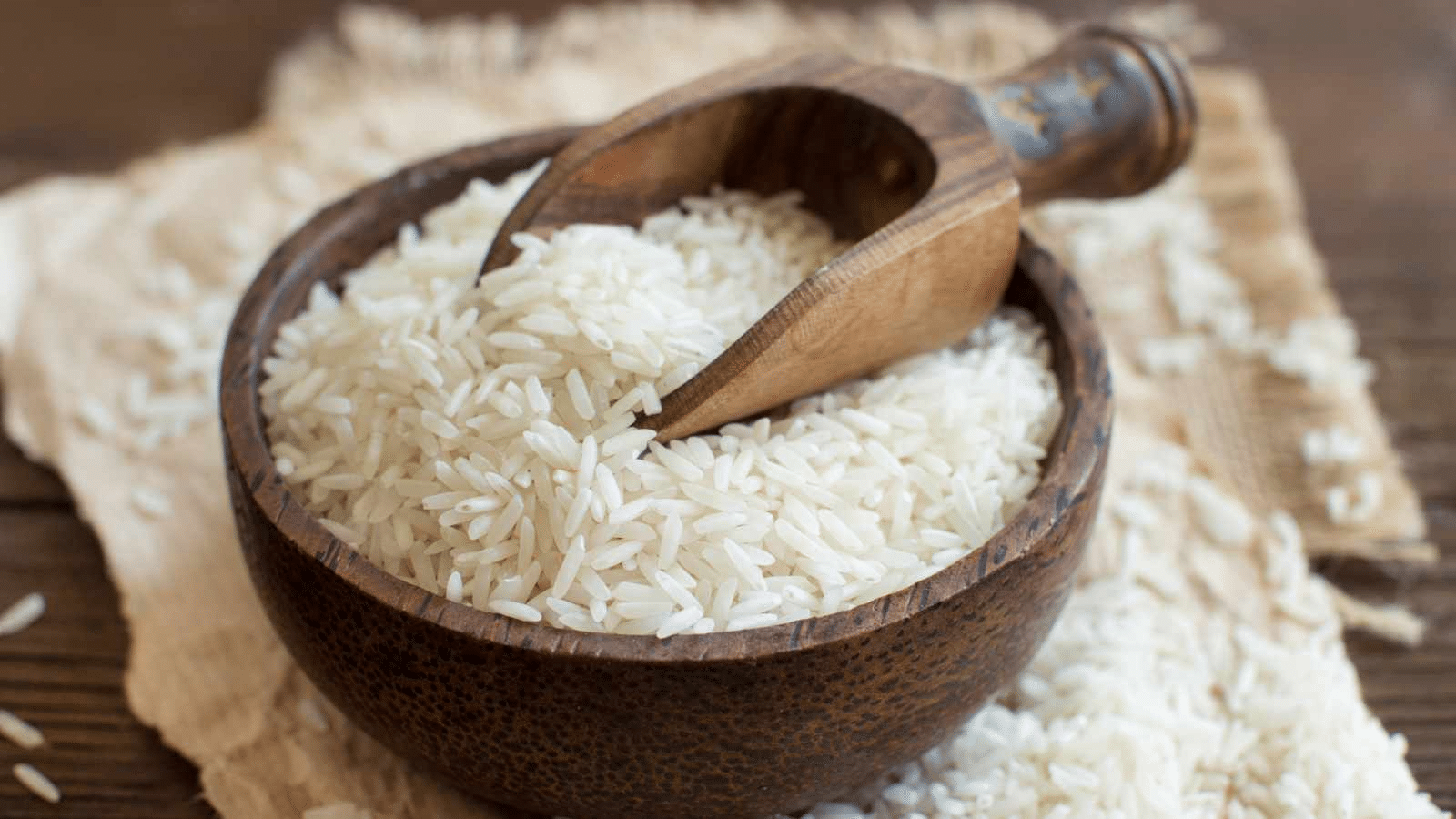
16 Grocery Staples to Stock Up On Before Prices Spike Again
I was in the grocery store the other day, and it hit me—I’m buying the exact same things I always do, but my bill just keeps getting higher. Like, I swear I just blinked, and suddenly eggs are a luxury item. What’s going on?
Inflation, supply-chain delays, and erratic weather conditions have modestly (or, let’s face it, dramatically) pushed the prices of staples ever higher. The USDA reports that food prices climbed an additional 2.9% year over year in May 2025—and that’s after the inflation storm of 2022–2023.
So, if you’ve got room in a pantry, freezer, or even a couple of extra shelves, now might be a good moment to stock up on these staple groceries—before the prices rise later.
Like our content? Be sure to follow us





