Ever bitten into a juicy hot dog on the Fourth of July and thought, “This is as American as it gets”? You’re not wrong to feel that way. But you might be surprised to learn that many iconic American foods actually have roots in other countries.
The Food Timeline states that many foods considered quintessentially American, including apple pie, hamburgers, and hot dogs, have European origins. In fact, culture, even though its origins tell a much more global story.
These are not dishes that simply appear on our plates; they were carried across oceans and between generations to acquire new flavors and become the staples we know and love. Now let’s look at foods that you likely assumed were uniquely American but were actually born beyond the border.
Apple pie

The saying “as American as apple pie” is a bit of a fib. According to Baked to Taste, the first known apple pie recipes appeared in England around the 14th century.
It’s a classic that’s really been embraced by the U.S. The dessert, for all its foreign provenance, has become a symbol of comfort and tradition in the United States. Pie, “they can encapsulate all of mankind’s culinary history.
Meatloaf

As much as meatloaf is the epitome of American comfort food, its roots extend all the way to medieval Europe and the Mediterranean.
This humble preparation of ground meat and seasonings has been with us for centuries, dating back to before the United States even existed as a country. It’s still a go-to for many households. Its long history demonstrates how plain, hearty food can endure through many years.
Hot dogs
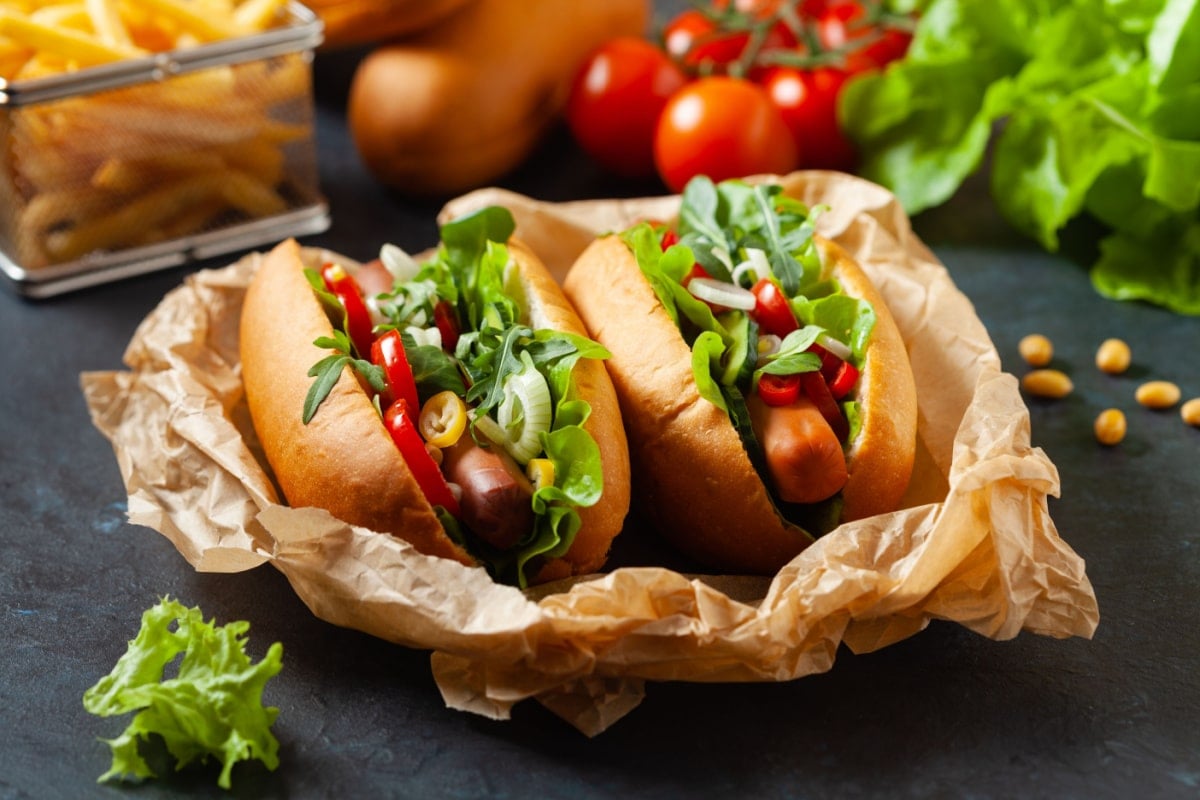
Hot dogs are the undisputed champions of summer barbecues, but their story begins in Germany or Austria. European immigrants brought these tasty sausages to the United States, where they quickly became a national favorite.
Americans’ love for them is undeniable; the National Hot Dog and Sausage Council states that in 2024, Americans spent more than $8.5 billion on hot dogs and sausages in US Supermarkets.
Macaroni and cheese

Rich, cheesy, and oh-so-filling, mac and cheese owes a debt of gratitude to similar dishes found in Northern Europe.
It is often said that Thomas Jefferson made mac and cheese popular in these States through having enjoyed it in France and returned with the recipe; recent fads for cheese-based comfort foods have only driven its status up as people hunt for meals that are simultaneously indulgent and nostalgic.
French fries

Despite their name, French fries do not actually come from France. The origin of this delicious crispy potato snack is hotly debated by science historians who claim that Belgium, Spain, and France are each responsible for the creation of fried potatoes. And there’s no debating just how much Americans, by and large, love them.
According to The Business Research Company, a report published in January 2025, the global French fries market was valued at $17.45 billion in 2024. It was projected to reach $18.44 billion in 2025, indicating a compound annual growth rate (CAGR) of 5.6%. They consistently rank as one of the top three most-ordered side dishes across the country, proving that no matter where they came from, they found a permanent home here.
Ketchup

The bright red bottle of ketchup in your fridge has an unexpected back story. It originated from kê-tsiap, a fermented fish sauce in China.
It worked its way through Southeast Asia, transforming along the way to become the tomato-based condiment we recognize today. Americans sure eat it up, “Ketchup’s path from a fish sauce to a leading condiment tells the story of culinary acceptance.”
Mustard

Mustard was eaten by the ancient Romans, long before it was squirted on hot dogs at baseball games. Its sour, pungent taste has graced some of the world’s greatest foods for thousands of years.
Bacon

The finger-licking-good saltiness of bacon has a long and storied history, going deep into the past, all the way to China in 1500 BC. Salt-curing pork belly to preserve it is something that has been done for hundreds, if not thousands, of years.
According to Metatech Insights, the US bacon market was worth around USD 72.24 billion in 2024 and is projected to increase to USD 96.15 billion by 2034, growing at a CAGR of around 2.90% during the forecast period. What is interesting is that, even as the older form of bacon receives its plant-based due, the rise of plant-based bacon alternatives, particularly among Gen Zers, demonstrates how this ancient food continues to evolve.
Mayonnaise

Mayonnaise, the creamy grounding of innumerable salads and sandwiches, was first whipped up in France or in Spain.
Save this article
It was not, however, an American invention, although it is now a staple in American kitchens. This Swiss Army knife of a condiment has since been embraced wholeheartedly and become a mainstay of everything, from potato salad to turkey clubs.
Pickles

Pickling cucumbers have been around for a long time, at least as long ago as 2030 BC, in the area of Mesopotamia known as the Tigris Valley. Pickles were also a method of preserving food for long journeys, and they have been a staple of the diet of people of many cultures worldwide for thousands of years.
According to the IMARC Group, the global pickles market is expected to reach USD 16.8 billion by 2033, exhibiting a compound annual growth rate (CAGR) of 3.79% during the forecast period of 2025–2033. This enduring love of pickles highlights the rich, multicultural food culture of the country.
Chocolate bars

The first solid chocolate bar was made by a British company, J.S. Fry and Sons, in 1847. Before that, the most common way of taking chocolate was as a drink.
Though it may be the Swiss and the Belgian chocolatiers who are best known, it was the British who first turned chocolate into a movable feast. This is due to new flavor combinations and an increase in demand for ethically sourced cocoa.
Cuban sandwich

This one may be a trick question, but the Cuban sandwich was actually invented in Key West, Florida, by Cuban immigrant workers in cigar factories. It’s a tasty mix of cultures, with Cuban ingredients in an American setting.
The sandwich remains a deli favorite across the U.S. A report by Growth Market Reports indicates the global frozen Cuban sandwich market reached $1.14 billion in 2024 and is projected to grow at a 6.2% CAGR, reaching $1.95 billion by 2033.
Pancakes

Making pancakes on a Saturday morning is a quintessentially American activity. Still, pancake-like dishes have been prepared since the Stone Age.
Simple flatbreads are a staple food in dozens of ancient cultures, from the tortillas of Mesoamerica to the roti of India.
Chop suey

Chop suey is a typical dish on American-Chinese restaurant menus that you will not find in traditional Chinese cookery. Or mustache-twirling crooks, perhaps? Normal civilians looking to make trouble? It was created in San Francisco by Chinese-American chefs experimenting with dishes that would appeal to local, non-Chinese palates.
This kind of fusion food has become a big part of the U.S. dining scene. National Day Calendar notes that National Chop Suey Day is observed annually on August 29.
Key takeaway

The vast majority of the foods we think of as quintessentially American are also the result of a long and fascinating global history. They are a tasty reminder of how cultures mix and learn from one another, making new traditions as they go.
If a melting pot does exist, it seems that the cheeseburger is certainly an experience, maybe the experience, of its pound of flesh; to crunch through one is to hear a refrain of history, one that’s sung not only to its own lingering satisfaction, but to the continuation of the American Dream itself. And yet the same could be said for every terrific dish on this list.
Disclaimer – This list is solely the author’s opinion based on research and publicly available information. It is not intended to be professional advice.
Disclosure: This article was developed with the assistance of AI and was subsequently reviewed, revised, and approved by our editorial team.
12 laws and rules about food in other countries

12 Laws And Rules About Food In Other Countries
Food is more than just nourishment; it’s a reflection of culture, tradition, and, in many cases, the law. Around the world, various countries have established distinct food regulations that may surprise travelers and food enthusiasts alike.
These laws reveal how deeply societies value what ends up on their plates. Here are 12 fascinating food laws and rules from around the globe that show just how diverse and sometimes unexpected our relationship with food can be.
16 grocery staples to stock up on before prices spike again
16 Grocery Staples to Stock Up On Before Prices Spike Again
I was in the grocery store the other day, and it hit me—I’m buying the exact same things I always do, but my bill just keeps getting higher. Like, I swear I just blinked, and suddenly eggs are a luxury item. What’s going on?
Inflation, supply-chain delays, and erratic weather conditions have modestly (or, let’s face it, dramatically) pushed the prices of staples ever higher. The USDA reports that food prices climbed an additional 2.9% year over year in May 2025—and that’s after the inflation storm of 2022–2023.
So, if you’ve got room in a pantry, freezer, or even a couple of extra shelves, now might be a good moment to stock up on these staple groceries—before the prices rise later.