

Ever catch yourself nodding along to everyone else’s opinions just to avoid that awkward silence? We’ve all been there. But sometimes the most controversial takes are the ones worth examining.
These aren’t your run-of-the-mill hot takes designed to spark outrage; they’re genuinely unpopular opinions backed by emerging research, shifting cultural trends, or simple logic that challenges our assumptions. Gallup 2025 reports reveal pervasive public distrust in traditional media and government agencies, with trust ratings at historic lows, demonstrating how many widely held beliefs are being questioned by growing segments of the population.
Let me be clear, I’m not saying these are the gospel truth. But dismissing them outright might mean missing some important insights about where we’re headed as a society.
Money actually can buy happiness (When used right)

You’ve probably heard “money can’t buy happiness” a thousand times, but research keeps chipping away at this feel-good platitude. Numerous studies confirm that money is a factor in making people happier, but only up to a specific limit, and primarily when it is used to meet primary needs, such as housing, medical care, and food security.
A major 2025 multinational psychology study led by the University of British Columbia found that money can buy happiness, but what you spend it on matters. Spending on gifts, experiences, and time-saving services, such as house cleaning, significantly boosts happiness, especially in wealthier nations. Conversely, paying off debt or housing costs brought less happiness in these countries.
The “money doesn’t buy happiness” myth often comes from wealthy people who’ve forgotten what financial stress feels like or have poor spending habits.
Vegetables are actually better than fruit

Before you roll your eyes, hear this out. While fruits often receive the most attention for their health benefits, vegetables are typically higher in essential nutrients and lower in sugar and calories.
Spinach is an excellent source of vitamins and minerals and contains fiber. However, it doesn’t come with the sugar spike that an apple would.
Nutritionally speaking, vegetables are a better value for your caloric buck. They contain less natural sugar, more fibre, and are often richer in micronutrients. Plus, you can consume larger amounts without having to worry about blood sugar crashes or excess calories.
Cancel culture is actually too powerful

This is a tricky one because reasonable people disagree about what “cancel culture” even means. But there’s growing evidence that our current approach to public accountability has some serious flaws. When people lose their livelihoods because of a tweet they wrote more than ten years ago or an ill-worded comment, we’re not holding them accountable; instead, we’re creating a climate of fear that stifles helpful discussion.
A 2025 study published in Social Science & Medicine examines how cancel culture often prioritizes punitive measures over restorative justice —education, apology, and redemption —and highlights the need for a more balanced approach to public accountability.
Proper accountability is about education, apology, and redemption, not an irredeemably permanent banishment from public life.
Most people shouldn’t go straight to college

The notion that everyone needs to attend college immediately after high school is relatively recent and increasingly questioned. At 18, most people don’t know what they want to do with their lives, yet we expect them to choose expensive degree programs.
Taking gap years to work, travel, or explore interests provides young adults with a real-world perspective, making any subsequent college experience more meaningful.
They go to campus with better goals and work habits and are often more successful academically. The mad dash to college is frequently accompanied by degree-hopping, debt piling, and college graduates with degrees and no purpose.
Daily showers aren’t necessary for everyone

Your daily shower routine may be doing more harm than good. Dermatologists have long preached that frequent washing strips the skin of its natural oils, unbalances the microbiome, and can actually make you dirtier by removing beneficial bacteria.
If you’re not doing manual labor, working out intensely, or living in extreme conditions, you might be better off showering every other day (or even every few days), as this may be best for your skin and hair.
According to Healthline, there is no universal rule for shower frequency. Some dermatologists recommend showering only 2 to 3 times a week, especially for people with dry or sensitive skin, while others find daily showers suitable depending on lifestyle and skin type.
There are highly advanced systems within your body that keep it clean, and chronically interfering with these systems can disrupt them.
Self-help books don’t actually help

The self-help industry is worth billions, but the research on its effectiveness is pretty underwhelming. Most self-help books repackaged the same concepts, and reading about change is not the same as creating it.
Psychological studies indicate that enduring behavior change depends on external accountability, social support, and practice; these are things that books alone cannot deliver.
People who get the most out of self-help books already have the motivation and structure to make a change; the books provide a framework for them to follow.
Nostalgia is holding back cultural innovation

Our sentimentality regarding “the good old days” may be keeping us from inventing better new ones. When every new movie gets compared to classics from decades past, or when we demand that new music sound like the hits we grew up with, we’re creating impossible standards that discourage innovation.
Every age has its masterpieces and its garbage; we tend to forget the forgettable things from the past. Researchers from Re.connect (2025) describe nostalgia as an emotional utility that provides comfort and grounding in an unstable digital and social environment, but caution that excessive backward-looking can limit fresh cultural development and storytelling.
By constantly looking backward, we miss the opportunity to create truly innovative forms of art, entertainment, and culture that resonate with the realities of our current experience.
Streaming services made TV worse

Remember how watching television was actually relaxing? Now you are scrolling through options more than actually watching anything. The promise of streaming was liberation from cable’s monopoly, only to create a splintered, overwhelming environment where choice paralysis reigns.
Binge-watching has disrupted the shared cultural experience of television. Remember talking about last night’s episode at work? Now, everyone’s at a different point in different shows, so we avoid discussing spoilers and instead have discussions.
The recommendation engines also create echo chambers, depriving us of the fortunate discoveries that were sometimes made possible by broadcast schedules.
Trust in relationships is overrated

Save this article
This may sound cynical, but hear me out: communication and mutual respect are more important than blind trust. Trust without understanding often results in disappointment when people inevitably act as they are designed to, rather than as we would like them to.
According to a 2023 study published by the National Institutes of Health, trust is a belief in someone’s reliability and integrity, while respect is a deeper acknowledgment of their worth and feelings.
Healthy relationships are based on accepting people for who they are, not on expecting them to be what we want them to be.
Android phones actually have more advantages
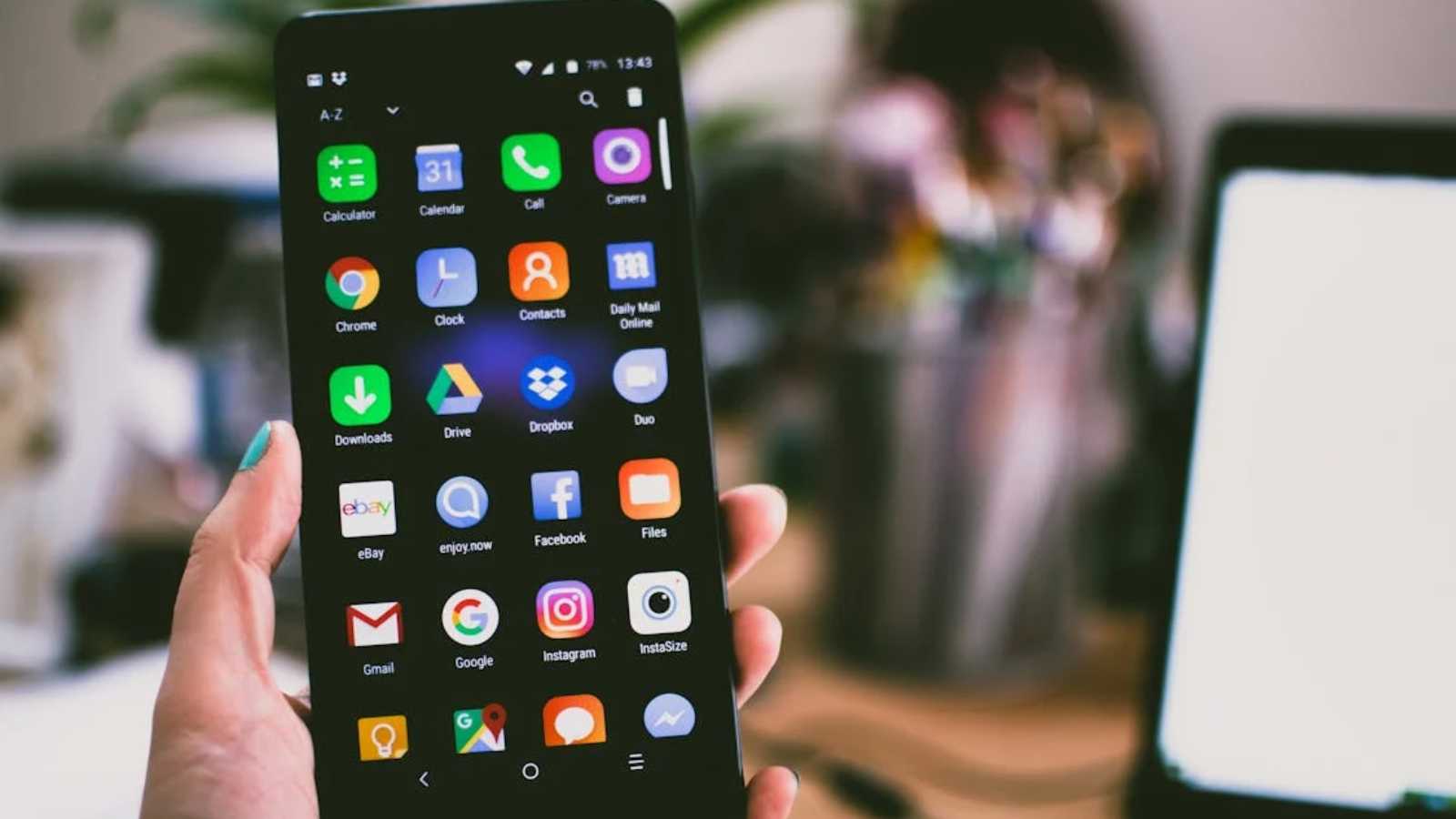
While the iPhone tends to receive the most hype, Android phones are often more affordable and customizable, and they often offer features that Apple eventually adopts years later. The “iPhone is better” narrative persists partly because of effective marketing and partly because of social status associations.
Android’s open ecosystem leads to more innovation and choice. You can find Android phones at every price point with features tailored to different needs.
They usually offer better camera quality, longer battery life, and more customization options compared to iPhones at similar prices (or even lower).
The idea of world peace is actually boring

This sounds horrible at first glance, but consider this: human beings require challenge and conflict (not necessarily violent conflict) to thrive. A world without any tension, competition, disagreement, etc., would be psychologically stifling.
Conflict drives innovation, art, and personal growth. The aim should not be to eliminate all conflict, but to channel it into constructive outlets such as competitive sports, intellectual competition, artistic expression, and political debate, which lead to positive change rather than destruction.
A study published by the American Psychological Association highlights that healthy conflict resolution contributes to stronger connections and improved emotional regulation, facilitating resilience and relationship satisfaction.
Soccer is more American than baseball

Despite baseball’s reputation as “America’s pastime,” participation in soccer among American youth has increased significantly over the past few decades.
More kids play soccer than any other sport, and soccer’s global connectivity aligns better with America’s increasingly diverse population. Baseball is an intensely nostalgic and regional sport, but soccer is the future of American sports culture.
The World Cup draws more American viewers than many baseball games, and Major League Soccer is continuing to expand as baseball faces a crisis of aging fans.
Social media doesn’t bring people closer

Despite promises of connection, social media often increases feelings of isolation and inadequacy. Genuine relationships are built on time, vulnerability, and shared experiences that just can’t be replicated with likes and comments.
Social media may help us stay connected with people we haven’t seen in years, but it isn’t fostering the kind of deep connections that contribute to well-being and happiness.
Research from McLean Hospital (2025) also emphasizes that social media fosters a false sense of connectedness that does not replicate the benefits of in-person, vulnerable, time-invested relationships, which are essential for emotional well-being.
Concerts are often a waste of money

Between the ticket, parking, food and drinks, and transportation, attending a concert can quickly cost hundreds of dollars, with an experience that’s generally less than optimal.
You’re almost always far from the stage, you’re hearing wildly different sounds, and you’re surrounded by people talking or recording everything with their phones. If you wear good headphones and have a good sound system, the audio quality can be better than most live venues.
So add to that the fact that you don’t have to contend with crowds, traffic, and sky-high concession prices, and staying home becomes pretty attractive for purely musical entertainment.
You can have kids before marriage

The social pressure to get married before having children is increasingly outdated and no longer reflects how many successful families actually operate. Marriage doesn’t necessarily guarantee that children are better cared for, and legal documents aren’t always necessary in all stable, committed relationships.
What’s important for kids is the presence of adult, committed, stable relationships, not the legal status of the relationship in which they are raised. Some of the best parents are unmarried couples who’ve deliberately chosen their family structure, without conforming to traditional expectations.
According to the CDC (2025), about 40% of children in the U.S. are born to unmarried mothers, highlighting that non-marital childbirth has become common and socially normalized.
Disclaimer – This list is solely the author’s opinion based on research and publicly available information. It is not intended to be professional advice.
Like our content? Be sure to follow us
14 Things That Label You as ‘Uneducated’ on Social Media

14 Things That Label You as ‘Uneducated’ on Social Media
Welcome to the digital world, a place as intriguing as treacherous, where your online persona can instantly charm or alarm others. In this realm, your social media presence is your calling card, a digital mirror reflecting your thoughts, beliefs, and, perhaps, inadvertently, your level of education. Yet, fear not! This guide is here to help you navigate the vast ocean of social
6 Gas Station Chains With Food So Good It’s Worth Driving Out Of Your Way For

6 Gas Station Chains With Food So Good It’s Worth Driving Out Of Your Way For
We scoured the Internet to see what people had to say about gas station food. If you think the only things available are wrinkled hot dogs of indeterminate age and day-glow slushies, we’ve got great, tasty news for you. Whether it ends up being part of a regular routine or your only resource on a long car trip, we have the food info you need.
Let’s look at 6 gas stations that folks can’t get enough of and see what they have for you to eat.