

Ever feel like it’s not the big disasters but the tiny, everyday frustrations that truly test your sanity? Psychologists call them “daily hassles,” and they’re the small, frequent challenges that can pile up and seriously mess with our well-being.
It’s a huge deal. In fact, recent research from the American Psychological Association shows that 41% of parents in the U.S. feel so stressed most days that they can’t function, with these little household pressures playing a major role.
According to Harvard psychologist Daniel Gilbert, we sometimes recover more quickly from huge problems than from minor ones. Why? Because the small stuff isn’t “bad enough” to trigger our psychological defenses, allowing the irritation to stick around for years.
These small frustrations aren’t just in your head—they’re a universal experience backed by science, and ignoring them can have a bigger impact on our lives than we think. So, let’s commiserate together over the little things that drive us all up the wall.
The never-ending pile of laundry

You know the feeling. It’s the chore that one person described as “an adult version of the never-ending story but as a horror movie”. You wash, you dry, you fold (maybe), and just when you think you’re done, a new pile magically appears.
Believe it or not, laundry is one of America’s most divisive chores. This love-hate relationship explains why 31% of us admit to leaving clean clothes in the basket for a day or more, with 4% letting them sit for a week or longer.
It’s a skill, really. A SWASH survey found that 65% of millennials and Gen Zers see laundry as a skill that needs to be taught, with many turning to YouTube and Instagram for tutorials.
This isn’t just about dirty clothes; it’s about the constant, low-grade effort required to keep our lives from descending into chaos.
That one squeaky door you’ve learned to ignore

It’s the herald of your midnight snack run, the alarm clock for anyone sleeping in. Every home seems to have at least one door that shrieks every time it’s opened. And we just… live with it.
This is a classic case of procrastinated maintenance, and it’s practically an American pastime. A staggering 59% of homeowners admit to putting off necessary repairs because they can’t afford them, and 44% have delayed routine maintenance in the last year.
But that squeak might be more than just an annoyance. According to home expert Graning, “A squeaky door isn’t just annoying; It’s an audible neon sign saying ‘Something’s not right.’ It could be a sign of uneven floors, warped frames, or even structural issues”.
That little squeak is the perfect example of a problem so minor we don’t fix it, allowing it to irritate us indefinitely while potentially hiding a bigger issue.
The mysterious case of the missing sock

It’s one of life’s great unsolved mysteries. You load the washing machine with pairs, but you pull out singles. Where do they go? Is there a portal to another dimension in your dryer?
This isn’t just in your head—scientists have actually studied this. Research commissioned by Samsung found that the average person loses 15 socks per year. Over a lifetime, that adds up to 1,125 socks vanishing into the ether.
They even developed a formula, the “Sock Loss Index,” to calculate the probability of losing a sock: Socklossindex=(L+C)−(P×A), where L is laundry size, C is washing complexity, P is your positive attitude towards laundry, and A is the degree of attention you pay.
The missing sock is our favorite symbol for the small, absurd ways our orderly lives fall apart, and we invent everything from monsters to mathematical formulas to cope with it.
Playing Tetris with mismatched food containers

You open the cabinet, and an avalanche of plastic and glass tumbles out. You have 47 containers and 82 lids, yet somehow, none of them match. It’s chaos.
This is a key battleground in the war against kitchen clutter, a major source of household stress. The average American home has around 300,000 items, and it feels like half of them are lidless Tupperware. Professional organizers say it’s one of the top things clients complain about.
It all comes down to delayed choices. As professional organizer Barbara Hemphill famously said, “Clutter is nothing more than postponed decisions”. We keep the container hoping the lid will turn up, and we keep the lid just in case.
That cabinet isn’t just messy; it’s a physical manifestation of indecision, and it drains a little bit of our mental energy every time we open it.
The dreaded “phone storage full” notification

You’re lining up the perfect photo of your kid, your pet, your artisanal brunch. You tap the button, and there it is. The pop-up of pure evil: “Cannot Take Photo.”
This is a painfully common modern problem. One study found that 22% of smartphone users run out of storage every single month, with nearly 10% running out daily. And even though the average phone’s storage capacity has ballooned to over 100GB, our digital hoarding has grown even faster.
We’re drowning in data we can’t manage. As work-life balance expert Jeff Davidson puts it, “The constant dilemma of the information age is that our ability to gather a sea of data greatly exceeds the tools and techniques available to sort, extract, and apply the information we’ve collected”.
That “storage full” message triggers a unique kind of anxiety, forcing us into a stressful triage of our own digital memories.
When the Wi-Fi slows to a crawl for no reason

One minute you’re streaming in glorious 4K, the next you’re watching a spinning wheel of doom. The Wi-Fi has, for no apparent reason, decided to take a vacation.
Slow internet is one of the top issues people complain about to the Federal Communications Commission (FCC). It disrupts our work, our entertainment, and our connection to the outside world.
But don’t blame your provider just yet. Tech experts say the culprit is often inside your own home. Your router might be in the wrong spot (it hates being near metal, concrete, or even your fish tank), or the signal could be getting jammed by your microwave or baby monitor.
The frustration comes from feeling powerless over this invisible force that our modern lives completely depend on.
I hope this works out for me. The wobbly chair that requires a coaster strategy

You sit down, it rocks, and the search for a folded napkin or a spare coaster begins. It’s a tiny, ridiculous engineering challenge we face every day.
This little wobble is part of a massive industry. The U.S. furniture repair market hit $2.2 billion in 2024, but the high cost of a professional fix for a minor issue means most of us just live with it.
It’s more than just an unstable surface; it’s a disruption to our sanctuary. As designer Nate Berkus says, “Your home should be a story of who you are, and be a collection of what you love”. A wobbly piece of furniture adds a note of constant, low-level irritation to that story.
That folded napkin isn’t just a shim; it’s a symbol of our tendency to apply temporary fixes to underlying problems we’ve deemed “not bad enough” to solve for good.
A sink full of dishes that seems to refill itself

You did it. You conquered Dish Mountain. You turn around to admire your gleaming, empty sink, only to spot a single, lonely coffee mug that has appeared out of thin air. The struggle is real.
Doing the dishes is officially one of America’s most hated chores. It’s tied for the #1 least favorite household task, according to a YouGov poll. It’s also a major source of roommate drama, with most people getting peeved by messes left in common areas.
The solution is all about routine. It’s about preventing the pile-up in the first place.
The frustration isn’t just about the chore itself; it’s about the feeling that it’s a battle you can never truly win.
The shower curtain that gets a little too friendly

You’re in the shower, minding your own business, when you feel its cold, clammy embrace. The shower curtain is attacking you again.
This isn’t a paranormal event; it’s just physics being a jerk. Scientists have a couple of theories. One is the Bernoulli Principle, which says the fast-moving water creates a low-pressure zone inside the shower, causing the higher-pressure air outside to push the curtain in.
Another, confirmed using high-powered computer modeling, is the “horizontal vortex.” Basically, the shower spray creates a tiny, sideways hurricane, and the low-pressure “eye” of the storm sucks the curtain right toward you.
So next time it happens, don’t get mad at your curtain. Get mad at the fundamental laws of fluid dynamics.
The mountain of junk mail

Save this article
You walk to the mailbox, a brief moment of hope in your heart. Could it be a letter from a friend? A birthday card? Nope. It’s a credit card offer, a pizza flyer, and a catalog for a store you’ve never been to.
Even in our digital world, the sheer volume of physical junk mail is staggering. In 2023, the USPS delivered 59 billion pieces of what it calls “Marketing Mail”. That firehose of paper now accounts for 62% of all mail in the average American’s mailbox, excluding packages.
This isn’t just annoying; it’s wasteful. The average American generates 4.9 pounds of trash every single day, and paper products are the single biggest contributor.
Junk mail is the physical version of spam, an unwelcome intrusion that costs us time and mental energy every single day.
A perpetually cluttered kitchen counter

You clean it off completely. It stays pristine for exactly seven minutes. Then the mail appears. Then the keys. Then a permission slip, a half-empty glass of water, and a rogue banana. The kitchen counter is a clutter magnet.
This visual chaos has a real, measurable effect on your brain and body. A UCLA study found that women who described their homes as “cluttered” had higher levels of the stress hormone cortisol throughout the day. Even worse, other research shows people in a messy kitchen are twice as likely to reach for cookies over an apple.
Think of it as valuable property being misused. As one expert says, “Counter space, that’s your prime real estate”. And as author Gretchen Rubin famously wrote, “Outer order contributes to inner calm”.
Your kitchen counter is the physical inbox for your family’s life, and its state is often a perfect reflection of your internal stress level.
Smart home devices that aren’t so smart

“Hey, play my morning playlist.”… “Sorry, I’m having trouble connecting to the internet right now.” The dream of a futuristic smart home often crashes into the reality of buggy, uncooperative gadgets.
If you’re frustrated, you’re in the majority. It’s called “smart home fatigue.” A recent survey found that while 89% of Americans own smart tech, a whopping 87% say their devices don’t work properly. The number one complaint, cited by 88% of users, is connectivity issues.
The core problem is that our devices don’t speak the same language. Tech experts call it a lack of interoperability. Different companies use different standards, leaving us with a “patchwork of equipment, protocols, and wireless networks that becomes difficult to manage”.
The annoyance comes from the massive gap between the seamless life we were promised and the glitchy, frustrating reality we paid for.
The empty ice cube tray left in the freezer

It’s a hot day. You dream of an ice-cold drink. You open the freezer, reach for the tray, and find… nothing. A barren, plastic wasteland. Or maybe just one, sad, lonely cube.
This small act of negligence feels like a huge personal insult. It’s a classic violation of the unspoken social contract of a shared home. It’s not really about the ice; it’s about the perceived selfishness of someone taking the last of something without thinking of the next person.
The rage is real, if a little comical.
This annoyance is so potent because it’s a tiny symbol of a much bigger issue: a lack of consideration for others.
That tiny, persistent faucet drip

Drip. Drip. Drip. It’s the official soundtrack of 3 a.m. anxiety, a constant, maddening reminder of a task you keep putting off.
That tiny drip is a bigger deal than you think. According to the EPA, a single faucet dripping once per second wastes over 3,000 gallons of water a year. That’s enough for more than 180 showers. Nationally, all those little household leaks add up to nearly 1 trillion gallons of wasted water annually.
It’s literally money down the drain. Delaying minor repairs can lead to more extensive and costly problems down the road.
The sound is what makes this so infuriating. Each drip is an audible reminder of your own procrastination and the resources being wasted, making it impossible to ignore.
The tangled mess of cables behind the TV

Every beautiful, minimalist media setup has a dark secret: the horrifying “rat’s nest” of cables lurking behind it. It’s a chaotic tangle of power cords, HDMI cables, and wires you can’t even identify.
This isn’t just ugly; it’s bad for your brain and your safety. This kind of visual clutter is scientifically proven to increase cognitive overload, making it harder to focus.
It ruins the whole vibe of a room. That cable jungle is the messy reality behind our clean digital lives, a problem we’d all rather just hide behind a piece of furniture and forget about.
Trying to slice a tomato with a dull knife

You’re trying to make a nice, clean slice, but instead, you’re just squishing the tomato into a pulpy mess. A dull knife turns a simple kitchen task into a deeply frustrating struggle.
Here’s a scary fact: a dull knife is way more dangerous than a sharp one. It may seem backward, but it’s true. Why? As the knife experts at Cozzini Bros. explain, “When using a dull knife, the person wielding it will be required to use more strength which causes them to have less control over the blade”. That extra force is what leads to slips and serious injuries.
The frustration you feel is your brain screaming at you for making a simple task difficult and dangerous through simple neglect.
The Sisyphean task of dusting

You spend an hour wiping down every surface. The house is gleaming. You sit down to enjoy it, and you can already see a fresh coat of dust settling on the coffee table. It’s a battle that can never be won.
It’s no surprise that dusting consistently ranks as one of America’s most-hated chores. A YouGov survey found 11% of people name it as their absolute least favorite.
The key to sanity is changing your mindset. As professional organizer Meagan Francis advises, “Cleaning and organizing is a practice, not a project”. It doesn’t have an end date; it’s just something you do.
Dusting is so psychologically draining because it offers no lasting sense of accomplishment. It’s the physical embodiment of a task that is never, ever truly finished.
Key takeaway
So, what’s the bottom line on all these little home headaches?
- It’s not just you. These minor annoyances are universal experiences backed by data. From laundry to slow Wi-Fi, we’re all dealing with the same stuff.
- Small problems have a big impact. Psychology shows that these “daily hassles” can pile up and affect our stress and happiness more than we realize.
- Procrastination has a price. Ignoring that dripping faucet or wobbly chair doesn’t just annoy you; it wastes money, resources, and can be a sign of bigger problems.
- Outer order really does create inner calm. The clutter in our homes—from messy counters to tangled cables—directly impacts our mental state. Acknowledging these annoyances is the first step toward creating a more peaceful place to live.
Disclaimer – This list is solely the author’s opinion based on research and publicly available information. It is not intended to be professional advice.
Like our content? Be sure to follow us
The 18 dumbest things men associate their masculinity with today

The 18 Dumbest Things Men Associate Their Masculinity With Today
In the grand theater of life, masculinity has often been associated with a bewildering array of props – some amusing, some perplexing, and others downright illogical. From the size of one’s biceps to the depth of one’s voice, from the choice of a car to the preference for meaty meals, men have often found themselves embroiled in a curious quest to assert their manhood.
6 gas station chains with food so good it’s worth driving out of your way for
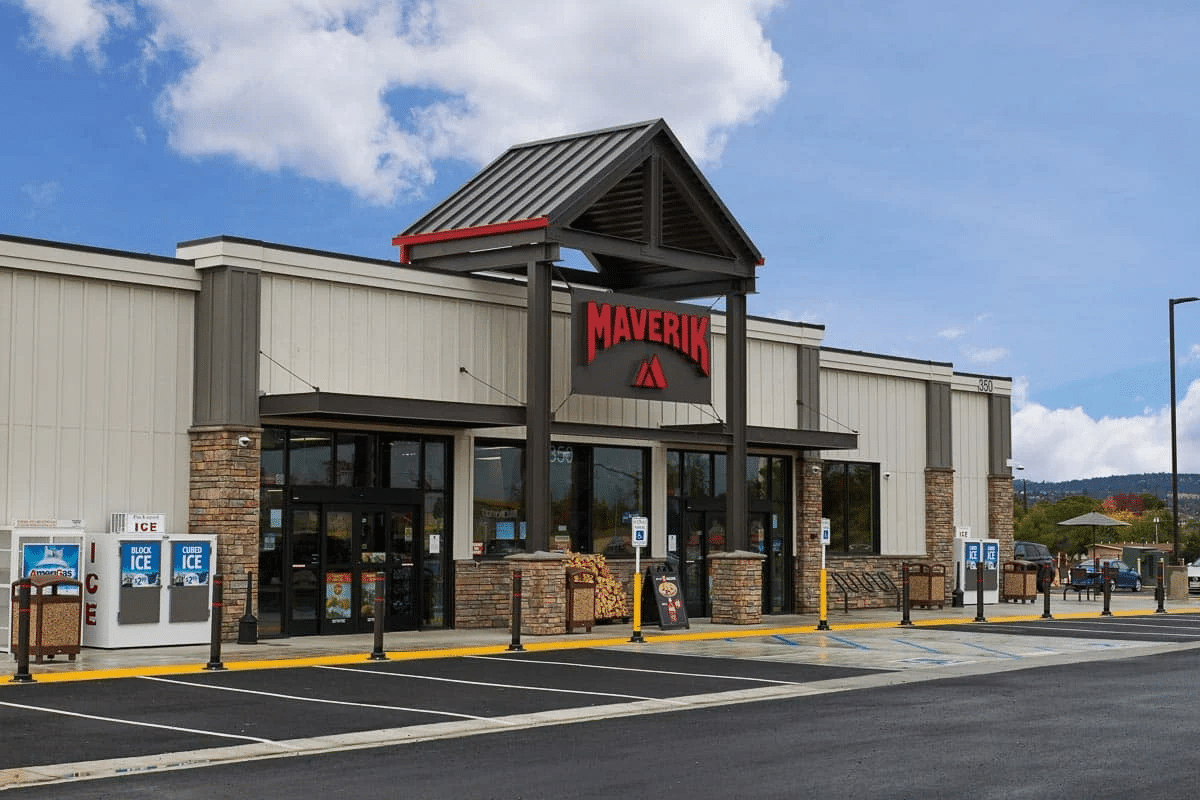
6 Gas Station Chains With Food So Good It’s Worth Driving Out Of Your Way For
We scoured the Internet to see what people had to say about gas station food. If you think the only things available are wrinkled hot dogs of indeterminate age and day-glow slushies, we’ve got great, tasty news for you. Whether it ends up being part of a regular routine or your only resource on a long car trip, we have the food info you need.
Let’s look at 6 gas stations that folks can’t get enough of and see what they have for you to eat.





