Cruise ship buffets have quietly become floating laboratories for food waste, disease control, and data tracking on an industrial scale.
I used to think cruise ship buffets were this harmless little side character in the vacation story — a place you wander into in flip‑flops, grab a plate, and wander out of in a slightly tighter T‑shirt. In 2026, that feels almost adorable.
We’re talking about an industry moving tens of millions of people a year across the world’s oceans, with mega‑ships that can carry more than 5,000 guests at a time and feed them from morning to midnight with assembly‑line precision. Cruising bounced back hard after the pandemic, and those bodies returning to the gangway all have one thing in common: they’re going to eat. A lot.
But the buffet isn’t just where you get your third plate of bacon. It’s where food‑waste scientists, disease specialists, tech vendors, and your own “I deserve this, I’m on vacation” voice all collide at once.
The Hidden Mountain of Food You Never See
That overflowing tray of lasagna you pass by? Up to 30% of all food prepared on cruise ships ends up as waste, much of it from buffets where food must be tossed after a limited serving window.
UN‑Habitat’s 2024 report on cruise food waste flat-out says buffet-style, all‑inclusive dining and crowded lines push people to overload plates out of FOMO. They take more “just in case,” then walk away when the thrill fades.
Researchers in that same report argue that to really cut waste, ships may need to “move away from all‑inclusive and buffet style dining” and control crowding at food stations.
Your Leftover Fries Are Being Weighed Like Gold
On some ships, your half-eaten fries are now data points.
River cruise line Uniworld quietly installed the Leanpath food‑waste tracking system on 11 ships, literally weighing uneaten food before it’s thrown away.
Between 2021 and 2023, that unsexy little scale helped Uniworld prevent 50.8 tons of food waste. Roughly 93,305 meals and 354 metric tons of CO₂, according to UN‑Habitat. In 2023 alone, they cut waste 38%, saving about 63,947 meals, and the company says the savings outweigh the roughly $4,000 per ship they spend on Leanpath each year.
So while you’re staring at the dessert bar debating between cheesecake and chocolate mousse, somewhere backstage, a spreadsheet already knows which one is winning.
One Cruise Giant Made Enough Scraps to Fill 14 Olympic Pools
Royal Caribbean reported 53,655 cubic meters of food waste in 2022; enough compressed scraps to fill about 14 Olympic swimming pools. That’s not “we ran out of fries,” that’s “we could drown in salad and dessert.”
The good news: the company says it has cut food waste by about 25% since 2019, with a goal to halve it by 2025.
How? They measure food before and after service, adjust batch sizes, and send leftovers through pulpers and advanced systems like microwave‑assisted pyrolysis instead of just dumping them. Part of a broader “Less Left Over” style push also seen at Carnival Corporation, which reports a 30%+ per-person reduction since 2019.
Buffets Are Norovirus’s Favorite Playground

The CDC logged at least 21 norovirus outbreaks on cruise ships in 2025, according to reports on one outbreak that sickened 95 passengers and six crew on AIDAdiva.
Dr. Scott Weisenberg, an infectious disease specialist at NYU, told Fox News that norovirus is “highly contagious” and spreads fast in crowded settings like cruise ships. And yes, that includes your beloved buffet line.
He notes people with “acute vomiting” can spread the virus through the air, while contaminated surfaces turn every shared serving spoon into a tiny biohazard.
Wash your hands with soap and water, especially before you touch a buffet utensil. Hand gel helps, but soap is better at physically removing the virus.
“Self-Serve” Buffets Aren’t Really Self-Serve Anymore
Buffets used to be a free-for-all. Post‑COVID, they’re much more… supervised.
Industry tech firm Tacit Corporation bluntly suggested that “COVID‑19 may mark the end of the traditional buffet,” as cruise lines switch to full‑service stations and digital ordering.
Norwegian Cruise Line’s “Peace of Mind” program moved to full‑service buffets, with crew plating the food rather than passengers ladling it themselves.
At the same time, digital menus and app‑based ordering let guests order buffet‑style dishes from their phones, giving cruise lines hard data on what you eat, when you eat, and how often you come back for round three.
The Buffet Will Gladly Lend You 1,000 Calories a Day
You know that quiet voice that says, “It’s vacation, it doesn’t count”?
According to a survey by CruiseCompare reported by Breaking Travel News, 67% of British cruisers admitted they eat more calories at sea than at home.
About 34% of them said they consume roughly 1,000 extra calories per day, while 8% confessed to adding around 1,500 extra calories daily — nearly a full recommended day’s intake for some adults.
They blame the cruise line for “always having food available,” plus the sheer quality of what’s on offer; about 31% overindulge because the food is so good, while 14% say they’re extremely disciplined at home and let loose on board.
And Yet, The Buffet Is Still Everyone’s Favorite
For all the chaos and calories, people love the buffet.
In a survey of 622 cruise passengers by food site Mashed, nearly 40% said the buffet was their favorite place to eat on board, beating out fine dining, casual restaurants, cafés, and room service.
Cruise Critic describes these buffets as a “cornucopia of diverse foods,” the all‑you‑can‑eat heart of the ship where the lines might be long but the options are endless.
Some readers rave about the freedom to take a tiny portion, taste, and walk away without a waiter judging them — or to grab an extra scoop if something turns out to be dangerously good.
So yes, the dining room might have white tablecloths, but the buffet has power: it lets you live out your “just a little of everything” fantasy without explanation.
It’s Not Just a Buffet — It’s a Social Pressure Cooker
Of course, that fantasy comes with side effects.
Cruise Critic readers describe buffets as dense jungles of tight seating, missing tables, questionable manners, loud conversations, and “yowling kids,” all while you’re balancing a plate and a drink.
Some people openly admit to double‑dipping in the most literal way: “We have been known to eat formal dining and then top off at the buffet,” one member confesses.
Others go there instead of the dining room — no forced small talk with strangers, just the joy of building your own salad or eating a small plate alone in a quiet corner.
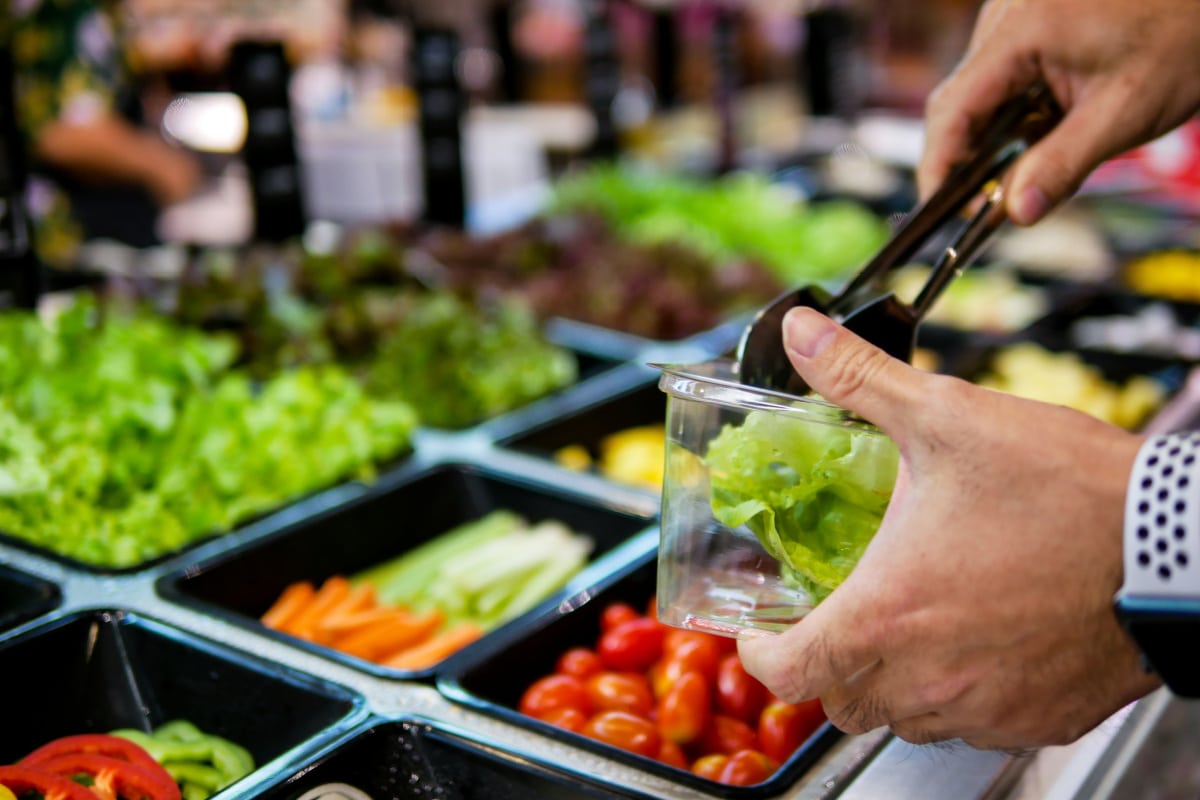
Your Salad Bar Might Be More Local Than You Think
Save this article
The lettuce under that ranch dressing might actually be from just down the road — or down the coast.
Business Insider reports that Royal Caribbean now sources 86% of the food for its European cruises locally in Europe, after spending the last two years shifting away from shipping supplies from the U.S.
The company even stopped sending frozen food from Florida to ships based in Seattle and Vancouver, choosing regional suppliers instead.
Bambi Semroc of Conservation International told Business Insider that this kind of destination‑based sourcing can cut environmental impact and stimulate local economies, as long as the food is produced sustainably.
Some Lines Are Trying to Get Buffet Waste Down to Almost Nothing
Norwegian coastal line Hurtigruten has spent about five years attacking food waste with smaller portions and smarter planning.
Travel Weekly reports that Hurtigruten cut food waste to around 65 grams per guest by 2023, down from 73 grams the year before: a reduction of roughly 70% since 2019, and edging toward “nearly zero” waste per person on some voyages.
Separate coverage of their “three R’s” program (Reduce, Reuse, Recycle) describes leftovers being repurposed and even turned into fertilizer to grow vegetables used back on board, closing the loop in a very literal way.
Meanwhile, Uniworld’s Leanpath rollout shows that waste‑cutting can save enough money to pay for the tech — meaning sustainability and cost control are finally sitting at the same table.
Behind the Buffet, Someone Is Constantly Adjusting the Dials
None of this is random.
Coverage of Royal Caribbean, Carnival, and Uniworld describes buffets where food is weighed before service, and leftovers are weighed again to fine‑tune batch sizes and menu planning.
In a cruise case study cited by UN‑Habitat, guests were told to order only one course at a time and were served smaller portions, which dramatically cut plate waste compared to all‑you‑can‑eat setups.
Researchers also note that overcrowded buffet lines push people to overload plates so they won’t have to fight the line again, which is why some ships now manage traffic flow and add subtle signage nudging guests toward smaller portions.
By the time you’re on your second plate, someone in a back office already knows whether they made too much lasagna yesterday, and they’ll make a little less tomorrow.
The Buffet Now Lives Inside a Bigger “Dining Revolution”
The buffet used to be the star. Now it’s part of a much larger cast.
In 2024, Princess Cruises announced a fleetwide dining shakeup: every ship’s main dining would be split into three rooms — Traditional, Reservable, and Walk‑In Anytime — all wired into the OceanNow app.
You can now choose fixed early or late seating, or go flexible, or skip it and grab food elsewhere while the app lets you order “anything, anytime, anywhere on board,” according to Princess and trade coverage.
That means the buffet is no longer the only symbol of “freedom” on board; app‑based ordering, small‑plate venues, and snack delivery blur the line between formal dining and grazing.
The Buffet Is a Hygiene Hotspot (Your Hands Are the Front Line)
Cruise health site Tips for Travellers points out that buffets carry extra risk because food is prepared, stored, and repeatedly handled in a self‑serve format.
Their advice to “smart cruisers” is blunt: wash your hands with soap and water every time you go in, and don’t treat hand sanitizer as a magic shield, especially against stubborn stomach bugs.
They highlight Royal Caribbean’s practice of placing large hand‑washing stations at buffet entrances and actively enforcing use — not just suggesting it.
Not Every Buffet Culture Plays by the Same Rules
UN‑Habitat’s cruise food‑waste research cites work showing higherfood waste among Chinese passengers than non‑Chinese, tied to norms around hospitality, “face,” and a desire to avoid missing out.
Older Chinese guests in particular were observed rushing for food and taking more than they could finish, even while worrying about how this looked to others. A kind of internal tug‑of‑war between abundance and embarrassment.
The same research suggests that offering more culturally familiar dishes, serving smaller portions, and even running culinary education events can reduce waste while actually improving the dining experience.
Disclosure: This article was developed with the assistance of AI and was subsequently reviewed, revised, and approved by our editorial team.
Like our content? Follow us on Newsbreak.
More articles:
- 12 cruise dress code rules that spark debate every time
- 16 things you should never leave in your cruise cabin on port days
- 13 Hidden Cruise Risks Most Travelers Don’t Realize Until It’s Too Late
10 Insanely Fast Trains That Make Air Travel Look Slow

Rail travel has come a long way from the slow chugging of steam engines. Today, the race for the fastest train has become a high-speed pursuit of groundbreaking technology, pushing the boundaries of what’s possible on rails. From maglev marvels to sleek bullet trains, these trains don’t just break records; they redefine them. Here’s a look at the 10 fastest trains on Earth, each moving faster than most airplanes. Learn more.
8 financial mistakes travelers should avoid in Mexico

Traveling through Mexico can feel effortless, from booking boutique hotels to paying for street tacos on the go. Yet money mistakes can quietly turn a dream trip into an expensive lesson. Many travelers focus on flights and itineraries but overlook everyday financial decisions that shape their budget once they arrive. Exchange rates, payment methods, and local banking norms differ from those at home, and misunderstandings can drain funds faster than expected.
The stakes are higher than most people realize. According to data from the Consumer Financial Protection Bureau, international travelers can lose money on each transaction. Losses typically range from 3 to 10 percent when foreign transaction fees, poor exchange rates, and ATM charges are combined. Learn more.
10 travel scams targeting tourists

Vacations are supposed to be carefree, but a single clever scam can empty your wallet faster than any overpriced souvenir.
Planning a vacation is usually the highlight of the year, but falling for a scheme can ruin the fun before it even starts. Scammers are getting smarter and using advanced technology to trick even the most experienced globetrotters into handing over their hard-earned cash. You need to stay alert because these criminals often target distracted visitors who are just trying to relax. Learn more.