

The Bald Range wildfire in British Columbia’s Okanagan region grew from a fast-moving blaze into a major emergency, creating its own weather system, forcing thousands to evacuate, and pushing firefighters to battle conditions that changed by the hour.
The wildfire near Summerland and Peachland expanded rapidly during a period of extreme heat, dry conditions, and strong winds. Within a short time, the blaze grew to more than 100 square kilometers, prompting British Columbia to declare a state of emergency as officials worked to protect communities in its path.
More than 20,000 people were forced to leave affected areas as evacuation orders spread across parts of the Okanagan region. Communities that normally attract visitors for their lakes, vineyards, and outdoor activities became the center of one of the province’s most serious wildfire responses of the season.
The cause of the Bald Range wildfire has not been confirmed. Investigators have not announced whether it was started by lightning, human activity or another source.
A Fire That Created Its Own Weather
The most unusual feature of the Bald Range wildfire was not only how quickly it spread, but how powerful it became once the flames began affecting the atmosphere around them.
British Columbia Premier David Eby said firefighters described the blaze as having extreme intensity, they compared it to “a bomb going off” with flames reaching high into the trees and the fire creating its own weather system.
The heat generated by the wildfire produced powerful rising air currents that helped form a large smoke column and triggered lightning within the fire’s cloud system.
This type of fire behavior is dangerous because the atmosphere around the wildfire can begin influencing the fire itself. The rising hot air can create strong winds, send embers ahead of the main flames and make it harder for crews to predict where the fire will move next.
Residents across the region reported seeing thick smoke covering the sky as the fire intensified. The heavy smoke also reduced visibility, affecting both people on the ground and aircraft trying to assist firefighting operations.
The Conditions That Made the Fire Difficult to Stop
Firefighters were not just battling flames; they were fighting the combination of weather and terrain that allowed the wildfire to grow rapidly.
Southern British Columbia was experiencing hot and dry conditions, leaving vegetation highly vulnerable to ignition and rapid burning. Strong winds pushed the fire across dry landscapes, while smoke, turbulence, and poor visibility made aerial firefighting more difficult.
Officials said aviation operations were affected by the conditions, with helicopters and aircraft facing challenges from smoke and turbulence. Despite those difficulties, crews continued using air support alongside ground operations to slow the spread.
The wildfire was part of a larger provincial crisis, with more than 100 fires burning across British Columbia. Many of those fires were considered out of control as emergency crews worked across multiple regions.
What Residents Saw as the Fire Moved In
For people living near Summerland and Peachland, the wildfire became a rapidly changing situation as smoke, flames and evacuation warnings moved closer to their communities.
Save this article
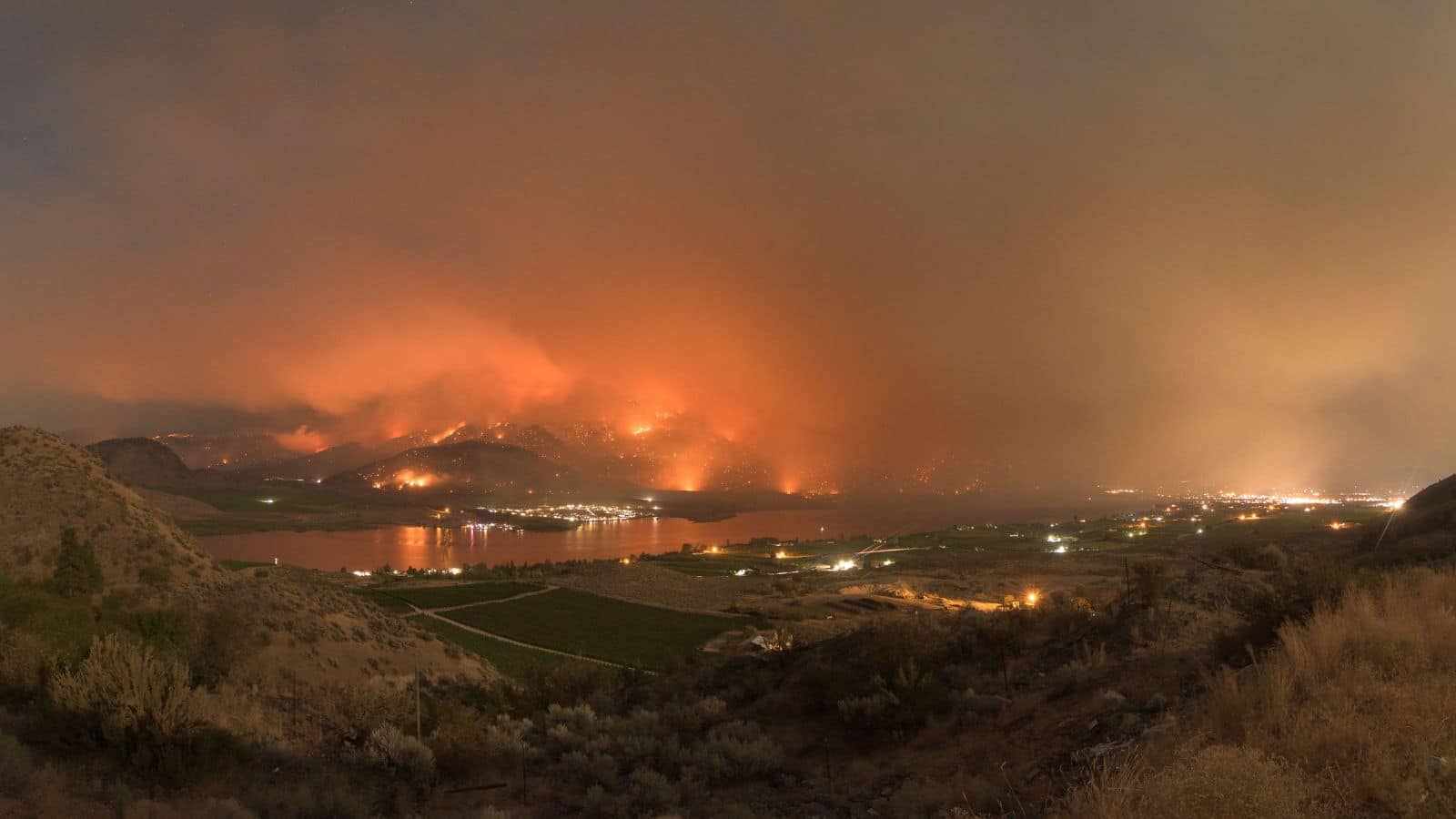
Residents described seeing heavy smoke over the Okanagan region as officials expanded evacuation orders. Some evacuees said the speed of the fire’s growth left little time to prepare, with many focusing on collecting essential belongings before leaving.
Officials also reported that some residents became trapped as conditions shifted quickly and required rescue assistance. Emergency crews worked alongside local authorities to move people away from dangerous areas and provide support for those displaced.
The scale of the evacuation required assistance beyond the province. The federal government provided support for shelter and accommodation, while emergency agencies coordinated resources for affected communities.
The Fight to Contain the Flames
The response brought together provincial crews, local emergency teams, and international firefighters as British Columbia faced one of its most demanding wildfire periods.
The BC Wildfire Service led the firefighting effort, supported by additional personnel from countries including Australia, New Zealand and Mexico. Hundreds of firefighters worked alongside aircraft crews to slow the fire and protect communities.
Fire crews used helicopters, including a night-vision helicopter, to continue operations when possible. However, smoke and dangerous flying conditions limited some aerial efforts.
The challenge was not simply putting out flames, but controlling a wildfire that could change behavior quickly because of the extreme conditions surrounding it.
What Happens After the Emergency
For British Columbia, the next stage will be determining the damage, supporting evacuees and understanding what made the fire grow so aggressively.
Officials will continue assessing affected areas while investigators work to determine the cause of the blaze. Residents will eventually return to their communities, but many will face questions about repairs, rebuilding and how to prepare for future wildfire threats.
The Bald Range wildfire has become another example of how quickly conditions can change during extreme fire seasons. It also highlights the growing challenge faced by communities located in areas where heat, drought and wind can combine to create dangerous wildfire conditions.
As wildfires become harder to predict and control, what do you think should be the priority: stronger prevention measures before fires start, greater investment in emergency response when communities are already at risk, or something entirely different?





