
Digestive symptoms can change how we shop, cook, travel, and socialize. For Jesse Pagliuca, digestive problems that developed after COVID-19 became the starting point for Après, a chewable digestive enzyme mint launched in September 2026. We asked Jesse about his experience, the thinking behind the formula, and what consumers should understand before trying it.
We know you are interested in digestive enzymes, so let’s get to it.

The Personal Story
Dédé: You’ve shared that your digestive issues began after COVID. What changed for you, and how did those symptoms affect your everyday life?
Jesse: Yeah, it was tough. After getting COVID, I started to notice a lot of digestive issues. One of the biggest was extreme FODMAP sensitivity. I was vegetarian, so beans, garlic, onions, veggies, and a lot of high-fiber foods were a big part of what I ate. Suddenly, those foods were hard for me to tolerate.
It was a very frustrating experience. I was trying to eat well, but it seemed like both the healthy and the good tasting meals were full of food triggers. And it was especially uncomfortable going out to eat. Navigating a menu at a restaurant was really annoying. I really just wanted to be able to eat with friends without spending so much time worrying about my digestion.
That experience is what ultimately led me to get obsessed with digestive enzymes, and it’s what led to Après.
What did you try before developing Après, and what needs did you feel existing products weren’t meeting?
I tried a ton of different digestive enzymes.
I took the classic ones (Lactaid for dairy, Beano for beans and veggies). They worked fine for one specific type of food, but real meals usually have lots of different triggers. I didn’t want to bring a whole medicine cabinet out to eat.
I also tried a ton of multi-enzyme blends. I didn’t find any that really helped. My biggest issue was that many of these products don’t tell you how much of each ingredient they are using. Many products use ‘proprietary blends,’ which means you can’t always tell exactly how much of each ingredient you’re getting. For me, that transparency really matters.
And I was concerned about the possibility of “fairy dusting”—including small amounts of multiple enzymes without providing enough of each to deliver meaningful benefits. Without knowing the actual amounts, I had no way to evaluate whether these products contained effective doses.
With Après, we use clinically tested doses that have meaningful effects for people, and we list the activity level of every single ingredient, so you know exactly what you’re getting.
Lastly, I thought that the premium products were really expensive! Often, you’d have to spend upwards of $2 per dose. And the entry price could be like $80+, which you’d have to pay before you even knew the product worked.
I wanted people to be able to try Après without spending $80 up front. Our monthly subscription starts at $34 for a tin of 30 chewables, which works out to about $1.13 a dose. If you get three tins once every three months, it comes to an even $1 a dose.
Honestly, I wish we could charge less. But the amount of each enzyme we put into every chewable is a big part of what it costs us to make. That’s also why we list the activity of each enzyme on the label. We want customers to know exactly what you’re paying for.
You mention that digestive health packaging can feel stigmatizing. Can you describe that experience and how it influenced the product you created?
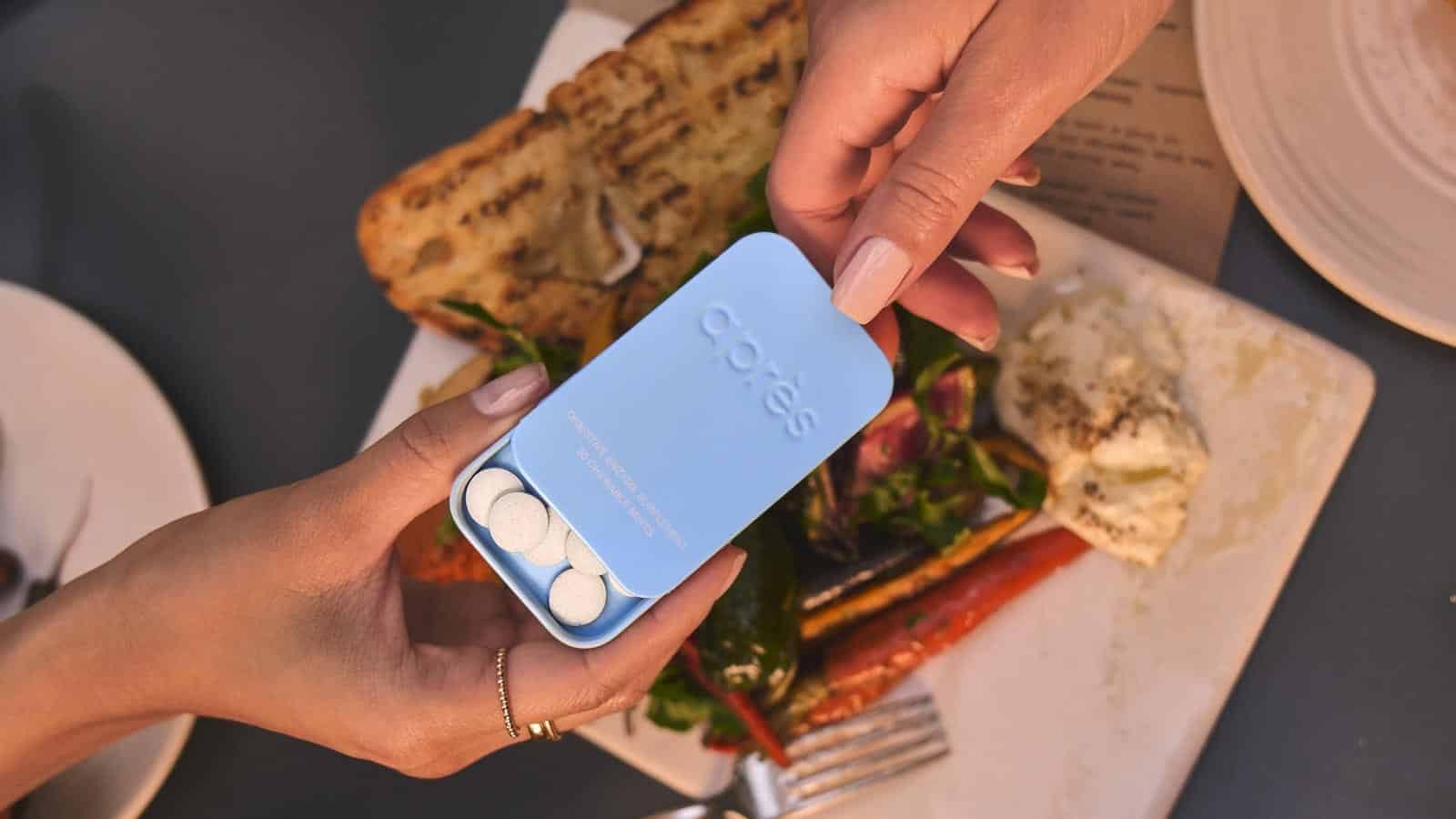
Yes, totally! I feel like digestive health packaging could use a serious refresh. Let’s face it, no one really wants to pull out a bottle of digestive enzymes at dinner or sprinkle powder all over their food in front of everyone! Digestive issues can already feel awkward enough, and I wanted to create something that people would actually feel good about carrying around and using. Something modern, discreet, and easy to fit into everyday life without giving it a second thought.
We spent a lot of time trying to make the packaging beautiful. Après is a chewable, and it comes in a small slide tin. It fits in your bag or pocket, and it’s a chewable so taking it is easy. My hope was to create something that would look great and be easy to use. Ideally, our product will be something people want to show off – taking care of your gut is cool!
Developing the Formula
Après contains eight enzymes. Can you explain, in plain language, what each is intended to do and why you chose to combine them?
Different enzymes help break down different things, so the combination matters.
The three main FODMAP-focused enzymes are:
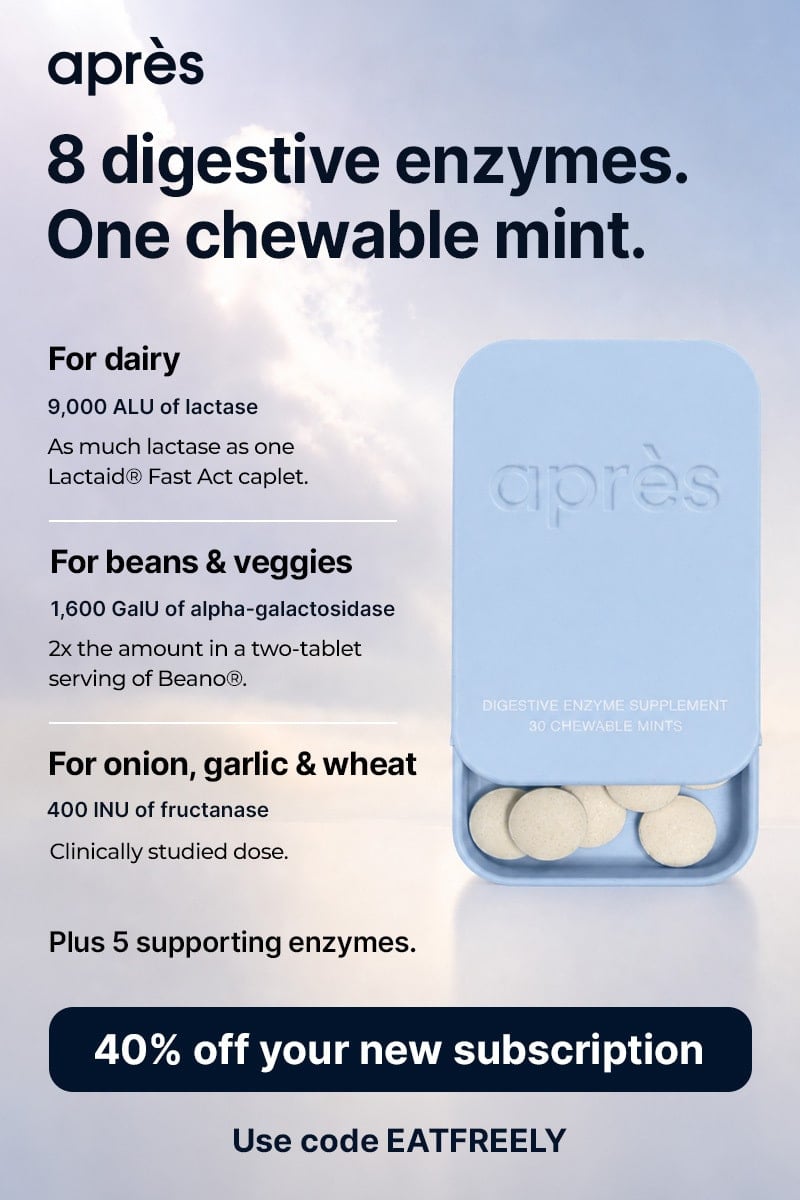
1) Lactase: helps break down lactose, the sugar in milk. We use as much lactase as is in Lactaid Fast Act.
2) Alpha-galactosidase: helps break down galacto-oligosaccharides (GOS), found in foods like beans, legumes, and cruciferous veggies. We use two times the amount that’s in Beano Extra Strength.
3) OPTIZIOME® Fructanase: targets fructans, found in garlic, onions, wheat, and some veggies. We use a dose currently being studied in clinical trials.
The other five work on components of plant fiber:
- Cellulase works on cellulose
- Hemicellulase works on hemicelluloses
- Xylanase works on xylans
- Beta-glucanase works on beta-glucans
- Pectinase works on pectin.
The combination means you get the most comprehensive FODMAP coverage possible, at clinically trialed doses, along with some added help with fiber digestion.
Which specific FODMAPs is the formula designed to address, and which does it not address? Where do other food triggers fit into that picture?
The main FODMAP targets are lactose, GOS, and fructans. We don’t have an enzyme specifically for excess free fructose or polyols (like sorbitol and mannitol).
You emphasize “meaningful doses.” How did you determine the activity amount for each enzyme, and what research supports those choices?
I got obsessed with digestive enzymes because I was building this company for my own gut. I started reading the studies to see what dose people took with a meal and whether they felt better afterward. For the three main enzymes in Après, my goal was to put a little more enzyme activity in each mint than the dose that had helped people in a study.
- Alpha-G for beans and veggies. One study I liked had people eat nearly a pound of cooked beans. When they took 1,200 GalU of alpha-galactosidase with that meal, they had significantly less gas over the next eight hours than when they took a placebo. We put 1,600 GalU in a single Après mint. Bean study
- Lactase for dairy. We found a study where people with lactose intolerance took 6,750 units of lactase with lactose. Among those who experienced symptoms, the overall symptom score dropped by 76% compared with placebo. We use 9,000 ALU of lactase per mint. Lactase study
- OPTIZIOME® fructanase for garlic, onions, and wheat. Garlic and onions were two of my biggest triggers, so I cared a lot about this one. In a recent study, people ate oatmeal with 25 grams of inulin, a type of fructan, mixed in. When they took 350 INU of OPTIZIOME® fructanase, they reported less digestive discomfort than with placebo. We use 400 INU of that same enzyme per mint. Fructanase study
I also cared about who made the enzymes. Enzyme quality really matters. I did a lot of research and landed on BIO-CAT for our enzyme source. To me, they’re the gold standard in the field. They test how well their enzymes hold up at different pH levels, which helps tell us how they’ll handle the acidity in your stomach. They also check how much activity the enzymes retain over time. That’s called stability testing. And they fund studies like the fructanase trial to see how their enzymes affect digestion in actual people.
I love being able to tell people exactly where our enzymes come from. When I was trying other blends, it was often hard to find out who made the ingredients or how much of each enzyme I was getting. I’m proud to tell people we work with BIO-CAT and why I picked them. That’s something I would’ve wanted to know as a customer.
Your label lists enzyme activity units rather than simply ingredient weights. What do those units tell consumers, and what can’t they tell us about how much food an Après mint can help digest?
Great question! Activity units tell you how powerful the dose of each enzyme is in one chewable.
PSA: If you’re comparing two products, always look for activity units! They tell you a lot more about what the enzymes can actually do than the total weight alone. It’s a great way to make a more informed choice and know what you’re getting!
Why did you choose a chewable?
The simple answer. I just think a chewable is a much better format than a pill or a powder. It’s easy to take, you don’t need to put anything on your food, and it can be discreet.
We tested multiple different samples to make sure our chewable is tasty. It’s sweet and subtly minty, and it’s designed to be a palette cleanser – it won’t overpower your food. And most importantly, our customers love the taste: we do customer surveys, and a majority of people have given the taste and texture a 5/5!

Evidence, Testing, and Transparency
What evidence is currently available for the finished Après product, as distinct from research on its individual enzymes? Has the complete formula been studied in people with IBS or documented food intolerances?
We do not yet have a trial on the product itself, but we are in the process of designing one, and hope to conduct a trial soon.
What testing do you conduct to confirm enzyme identity, activity, and shelf life? Is independent laboratory testing involved, and what information can consumers review?
We have three levels of testing. Our enzyme manufacturer (BIO-CAT) tests the activity levels, our contract manufacturer runs their own test on the enzymes we procure, and we have an independent laboratory test for heavy metals and safety.
What are the mint’s other ingredients, including sweeteners and flavorings, and how did you assess their suitability for people who are sensitive to FODMAPs?
The working ingredient list includes organic cane sugar, natural flavors (including peppermint), monk fruit extract, stearic acid, magnesium stearate, and silicon dioxide.
We chose to leave out high-FODMAP sugar alcohols like mannitol.
Has Après undergone independent FODMAP testing or certification?
We’re in the process of pursuing FODMAP certification. Our product doesn’t contain any ingredients associated with FODMAPs, so I have confidence we’ll get those certifications.
Using Après in Everyday Life
Walk us through how someone would use Après with a meal. When should they take it, how is the serving determined, and what is the maximum recommended amount?
Chew one mint with your first bites, or anytime up to mid-meal. One mint should work for most people and most meals. You can take two mints each meal if you are really loading up on triggers.
How should consumers think about portion size and meals containing several different potential triggers? What should they realistically expect the product to accomplish?
Every person’s gut is different, so I can’t make any promises on what to expect. And I don’t want to give advice on what foods to try – I’m not a doctor and people have different levels of sensitivity across different foods
But we’ve had a lot of positive feedback from people who’ve taken Après with foods that used to give them trouble.
A few real reviews from customers:
- “I’ve introduced onion back into my meals tonight and am having no reaction! I’m excited to continue this experiment.”
- “Yesterday I ate pizza with artichokes on it. I almost cried. I felt great.”
- “I have found that I have more comfort after meals nearly every time I use a mint.”
- This type of feedback makes me so happy – I’m really glad that it’s helping people!
Who should consult a healthcare professional before using Après, and who should avoid taking the product without consulting your healthcare provider first? What should readers understand about food allergies and conditions such as celiac disease?
Après is for adults. If you’re pregnant or nursing, take medication, or have a medical condition, check with your healthcare professional first. And don’t take it if you’re allergic to an ingredient.
On gluten/allergies: food allergies are different from intolerances. Après won’t protect you from an allergic reaction, and it doesn’t break down gluten. If you have celiac disease or a wheat allergy, you still need to avoid the foods your clinician has told you to avoid.
If someone continues to experience symptoms despite using the product, what would you encourage them to do?
I’d encourage them to talk to their healthcare professional. I wouldn’t want someone to keep taking more mints and assume that’s the answer – digestive symptoms can have a lot of causes.
Where do you see Après fitting into the three phases of the low FODMAP diet: Elimination, Challenge/Reintroduction, and Integration/Personalization?
I see the most natural fit in Personalization. Once you have a better idea of your triggers, an enzyme can be another tool for eating meals with food triggers.
Building the Company
You’re assembling an advisory board of registered dietitians, gastroenterologists, and other experts. What role do you see them playing as Après grows?
I’d like them to be involved in the actual decisions we’re making; how we explain the product, how to conduct a proper trial to get data on product efficacy, and what future products we could make.
Dietitians and medical doctors see what people struggle with day-to-day, and that input is really valuable when you’re trying to make something people can use in their normal lives. We’ve had some health professionals try the product, like it, and reach out to us personally, and it’s been awesome getting their feedback.
What have you learned from customers since launch, and what questions about the product are you still working to answer?
First off, we love hearing from customers! If you have a question or want to tell me how Après worked for you, or what we can improve, you can always reach me personally at jesse@tryapres.com.
One question I get a lot is when to take Après.
Can I take it right before eating? Yes, right before your first bite can work perfectly for some, but stomach pH may play a role. An empty stomach is usually pretty acidic, and some enzymes are less active there. A few bites of food help buffer that acid and give the enzymes something to mix with.
Can I take it right after eating? Some customers say it helps, and others don’t notice much. Your stomach mixes and empties as you eat, so by your last bite, some of the food may have already moved on. We’re still learning how much that affects what people notice.
The sweet spot for most people: take after your first few bites up to mid-meal. This will ensure optimal PH stomach levels and also allow the enzymes to distribute amongst the food before it starts to empty.
It’s a complicated answer to a question that seems simple! Every stomach is different, and I’d encourage customers to play around with dose timing to find what’s optimal for them.
What do you most want someone living with digestive symptoms to understand about Après?
I started Après because I was dealing with this myself. I know how frustrating it is to be calculating what you can and can’t eat.
I wanted something I could keep in my pocket and take with a meal, that would actually help with FODMAPs. My hope is that it makes eating easier for people dealing with their food triggers. Food is such a pleasant and communal experience. I’d like them to spend less time thinking about digestion and more time enjoying dinner.
Jesse, thank you so much for the interview – and the product. I am looking forward to test-driving Après, especially during the holidays and travel.
Resources
Product-claim disclaimer
These statements have not been evaluated by the Food and Drug Administration. This product is not intended to diagnose, treat, cure, or prevent any disease.