

Massive public outrage and physical sabotage are targeting license plate surveillance networks across the United States as citizens push back against warrantless tracking.
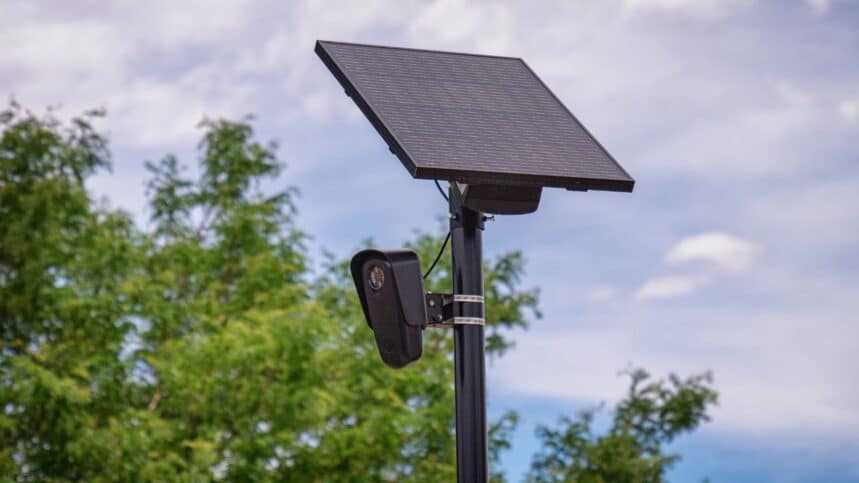
Across American highways and suburban intersections, small black cameras on solar poles are silently tracking everyday traffic. These automated license plate readers, manufactured primarily by Atlanta-based Flock Safety, scan roughly 20 billion license plates every single month across 49 states. While police departments celebrate the technology as a vital tool for solving crimes, public hostility has reached a boiling point.
Community resistance isn’t just taking the form of angry town hall speeches or online petitions. Citizens are taking power tools to camera poles, and thousands of supporters are backing them online. More than 80 municipal contracts in 28 states have already been canceled or allowed to expire as privacy concerns mount.
The Rise of Real-Time Vehicle Tracking
Flock Safety built a widespread surveillance network by equipping thousands of police departments with AI cameras that log billions of drivers monthly.
Founded in 2017, Flock Safety pitched its hardware as an affordable tool for local neighborhoods struggling with vehicle break-ins. The business model quickly expanded into a nationwide dragnet serving over 5,000 law enforcement agencies and 6,000 residential communities. Instead of recording local video feeds, these AI units capture vehicle plates, car colors, makes, and custom alterations like bumper stickers, storing them in a searchable database.
Law enforcement agencies argue that instant access to nationwide plate data helps recover stolen property and locate missing individuals quickly. The company’s internal census indicates its software assisted in roughly 1 million investigations in 2025, contributing to 20% of cleared cases in customer jurisdictions. However, critics point out that the continuous collection of location data creates an invasive network where innocent drivers are constantly monitored without a warrant.
Related: Flock Cameras Are Everywhere Across America, and the Debate Over Privacy Is Growing
Sabotage, Crowdfunding, and Refusals to Indict
Vandalism against surveillance cameras has transformed from isolated property damage into a publicly funded, bipartisan vigilante movement.
An investigation by The Guardian documented at least 33 distinct instances of physical destruction targeting Flock cameras across 23 states. Vandals haven’t been subtle about their methods, using battery-powered saws to cut down metal mounting poles, spraying expanding foam into camera housings, or painting over lenses. Open-source mapping projects like DeFlock have gained traction online, allowing community members to locate every nearby surveillance node.
Public support for these acts of physical resistance has moved far beyond internet forum comments. In Virginia, an Air Force engineer accused of cutting down 13 Flock cameras received legal defense donations from supporters via GoFundMe. Meanwhile, local legal systems are reflecting the public’s irritation; an Ohio grand jury recently refused to indict a man charged with disabling local surveillance units.
The Fourth Amendment and Police Misuse
Civil liberties organizations argue that automated vehicle tracking violates Fourth Amendment protections while enabling widespread officer abuse.
Civil rights organizations emphasize that the vast majority of tracked drivers haven’t committed any crime. Data from the American Civil Liberties Union shows that less than 1% of scanned vehicles are tied to wrongdoing, while the system misidentifies the issuing state on 10% of reads. Privacy attorneys argue that logging everyday driving habits creates an unconstitutional dragnet.
Save this article
Shelby Leighton, a public interest attorney, noted, “When you are tracking everywhere someone goes, that is a ‘search’ under the Fourth Amendment, and if police are accessing that data without a warrant, that violates people’s constitutional rights.“
The potential for internal police misuse has further fueled public anger. The Institute for Justice uncovered 46 cases where police officers allegedly used Flock technology without authorization to stalk spouses, ex-partners, or romantic rivals.
Officers in Brevard County, Florida, and Stow, Massachusetts, recently resigned following investigations into improper system queries. Officer Jason Rogers resigned from the Stow Police Department ahead of a scheduled termination hearing.
An internal affairs investigation revealed that he repeatedly misused law enforcement databases and the town’s Flock Safety license plate reader system to track a former partner without any legitimate law enforcement purpose. Following the investigation, the town opened a criminal investigation against him, referred the case to the state oversight commission, and completely terminated its relationship with Flock Safety, removing its remaining cameras.
In Brevard County, Deputy Michael Fultz (who had previously been named 2025 Deputy of the Year) resigned while facing termination after the Brevard County Sheriff’s Office opened an administrative investigation into several instances of egregious misconduct. Among the violations was using the department’s Flock Safety cameras to conduct unauthorized tracking of his ex-girlfriend’s vehicle.
Addressing the public outcry, Flock Safety CEO Garrett Langley stated, “When people talk about just one of these, privacy or safety, they’re prioritizing the wrong thing, and what we have to prioritize as a country is compromise.” When confronted with officer stalking cases, Langley added, “I apologize. It kills me that she went through that.“
The Escalating Backlash Against Big Tech Surveillance
The national reaction against camera networks signals a fundamental breakdown in public trust over corporate-managed law enforcement tools.
Public opposition to Flock cameras cuts across traditional political lines, uniting progressives concerned about immigration enforcement with conservatives wary of government overreach. Because many municipal surveillance contracts were signed by police chiefs without public city council hearings, residents feel completely shut out of decisions affecting their privacy. Direct physical sabotage has emerged as a disruptive response when democratic oversight is bypassed.
To stem the backlash, Flock Safety recently shortened its default data retention period from 30 days to 7 days and mandated misuse detection features for all clients. However, contract cancellations continue to climb in cities like Los Angeles and Syracuse. Even so, privacy advocates warn that removing one vendor doesn’t solve the broader problem, as competitor companies frequently step in to replace canceled camera contracts.
Reimagining Safety in an Era of Mass Monitoring
The battle over automated street monitoring will shape the future of municipal governance and public privacy rights for decades to come.
The widespread cheering for surveillance vigilantes exposes a deep rift between tech-driven law enforcement tactics and community consent. While public safety officials highlight the high success rate of locating stolen cars and missing persons, citizens are increasingly unwilling to trade their constitutional protections for total visibility.
As courts begin evaluating whether continuous plate tracking requires a search warrant, local governments must re-evaluate how surveillance technology is deployed. Without genuine transparency, judicial oversight, and community approval, public resistance will likely continue to grow on both the legal front and on city streets.
The Big Picture
Understanding the key facts reveals why automated plate readers are facing unprecedented legal and physical resistance.
- Unprecedented Scale: Flock Safety operates over 120,000 AI cameras across 49 states, logging roughly 20 billion plate scans monthly.
- Rising Physical Resistance: Investigative reporting shows at least 33 verified instances of camera destruction across 23 states, with crowdsourced legal funds raising tens of thousands of dollars for defendants.
- Low Hit Rate, High Error: Less than 1% of scanned vehicles are linked to any crime, and system error rates incorrectly log the state of origin in 1 in 10 scans.
- Widespread Police Misuse: Dozens of cases have documented law enforcement officers abusing plate readers to stalk ex-partners, prompting high-profile officer resignations and CEO apologies.
- Policy and Municipal Pushback: Over 80 contracts across 28 states have been canceled or non-renewed, forcing Flock to cut default retention times to seven days.
How do you feel about automated license plate cameras monitoring your neighborhood, and where should local governments draw the line between public safety and personal privacy?





