

Hans Christian Andersen’s birthday spotlights how one outsider’s stories still shape how children understand belonging and resilience today.
Hans Christian Andersen’s birthday on April 2 is more than a date on the calendar. It is a chance to step into a world where awkward ducklings become graceful swans, tin soldiers stand firm against impossible odds, and quiet nightingales outshine glittering machines.
His tales invite readers into places where snow queens rule with icy hearts, wild swans circle the sky and tiny girls emerge from flower petals, yet the emotions at the center feel familiar and close. Children who pick up his stories meet characters who worry they are not enough, who long for acceptance and who keep going even when the world misunderstands them.
His stories remind kids and adults that the smallest, most overlooked character can hold the biggest heart and the bravest spirit. As we celebrate his life, it is worth remembering that his own journey began with poverty, teasing and uncertainty, yet he found comfort in stories long before he became famous for writing them. He knew what it felt like to be the one on the outside of the warm circle, listening at the door, dreaming of being invited in. That connection to hope on the page still matters today, especially for children who are searching for characters that feel like friends or guides when real life feels confusing.
Buy, Borrow & Share

Whether the book is new, used, borrowed or digital, what counts is that it is there when a child reaches for it, ready to offer comfort, courage and a spark of imagination. Andersen’s birthday becomes a reminder that any book within reach can be the one that changes how a child sees themselves and the world, and that access to stories should never depend on a family’s budget or zip code.
Andersen’s Early Life and Big Dreams
Hans Christian Andersen was born in 1805 in Odense, Denmark, to a shoemaker father and a washerwoman mother. He grew up in a tiny home with few luxuries, but he had an overflowing imagination that refused to stay small. As a boy, he staged puppet shows with homemade props, stitched from scraps and string, and copied out plays he could barely afford to see. He listened closely to traveling performers and local storytellers, storing away scenes and voices he would later transform into fairy tales. The theater, with its costumes and music, fascinated him, even when he could only watch from the cheapest seats.
When his father died, life became even harder, yet his dreams only got louder. At 14, he left for Copenhagen with almost no money, a bundle of clothes and a head full of ideas, chasing a future he could not fully picture. That leap of faith mirrors the journeys in his stories, where fragile, uncertain characters step into the unknown and discover their strength along the way. In the city, he took odd jobs, faced rejection from theaters and schools, and endured harsh comments about his looks and manners. He felt like a misfit in polished circles, but he kept reading, learning and writing in every spare moment.
His Experiences Shaped His Outlook
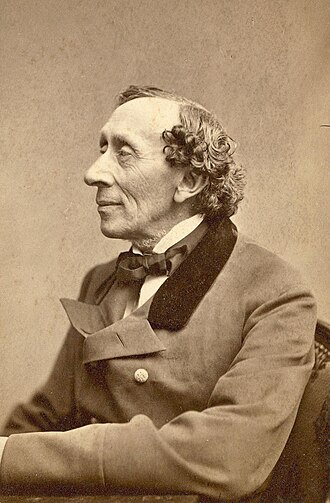
A portrait of the Danish writer Hans Christian Andersen. 1869
Thora Hallager, Public domain, via Wikimedia Commons
Over time, those early struggles shaped his sensitivity to outsiders, dreamers and underdogs. The boy who once felt out of place in elegant salons ended up creating stories that welcomed everybody, especially kids who worried that they did not fit the mold. He knew that a small, quiet child in a corner could hold a head full of stories. Remembering that beginning makes his birthday feel less like a distant literary anniversary and more like the quiet celebration of someone who refused to give up on the power of stories, even when life gave him every reason to.
Themes Of Outsiders, Courage and Inner Beauty
So many of Andersen’s tales speak directly to kids who feel different or left out. “The Ugly Duckling” begins with a lonely outsider mocked for looking wrong, but it ends with the surprise of becoming a swan, showing that identity can unfold over time instead of being fixed on one bad day. The duckling has to move through seasons of hardship, cold and danger before he sees his own reflection clearly. That journey mirrors the slow process of growing up, when a child learns that other people’s judgment does not define their worth.
The Original Little Mermaid Predates Disney
“The Little Mermaid” gives voice to a character who longs for another world and sacrifices comfort for the chance to belong somewhere new, touching on the risks and rewards of chasing a dream that others do not understand. She trades her voice, the very thing that expresses her inner self, for legs that let her walk in a place she has only watched from afar. Her story raises questions about what we give up to fit in, and whether love or acceptance should ever cost us our true selves.
Perfection Is Never The Goal
In “The Steadfast Tin Soldier,” a toy with one leg proves that true courage has nothing to do with perfection. He persists through falls, storms and fire, guided by a quiet love and sense of duty, even when he cannot control what happens around him. “The Nightingale” contrasts a living bird with a jeweled mechanical copy, gently insisting that real beauty comes from sincerity, feeling and song, not from glitter or price. A real, imperfect song trumps a flawless fake performance.
His Stories Showcase True Value
Even stories that end on bittersweet notes leave room for readers to think about kindness, honesty and the cost of chasing shallow rewards. Children meet characters who tell inconvenient truths, like the child in “The Emperor’s New Clothes,” and they see how honesty can cut through fear and pretense. These tales gently tell children that their value is not measured by how they look, how rich they are or how smoothly life is going. They suggest that feeling small or unsure today does not mean you will stay that way forever.
When kids see a duckling grow into a swan, a mermaid find her own path or a tiny Thumbelina survive one challenge after another, they receive a quiet message that their struggles can lead to growth. That is a powerful gift, especially when it arrives in a book that was simply sitting on a shelf, waiting to be opened. It is a reminder that the right story, at the right moment, can plant seeds of courage in a young mind that will bloom years later.
Family Ways To Bring The Stories To Life
Families can turn Andersen’s birthday into a cozy, creative celebration at home. A simple starting point is a fairy tale marathon, reading a few of his short stories aloud and letting kids choose which character they want to follow next. Parents can mix well known tales with less familiar ones to keep things fresh. After reading “The Ugly Duckling,” children can make swan crowns, decorate mirrors with paper feathers or draw a comic strip of the duckling’s transformation from miserable to magnificent. They might decorate one side of the page with gray, stormy colors and the other side with bright blues and whites to show the shift in mood.
Bring His Stories to Life
“The Little Mermaid” invites bathtub boat races, seashell art and homemade ocean soundscapes with simple instruments like shakers and drums. Kids can design their own underwater kingdoms on large sheets of paper, filling them with friendly sea creatures and coral castles. “The Snow Queen” can inspire paper snowflake chains, glittering window decorations and hot chocolate story breaks where everyone shares the bravest thing they have done. “Thumbelina” naturally leads to flower crafts, fairy houses made from twigs and leaves, and tiny notes written from the perspective of a character who could ride on a butterfly’s back.
Engage in Discussion
Parents and caregivers can pause during key scenes to ask questions like, “When have you felt like the duckling?” or “What brave choice have you made recently?” These conversations help kids connect their own feelings to the gentle wisdom hiding between the lines of the stories. For younger children, you might act out scenes with stuffed animals, turning the living room into a mini stage where everyone gets a role. Older kids might enjoy rewriting an ending, imagining what would happen if the characters made a different choice or if the story took place in their own school or town.
You do not need a big budget to make the day special. A blanket on the floor becomes a reading nest, a flashlight turns a regular story into a campfire tale, and simple crafts made from recycled paper and crayons can stand in for fancy supplies. Families who do not own many books can borrow Andersen collections from the library, read free versions online or listen to audio recordings together. The goal is to give Andersen’s themes room to breathe in everyday life, using his stories as an easy doorway into conversations about bravery, kindness and finding your place.
Schools, Libraries and Community Celebrations
In classrooms and libraries, Andersen’s birthday offers a perfect hook for literacy events. Teachers can set up reading stations where students move from tale to tale, jotting down the moment when a character finds courage or kindness. A “character map” bulletin board might track how different heroes and heroines change from the beginning of a story to the end. Art classes could create a gallery of “unlikely heroes,” with posters of tin soldiers, tiny Thumbelina, stubborn wild swans and honest children who dare to speak up about invisible clothes.
Librarians can host dress up story times, inviting kids to arrive as any character, not only princes and princesses, so that shy readers feel welcome too. Costumes made from everyday clothes and homemade paper accessories keep things inclusive and low cost. Story times might feature a mix of Andersen tales and modern books that echo the same themes, showing kids that the idea of the brave outsider runs across many stories and cultures.
Save this article
Turn the Book Topics Into Events
Community centers can organize small festivals with read aloud corners, craft tables and short performances of favorite scenes. Drama clubs can adapt one of the tales into a short play, letting students explore voice, movement and empathy as they step into different roles. Music teachers might introduce songs inspired by fairy tales, encouraging children to write simple lyrics from a character’s point of view. Book clubs can pair Andersen’s stories with graphic novel retellings or contemporary middle grade novels that explore similar questions about belonging and identity.
These events remind families that you do not need expensive supplies to build a rich literary world. A handful of books, some paper, markers and a bit of imagination can turn a gym, classroom or meeting room into a fairy tale village. They also highlight the importance of having books available in shared spaces so that kids who may not have many at home still get regular chances to discover new stories. Each time a child wanders past a display and picks up a book out of curiosity, a new door opens.
Why Access To Any Book Matters
Underneath the fun, Andersen’s birthday also highlights a serious truth. Many children do not live in homes filled with books or near well stocked bookstores. For them, a single library card or a donated paperback might be the only doorway into the kind of stories that once comforted Andersen himself. The format hardly matters. The book might be gently used, downloaded from a free app, shared by a neighbor or waiting in a classroom bin. What matters is that it is reachable when curiosity strikes and that no child feels they have to earn the right to read.
Lessons Are Learned Through Books

When kids encounter characters who struggle, learn and change, they pick up language, empathy and problem solving skills along the way. A child who recognizes their own loneliness in the duckling, or their own bravery in the steadfast soldier, starts to believe that their feelings make sense. Stories can help kids name big emotions, rehearse difficult choices and see that other people have faced similar challenges. For a child dealing with bullying, financial stress at home or a move to a new school, a single story about an outsider finding their place can feel like a lifeline.
Making sure that any book is available, not only the newest or prettiest, keeps that path open to every child, not just a lucky few. A dog eared paperback borrowed from a friend can be just as life changing as a glossy gift edition. On Andersen’s birthday, adults can look around and ask a simple question. Which kids in my community still do not have easy access to stories, and what can I do to change that? The answer might be as small as donating a few books, volunteering at a library, supporting a school book fair fund, or setting up a neighborhood book exchange box that invites everyone to “take a book, leave a book.”
Keeping His Legacy Alive Year Round
Finally, Andersen’s birthday can become a launchpad rather than a one day event. Families might start a weekly “story night” where everyone brings a favorite book, even if it is from different authors or genres. Some weeks might feature fairy tales, others could highlight realistic stories about kids facing everyday challenges. Schools can set reading goals that highlight characters who grow and change over time, drawing links back to Andersen’s themes of courage, resilience and inner beauty. Classroom charts that track “quiet reading minutes” or “stories shared with someone else” can keep the energy going long after April 2.
Community leaders can support book drives, mobile library visits and reading mentors who show up regularly in local schools. Little neighborhood book boxes, filled with donated titles, can pop up near playgrounds or bus stops, turning quick errands into opportunities to find a new story. Local businesses can sponsor “take a book, leave a book” shelves so that families see reading as part of everyday life, not only something that happens at school. Youth groups, after school programs and summer camps can weave Andersen’s tales into their activities, using them as springboards for discussions and creative projects.
The Takeaway: Books & Stories Matter
Each of these efforts carries his legacy forward in a practical way. Andersen wrote for the child who aches, dreams and hopes for more, often because he had been that child himself. Making sure that every child can reach any book that calls to them is the most fitting birthday gift we can offer in his honor, and it keeps the spirit of his stories alive every time a young reader turns a page. Year after year, April 2 can be a reminder not only to celebrate a famous author, but to recommit to the simple, powerful idea that stories belong in every hand.
Disclosure: This article was developed with the assistance of AI and was subsequently reviewed, revised, and approved by our editorial team.
Like our content? Be sure to follow us on MSN and Newsbreak