Remember when the only screen in the house was the TV, and “playing with friends” meant knocking on their actual door?
It’s not just nostalgia talking; the world that shaped Baby Boomers is fundamentally different from the one today’s kids are navigating.
Baby Boomers, born between 1946 and 1964, were the children of post-war prosperity and optimism. They grew up in an analog world defined by shared cultural moments and a sense of expanding freedom. Today’s kids, Gen Z (born after 1996) and Gen Alpha, are “digital natives” shaped by constant connectivity, economic uncertainty, and a completely rewired social landscape.
The differences are more than just bell-bottoms versus TikTok dances. As psychologist Jean Twenge notes, technology is the most impactful force shaping generations, creating downstream effects on everything from family life to mental health.
The world the Boomers knew, one of economic optimism, analog technology, and unstructured freedom, is fundamentally different from the hyper-connected, economically anxious, and digitally native world of today’s youth.
Here are 17 ways baby boomers grew up differently from today’s kids
They played outside until the streetlights came on

For Boomers, childhood was largely an unsupervised, outdoor adventure. They roamed their neighborhoods in what education professor Michael Patte calls “wandering hoards,” creating their own games, negotiating their own rules, and learning to solve problems without an adult hovering nearby. This unstructured play was crucial for developing independence, creativity, and resilience.
That world is almost unrecognizable to many kids today. Childhood is now dominated by scheduled activities, such as Little League and ballet, with play often happening under the watchful eye of an adult. A recent Harris Poll found that while 45% of kids prefer unstructured play, most aren’t allowed to be in public without supervision.
This isn’t just because kids prefer screens. The shift is rooted in a massive cultural change in parenting. As Dr. Michael Patte explains, “For past generations, play was a child-initiated, open-ended activity. But for many kids today, play has become adult-directed and highly structured.”
The freedom Boomers took for granted has been replaced by a culture of supervision and scheduled enrichment.
They got their news from three TV channels, not infinite feeds

Boomer families gathered around the TV to watch one of three major networks: ABC, CBS, or NBC. As television ownership soared from just 9% of households in 1950 to over 87% by 1960, it created a powerful monoculture. Most Americans watched the same shows, saw the same commercials, and got their news from the same trusted anchors, creating a set of shared cultural touchstones.
Today’s kids live in a completely fragmented media world. They consume content on demand from a vast array of streaming services and platforms, including YouTube and TikTok. The idea of a shared national experience, such as Saturday morning cartoons, has all but vanished.
This isn’t just a technology change; it’s a shift in how we interact with one another. The shared media of the Boomer era created a common ground of facts and cultural references. Today’s algorithm-driven feeds create personalized realities, making it increasingly difficult to find common ground.
They called friends on a phone that was stuck to the wall

For Boomers, the telephone was a shared family appliance, typically located in the kitchen, with a long, tangled cord and little to no privacy. You couldn’t text, send a photo, or scroll through a feed. Conversations were often semi-public, and long-distance calls were an expensive, planned event.
Today’s kids are the first to grow up with smartphones not as a new gadget, but as a simple fact of life. As psychologist Jean Twenge points out, “The iPhone launched in 2007, when the oldest Gen Zers were 10. By the time they were in their teens, the primary means by which young Americans connected with the web was through mobile devices”.
This shift has rewired social interaction. A landline call was a public, family-adjacent activity. A smartphone creates a private universe where a teen can have an entire social life, complete with all its drama and joy, that is entirely invisible to their parents. The transition from a shared landline to a personal smartphone represents a significant shift from public to private communication.
The “typical” family looked a lot more like ‘Leave It to Beaver’

The “nuclear family” was the dominant and idealized model during the Boomer childhood. In 1960, a staggering 73% of children lived in a home with two parents in their first marriage, typically with a breadwinning father and a homemaker mother. Popular TV shows of the era constantly reinforced this image.
Today, that “typical” family is just one of many possibilities. Single-parent households, blended families, and multi-generational homes are now standard fixtures of the American landscape.
But as historian Stephanie Coontz argues, our nostalgia for the 1950s family is often misplaced. She notes that the “traditional family” is an “ahistorical amalgam of structures, values, and behaviors that never coexisted in the same time and place”.
The idealized family of the Boomer era was a historical anomaly, propped up by a unique post-war economy that has long since vanished.
They were raised by parents who practiced ‘benign neglect’

Boomer parents, members of the Silent Generation, often took a more hands-off approach to child-rearing. This wasn’t a formal philosophy like today’s “free-range parenting”; it was simply the cultural norm. Kids were expected to be more independent, solve their own problems, and entertain themselves.
This stands in stark contrast to the rise of “helicopter parenting,” a term coined to describe how many Boomers raised their own kids. This intensive, overprotective style is now a cultural norm, with a 2019 poll finding that one-quarter of parents admit they are the main barrier to their teen’s independence.
This shift has consequences. According to physician and psychologist Dr. Leonard Sax, this over-parenting can lead to a lack of resilience and independence.
The hands-off parenting that shaped Boomers has been replaced by a hands-on, high-anxiety approach that shapes kids today.
Getting a driver’s license was the ultimate rite of passage

For a Boomer teen, a driver’s license was the key that unlocked the adult world.
It meant freedom, privacy, and a social life that revolved around cruising with friends and going to drive-in movies. It was the most anticipated milestone of adolescence.
For today’s teens, the urgency has faded. This is part of what Jean Twenge calls a “slow life strategy,” where the milestones of adulthood are reached later in life. Teens are less likely to have a driver’s license, date, or work a job than their Boomer and Gen X counterparts were at the same age.
Why the change? For Baby Boomers, a car was the primary means of social connection. For Gen Z, that tool is the smartphone. Teens can now connect with their entire social world from their bedroom, making the car less essential for freedom.
A summer job was a given, not a rarity

Having a summer job was a nearly universal experience for Boomers during their teenage years.
Whether it was a paper route, mowing lawns, or working at the local drugstore, these jobs were plentiful. In the summer of 1978, almost 60% of American teens were in the labor force.
Today, the teen summer job is a dying tradition. That 60% participation rate has been cut nearly in half. During the summer of 2020, the pandemic year, teen employment reached its lowest point since the Great Recession, with only 30.8% of teens working.
The reasons are complex. There’s more academic pressure, with the number of teens in summer school tripling over the last 20 years. There’s also increased competition for entry-level jobs from older workers and new immigrants, as well as a significant rise in unpaid internships that teens are encouraged to take to build their resumes.
For Baby Boomers, a first job meant earning money and acquiring practical skills; for many of today’s teens, it means working for free.
They went to college without taking on a lifetime of debt

For many Boomers, college was an affordable ticket to the middle class.
In 1963, the average total cost for a year of college, including tuition, fees, and room and board, was approximately $12,130 in today’s dollars. It was an investment that paid off quickly.
Today’s students face a much harsher reality. By 2022, that average annual cost had more than doubled to nearly $28,000. This has fueled a student debt crisis of epic proportions. While Gen Z’s debt is still accumulating, their Millennial predecessors (ages 25-34) already hold nearly half a trillion dollars in federal student loans.
As one analysis puts it, “Gen Z graduates are burdened with debt levels that many Baby Boomers could not have imagined”.
Higher education has gone from a vehicle of upward mobility to a primary driver of generational debt.
They listened to music on vinyl, not on demand

A Boomer’s music collection was a physical thing: a stack of vinyl records or a collection of 45 RPM singles.
Discovering new music meant listening to the radio, hoping a DJ would play a new hit from The Beatles or The Rolling Stones. It was a shared, curated experience.
Today’s kids have an infinite amount of music at their fingertips. Streaming services like Spotify and Apple Music have made listening a solitary, on-demand activity. The financial model has been completely upended, with global streaming revenues hitting $25.9 billion in 2021.
While vinyl has made a surprising comeback, its sales are a drop in the bucket compared to streaming. The experience has shifted from a communal ritual of listening to the radio to a personalized, algorithm-driven soundtrack tailored to one’s individual preferences.
“Safety first” meant something entirely different

Save this article
The concept of child safety as we know it today didn’t exist for most Boomers.
They rode in cars without seatbelts (national usage was just 14% as late as 1983) and biked around the neighborhood without helmets. Child protection was in its infancy, and the concept of “child-proofing” a home was not yet widespread.
Today, childhood is governed by an extensive set of safety standards. From car seat laws to mandatory bike helmets in many areas, protecting children from physical harm has become a central focus of parenting and public policy.
This reflects a broader cultural shift toward risk aversion. A carefully managed and safety-conscious upbringing has replaced the freewheeling, and sometimes dangerous, independence of a Boomer childhood.
Their dinner plates have changed dramatically

The Boomer dinner plate was likely centered on red meat and potatoes, with a tall glass of whole milk.
The American diet was simpler, with far fewer processed foods and a more limited range of ingredients available at the grocery store.
Today’s diet is a world apart. Americans eat more chicken than beef, consume nearly three times as much cheese, and drink 42% less milk than they did in 1970. However, the most significant change is the surge in ultra-processed foods. A recent CDC report found that youth now get a shocking 61.9% of their daily calories from these foods.
New health challenges have accompanied this. Food allergies are now common, affecting nearly 8% of children under five. In response, an entire industry has emerged, the organic baby food market.
The very food kids eat has been transformed by industrial agriculture and food science.
They were a marketer’s dream, but in a totally different way

As the first generation to grow up with television, Boomers were a massive, captive audience for advertisers. Marketers targeted them with ads for everything from Barbie dolls and Mr. Potato Head to sugary cereals, helping to create a robust new youth consumer market.
Today’s kids are also a vast market, but they’re much harder to reach through traditional channels. They don’t watch broadcast TV, and they’re skeptical of polished corporate advertising. Instead, their purchasing decisions are heavily influenced by social media creators and influencers on platforms like YouTube and TikTok.
For this new generation, authenticity is everything. They expect brands to have values and engage in conversations, rather than just broadcasting a message.
The power of persuasion has shifted from the 30-second TV spot to the “authentic” recommendation of a trusted influencer.
They found information in an encyclopedia, not a search bar

When a Boomer kid had a question for a school report, the process was slow and deliberate. It involved a trip to the library or pulling a heavy volume of the World Book Encyclopedia off the shelf and searching for the answer alphabetically. Information was finite and curated by experts.
Today’s kids have a different tool: the search bar. With Google commanding nearly 90% of the search engine market, they have instant access to a seemingly infinite amount of information. They are the first generation to grow up with the internet as their primary source for everything.
This has fundamentally changed how kids learn and what they trust. The challenge has shifted from finding information to sifting through a deluge of it to determine what’s credible.
Their world felt bigger, and sometimes scarier, due to the Cold War

Boomers grew up under the shadow of the Cold War.
They practiced “duck and cover” drills at school and watched the news with an underlying anxiety about nuclear war and the spread of communism. The world was divided into two clear, opposing sides, which created a sense of national unity and a well-defined external threat.
Today’s kids face a different set of anxieties. They’ve grown up in the era of the War on Terror, school shootings, and a looming climate crisis. The threats they face feel more diffuse, complex, and often closer to home.
This has shaped a more pragmatic and sometimes more pessimistic worldview. The clear-cut “us vs. them” narrative of the Cold War has been replaced by a more complicated and uncertain global landscape.
They were part of a massive population boom

The Baby Boomers got their name for a reason: they were part of an unprecedented population explosion after World War II. Reaching a peak of 78.8 million in 1999, their sheer numbers enabled them to dominate and reshape American culture, markets, and politics at every stage of their lives.
Today’s youth are growing up in a profoundly different America. Gen Z is the most racially and ethnically diverse generation in U.S. history. A bare majority (52%) of Gen Z members are non-Hispanic white, compared to more than 71% of Baby Boomers.
This demographic shift is one of the most significant differences between the two eras. Boomers grew up in a largely monocultural America, while today’s kids are natives of a multicultural one.
Their toys were powered by imagination, not batteries and Wi-Fi

The iconic toys of the Boomer era were open-ended and straightforward. Things like Lego bricks, Mr. Potato Head, and Matchbox cars required kids to use their imagination to bring them to life. Play was an act of creation.
Today, we are witnessing the rise of the “iPad kid.” Play is often a digital experience, centered on online games like Roblox or interactive apps. Even physical toys are frequently connected to the internet or have pre-programmed functions.
This changes the very nature of play. As one analysis notes, Gen Alpha kids often show less interest in traditional toys, preferring online games and even branded, adult-like products, such as real makeup, over toy sets.
The world of make-believe has, for many, been replaced by a world of virtual reality.
Their path to adulthood was more straightforward

For Boomers, the American Dream was a clear, if not always easy, path. The template was straightforward: finish school, get a stable job, get married, buy a house, and start a family. This path was supported by a booming economy and a culture that valued stability.
For today’s youth, that template feels broken. As Jean Twenge’s research shows, they are following a “slow life strategy,” delaying traditional adult milestones. The precarious economy, crushing student debt, and a complex housing market make the old path seem out of reach.
This creates a fundamental difference in outlook. As Robert Kennedy once said, “Every generation inherits a world it never made”.
Boomers inherited a world of clear paths and expanding possibilities, while today’s kids must forge their own way in a world of digital complexity and economic uncertainty.
Key Takeaway

The chasm between these two childhoods is vast. Boomers grew up in an analog world defined by shared cultural touchstones, post-war economic optimism, and a level of unstructured freedom that is almost unimaginable today. A relatively stable, monocultural society shaped their path. In contrast, today’s kids are navigating a fragmented, digital-first world marked by deep economic anxiety, unprecedented diversity, and a more protected, scheduled, and supervised upbringing. The very definitions of play, communication, family, and safety have undergone significant revisions in the span of a single lifetime.
Like our content? Be sure to follow us.
Disclaimer – This list is solely the author’s opinion based on research and publicly available information. It is not intended to be professional advice.
6 Grocery Staples to Stock Up On Before Prices Spike Again

16 Grocery Staples to Stock Up On Before Prices Spike Again
I was in the grocery store the other day, and it hit me—I’m buying the same things I always do, but my bill keeps getting higher. Like, I swear I just blinked, and suddenly eggs are a luxury item. What’s going on?
Inflation, supply-chain delays, and erratic weather conditions have modestly (or, let’s face it, dramatically) pushed the prices of staples ever higher. The USDA reports that food prices climbed an additional 2.9% year over year in May 2025—and that’s after the inflation storm of 2022–2023.
So, if you’ve got room in a pantry, freezer, or even a couple of extra shelves, now might be a good moment to stock up on these staple groceries—before the prices rise later.
6 Gas Station Chains With Food So Good It’s Worth Driving Out Of Your Way For
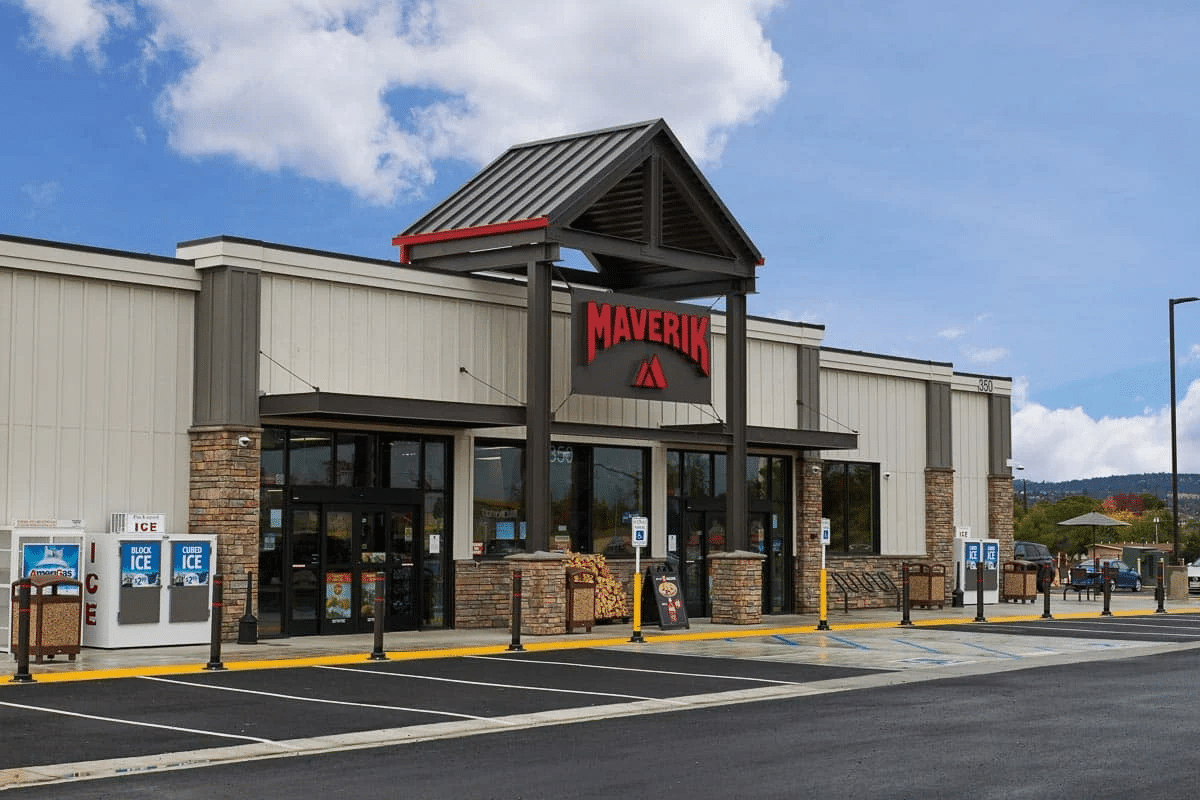
6 Gas Station Chains With Food So Good It’s Worth Driving Out Of Your Way For
We scoured the Internet to see what people had to say about gas station food. If you think the only things available are wrinkled hot dogs of indeterminate age and day-glow slushies, we’ve got great, tasty news for you. Whether it becomes part of a routine or your only resource on a long car trip, we have the food information you need.
Let’s look at 6 gas stations that folks can’t get enough of and see what they have for you to eat.