Let’s be honest, adulthood is full of silent agreements and unspoken truths that we all seem to understand but rarely discuss.
It feels like we’re all just quietly navigating this stuff, thinking we’re the only ones. But we’re not. Lately, it seems that many of us are feeling it. According to Gallup, the percentage of U.S. adults who think they’re “thriving” has recently dipped below 50% for the first time since the pandemic, hitting lows we usually only see during major recessions.
So, what are these tough lessons we’re all learning in the background? This isn’t about being negative; it’s about acknowledging the complex, often paradoxical, realities of life, because understanding them is the first step toward navigating them with grace and wisdom. This list is a nod to that quiet knowledge we all accumulate.
Your Dream Job Is a Myth, and Chasing It Can Make You Miserable

Remember being a kid and having that one perfect answer to “What do you want to be when you grow up?” Well, it turns out that whole concept might be the problem.
The data is relatively straightforward: the idea of a single “dream job” doesn’t align with reality. A 2018 survey by TollFreeForwarding.com found that only 10% of people were in their childhood dream job.
What’s more, there’s a massive sense of regret baked into this myth. A 2023 ResumeLab study found that a staggering 72% of workers who haven’t achieved their dream job regret it. We’re setting ourselves up for a feeling of failure based on a childhood fantasy.
The harsh lesson isn’t that you failed to get your dream job. It’s that the concept itself is flawed. As Hillary Clinton once said, “Don’t confuse having a career with having a life.” The real goal isn’t a perfect job; it’s a good life.
Success Isn’t a Ladder; It’s More Like a Jungle Gym

The old-school idea of climbing a corporate ladder, one predictable rung at a time, is officially dead.
Today’s career path looks a lot less linear. The average person will change careers 5 to 7 times in their life. The concept of a “job for life” has given way to constant change; median job tenure has plummeted to just 3.9 years as of early 2024, according to the U.S. Bureau of Labor Statistics.
Why the change? Technology is a huge driver. Experts predict that by 2030, a significant 70% of the skills required for jobs today will have undergone substantial changes due to the impact of AI and automation. Staying in one place is no longer safe; it’s a risk.
This is why Sheryl Sandberg’s metaphor is so perfect: “Careers are a jungle gym, not a ladder”. It’s about being agile, making lateral moves, and gathering a diverse set of skills. We quietly accept that our careers will be a series of pivots, but the upside is a path that offers more chances for real fulfillment.
“Work-Life Balance” Doesn’t Exist, and the Pursuit of It Is Exhausting

We’ve all been sold the dream of a perfectly balanced scale, with work on one side and life on the other. But for most of us, it’s a myth that just creates more stress.
The numbers don’t lie. A significant number of American workers feel they lack work-life balance. This isn’t just a feeling; it has real consequences. The American Psychological Association found that 77% of workers experienced work-related stress, leading to emotional exhaustion (31%) and a desire to quit (23%) in 2023.
The problem is the word “balance” itself. It suggests a 50/50 split, which is impossible. As author Alain de Botton put it, “There is no such thing as work-life balance. Everything worth fighting for unbalances your life”.
A healthier trend is the move toward “work-life fit” or “integration,” which is about blending the two in a way that works for you. We’ve learned to stop chasing the ghost of balance and accept that life is a messy, beautiful, and always-shifting blend of priorities.
You have to Fail About 16% of the Time to Learn Anything Meaningful

If you’re succeeding all the time, you’re not learning. You’re stagnating. Actual growth happens when you’re willing to get it wrong.
It’s not just a nice idea; it’s science. Researchers have identified a “sweet spot” for learning, characterized by an optimal error rate of 15.87%. If you’re getting things right more than 85% of the time, the task is too easy for you to grow.
Failure literally distorts our perception, making our goals seem farther away, and our own abilities feel weaker than they truly are. It’s a defense mechanism, but it holds us back.
That’s why we have to reframe it, just like the greats do. We quietly learn that the discomfort of that ~16% failure rate isn’t a sign of weakness; it’s the price of admission for getting better.
Happiness Isn’t a Destination You Arrive At

We live in an “I’ll be happy when…” culture, when I get the promotion, when I buy the house, when I find a partner. But that’s a trap.
Happiness isn’t a place you get to; it’s a state you cultivate. The famous “happiness pie chart” theory suggests that while about 50% of our happiness is tied to our genetic set point and 10% to our life circumstances, a massive 40% is determined by our intentional, daily activities.
So what works? Small, consistent actions. The lesson is that happiness isn’t a lottery ticket we might win; it’s a garden we have to tend to every single day.
You Will Outgrow People You Thought Would Be in Your Life Forever

This is one of the most painful lessons, but it’s a universal one. Not all friendships are meant to last a lifetime, and that’s okay.
We are in the middle of a “friendship recession.” It’s not always a dramatic falling out. Often, it’s a slow, quiet drift. As we grow and our values shift, we can find ourselves on different paths from people we once shared everything with.
It hurts because we often treat friendships as if they are permanent. But the truth we quietly accept is that some people are there for a season, to teach us something or share a specific part of our journey. Letting them go gracefully is a sign of maturity.
The Need to Be Liked by Everyone Is a Trap

The desire to be liked is a universal human trait. The need to be liked by everyone is a recipe for anxiety and inauthenticity.
This is a widespread struggle. Social anxiety disorder, which often involves an intense fear of being judged or disliked, affects both teens and adults in the U.S. Social media has poured gasoline on this fire, creating a “Like Economy” where our self-worth gets tied to digital validation.
We start sanding down our interesting edges to become more palatable, more “likeable.”
Researcher and author Brené Brown offers the way out. She says, “when I’m prioritizing being liked over being free, I was much sweeter but less authentic. Now I’m kinder and less judgmental. But also firmer and more solid”. The lesson is that being truly yourself means some people won’t get it. And that’s not just okay; it’s a sign that you actually stand for something.
Your Parents Are Just Flawed People Who Had You

There’s a moment in every adult’s life when the curtain is pulled back, and you see your parents not as superheroes or villains, but just as… people.
It’s a tough transition. As children, we see them as all-knowing. As adults, we see their flaws, their insecurities, and the ways their own upbringing shaped them.
Generational trends reveal a lot. Many Gen X parents became “helicopter parents” because they felt their own Boomer parents were too hands-off. Now, Millennial parents are reacting to that, focusing more on emotional intelligence and open-mindedness.
Parenting is often a reaction to our past experiences. As actor Peter Krause said, “Parenthood… It’s about guiding the next generation and forgiving the last”. We learn to grieve the perfect parent we never had and accept the real, beautifully imperfect one we do.
You Can’t Change Other People, and Trying Is a Waste of Your Energy

We spend so much energy trying to fix, convince, or change the people around us. But it’s a battle we will almost always lose.
Cognitive science is pretty blunt about this: humans are incredibly resistant to changing their minds, even when you show them cold, hard facts. We’re wired to protect our existing beliefs. Furthermore, research indicates that a remarkable 43% of our daily behaviors are simply habits we repeat without even thinking. You’re not arguing with a person; you’re arguing with their autopilot.
Think about it: 80% of people who make New Year’s resolutions don’t actually keep them. If it’s that hard to change ourselves, what makes us think we can change someone else?
The real power move is acceptance. We quietly learn to stop trying to be a sculptor of other people and instead become the architects of our own boundaries and peace.
Saying “No” Is a Skill You Must Learn to Protect Your Peace

Save this article
Every time you say “yes” to something you don’t want to do, you’re saying “no” to something you need—like rest, time with loved ones, or your own sanity.
This is a tough one for a lot of us. It’s often rooted in a deep-seated need for approval that can date back to childhood.
But the most successful people have mastered this skill. Saying “no” isn’t about being mean; it’s about being clear. It’s the ultimate form of boundary setting, which leads to lower stress and higher self-esteem. We learn, often the hard way, that our time and energy are our most valuable assets. Saying “no” is just responsible budgeting.
Your Thoughts Are Not Facts

Your brain is a thought-generating machine, but it’s not a truth machine. Learning to distinguish between the two is a life-changing skill.
Our minds have a well-documented negativity bias. Most of our thoughts are focused on negative things. It’s a survival mechanism left over from ancient times, but in the modern world, it just creates anxiety. We have thousands of thoughts a day; they can’t all be true or worthy of our attention.
This is why mindfulness and meditation have exploded in popularity. We’re collectively realizing we need tools to manage our inner world.
The core practice is called cognitive defusion. A great way to think about it is this metaphor: “You are the sky, everything else is the weather”. Thoughts, feelings, and sensations just pass through. You don’t have to become the storm.
Courage Is Born from Vulnerability, Not Strength

We’ve been taught that courage is about being fearless and strong. The truth is, it’s about being scared to death and doing it anyway.
Real courage requires vulnerability. Brené Brown’s research, based on over 11,000 interviews, found that she could “not find a single example of courage… that was not born completely of vulnerability.”
Think about it. Asking for help, admitting you’re wrong, starting a new business, falling in love—these are all acts of courage that require you to be completely exposed, with no guarantee of the outcome.
We quietly learn that the shaky, uncertain feeling of vulnerability isn’t a warning sign to retreat; it’s a call to action. It’s a compass pointing us toward a more courageous life.
Letting Go Is Hard Because It Feels Like Giving Up Control

We hold on to old hurts, resentments, and what-ifs, not because we like the pain, but because holding on gives us a false sense of control.
Our brains are hardwired to seek control because, on a primal level, control equates to safety. Letting go of a past wrong can feel like admitting defeat or accepting that what happened was okay. It feels dangerous.
But holding on is what truly harms us. It traps us in a cycle of rumination that is mentally and physically exhausting, and can even contribute to chronic pain and other physical symptoms. Psychologists have even identified the “inability to let go” as a key factor that predicts anxiety and depression.
The harsh lesson is realizing that the control we feel from holding on is an illusion. The event is over. The only thing we control now is whether we continue to carry it. Letting go isn’t giving up; it’s setting yourself free.
Most of Your Disappointment Is Just the Gap Between Expectation and Reality

It’s rarely the event itself that breaks our hearts; it’s the distance between what we thought would happen and what actually did.
Psychologists call this the “expectation gap,” and they’ve identified it as a major predictor of dissatisfaction and anxiety. Our brains don’t help; we have a natural “optimism bias” that causes us to have inflated hopes for the future.
And reality is often a tough pill to swallow. Some startups fail, marriages end in divorce, and less than 1% of professionals ever reach the C-suite. Our expectations are often based on movies, not math.
The secret isn’t to stop having dreams, but to hold them a little more loosely.
You Don’t Lack Time; You Lack Clear Priorities

“I don’t have time” is the most common and convenient excuse. But for most of us, it’s not true. We have the time; we just haven’t decided what’s truly important.
The statistics on how we actually spend our time are eye-opening. A shocking 82% of people don’t use any formal time management system. The average employee is only truly productive for 2 hours and 53 minutes a day, with the rest of the time lost to low-value tasks, interruptions, and meetings.
Where does it all go? We quietly learn that our schedule is a perfect, honest reflection of our priorities. To discover what you truly value, examine your calendar.
Experiences Will Almost Always Bring You More Joy Than Possessions

Our consumer culture has led us to believe that the path to happiness is paved with possessions. But science and experience tell us a different story. To be truly happy, consider spending your money on experiences rather than things.
The happiness we get from buying a new phone or a new pair of shoes fades quickly. It’s a phenomenon called “hedonic adaptation.” We just get used to it. But experiences—a trip, a concert, learning a new skill—become a part of our identity. They give us stories and memories that can last a lifetime.
This is the core idea behind the minimalism movement. It’s not about deprivation; it’s about intentionality. It’s about freeing up the resources (money, time, energy) that we spend on stuff and redirecting them toward things that create lasting joy and meaning.
Burnout Is Real, and Self-Care Is a Necessity, Not an Indulgence

For a long time, the concept of “hustle culture” was glorified. But now, the bill is coming due in the form of a widespread burnout epidemic.
Burnout is now officially recognized by the World Health Organization as an “occupational phenomenon.” And it’s everywhere. This has fueled the “quiet quitting” trend, where up to 50% of the U.S. workforce is now doing the bare minimum to get by—not out of laziness, but as a form of self-preservation.
In response, the health and wellness industry is projected to become an $11 trillion market by 2034. We’re all desperately looking for ways to recover. We’ve finally, quietly accepted that self-care isn’t selfish. It’s essential maintenance.
Key Takeaway

Life isn’t a straight line, and it rarely follows the instructions we were given. The real journey is about learning to navigate the beautiful, messy, and unpredictable reality.
- Life is about adaptation, not achievement. Chasing static goals like a “dream job” or perfect “balance” is less valuable than building the resilience to navigate constant change.
- Your internal world matters more than your external one. True contentment comes from managing your thoughts, priorities, and expectations, not from chasing wealth or status.
- Authentic connection requires both courage and boundaries. The best relationships are built on being your genuine self, which means having the vulnerability to be seen and the strength to say “no.”
- Acceptance is your most fantastic tool for peace. Learning to accept reality—your failures, your flawed family, the things you cannot change—is the most direct path to reducing your own suffering.
Disclaimer – This list is solely the author’s opinion based on research and publicly available information. It is not intended to be professional advice.
Like our content? Be sure to follow us.
How Total Beginners Are Building Wealth Fast in 2025—No Experience Needed

How Total Beginners Are Building Wealth Fast in 2025
I used to think investing was something you did after you were already rich. Like, you needed $10,000 in a suit pocket and a guy named Chad at some fancy firm who knew how to “diversify your portfolio.” Meanwhile, I was just trying to figure out how to stretch $43 to payday.
But a lot has changed. And fast. In 2025, building wealth doesn’t require a finance degree—or even a lot of money. The tools are simpler. The entry points are lower. And believe it or not, total beginners are stacking wins just by starting small and staying consistent.
Click here and let’s break down how.
5 Easy Steps to Change Any Habit
5 Easy Steps to Change Any Habit
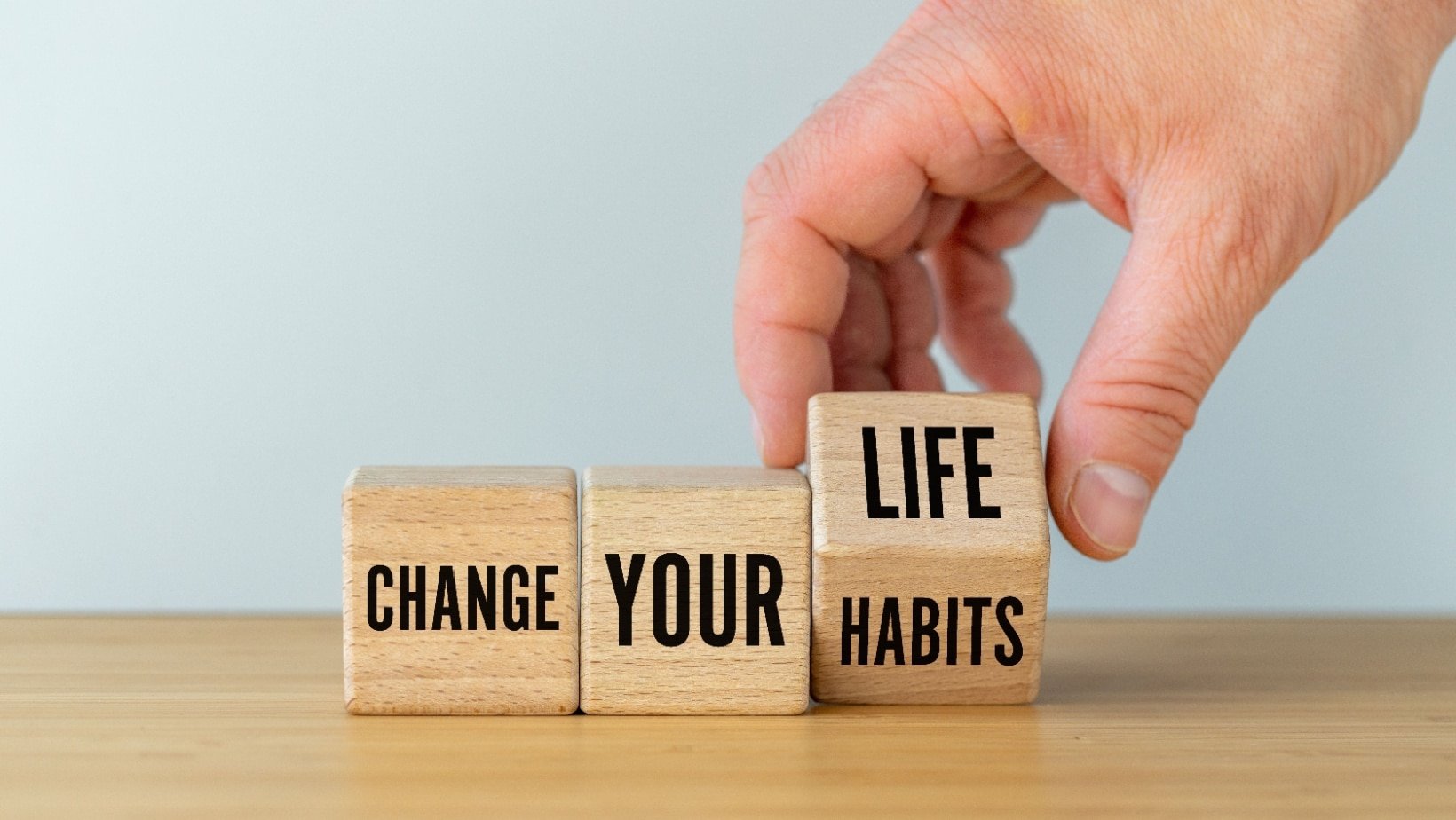
We all click on them with the hope that just THIS time, the secret to changing a bad habit or adopting a healthy one will be revealed. We’ll finally be able to stick to that diet, stop those one or ten things that might in the moment make us feel temporarily good but really just make us fat, unhealthy, sad, mad, or just frustrated with ourselves.