The vegetables that end up in the trash are often the ones bought with the best intentions.
A bag of spinach for weekday lunches. A bunch of herbs for homemade dinners. A container of mushrooms for the recipe that never happened. By the end of the week, the same produce that looked like a sign of a healthier routine has become a reminder of another unfinished plan.
For many households, the problem starts before the vegetables reach the refrigerator. People buy more variety than they can realistically use, underestimate how quickly delicate produce changes, and store everything together as if every vegetable follows the same timeline.
The result is familiar: wilted greens, soft vegetables, and a crisper drawer full of food that should have been dinner.
The Environmental Protection Agency estimates that the average U.S. consumer wastes about $728 worth of food each year, while a family of four wastes roughly $2,913 annually, about 11% of its food spending.
Reducing produce waste is less about finding one perfect storage trick and more about changing how vegetables move through the kitchen — from the grocery cart to the refrigerator to the plate.
Stop Shopping for the Week You Wish You Had
Many shoppers buy produce based on an ideal version of the week: the person who will cook every night, prepare lunches in advance, and finally use that large container of greens before it expires.
Then schedules change.
The most effective grocery strategy is often to buy based on actual habits rather than ambitious plans. That might mean buying fewer delicate vegetables, choosing sturdier options that last longer, and making a shorter midweek trip for items that don’t hold up as well.
A 2026 study involving 63 graduate students found that shopping-list use was associated with lower self-reported food waste. Among participants who did not use shopping lists, 92% reported food waste compared with 55.3% of those who did use lists. The researchers also identified overbuying, forgotten refrigerator items, and limited meal planning as common contributors to household food waste.
Give Vegetables a “Use First” Schedule
A bunch of asparagus and a bag of potatoes may both count as vegetables, but they follow very different timelines.
Tender produce usually needs attention earlier in the week. Leafy greens, asparagus, green beans, mushrooms, and fresh herbs can deteriorate quickly, while vegetables such as carrots, potatoes, sweet potatoes, and winter squash are more forgiving.
The University of Maine Cooperative Extension’s produce storage guidance highlights these differences, noting that green beans may last only a few days under refrigeration, while many root vegetables can last one to two weeks under proper conditions. Bell peppers can also last up to two weeks when stored correctly.
A simple system can prevent many vegetables from being forgotten:
Use first:
- Leafy greens
- Asparagus
- Green beans
- Mushrooms
- Fresh herbs
Use later:
- Broccoli
- Cauliflower
- Celery
- Carrots
- Potatoes
- Sweet potatoes
Planning meals around shelf life can be more effective than forcing every vegetable into the same weekly routine.
Make the Vegetables That Need Attention Impossible to Miss
A bag of spinach behind leftovers is easy to forget. A container of chopped vegetables pushed to the back of the fridge can become invisible until it is too late.
One simple habit is creating a visible “use first” area.
That might mean placing vegetables that need attention on the most visible shelf, grouping ingredients for an upcoming meal together, or keeping a container specifically for produce that needs to be used soon.
A 2025 intervention study involving 119 households tested food-management tools that encouraged participants to identify foods needing prompt use, move them into visible locations, and use them. The intervention groups reduced average weekly food waste by 29% to 51% during the two-week study period, although the authors described the results as short-term evidence rather than proof of a permanent solution.
Sometimes the biggest improvement is not better storage.
It is remembering what you already bought.
Store Vegetables Based on What They Need
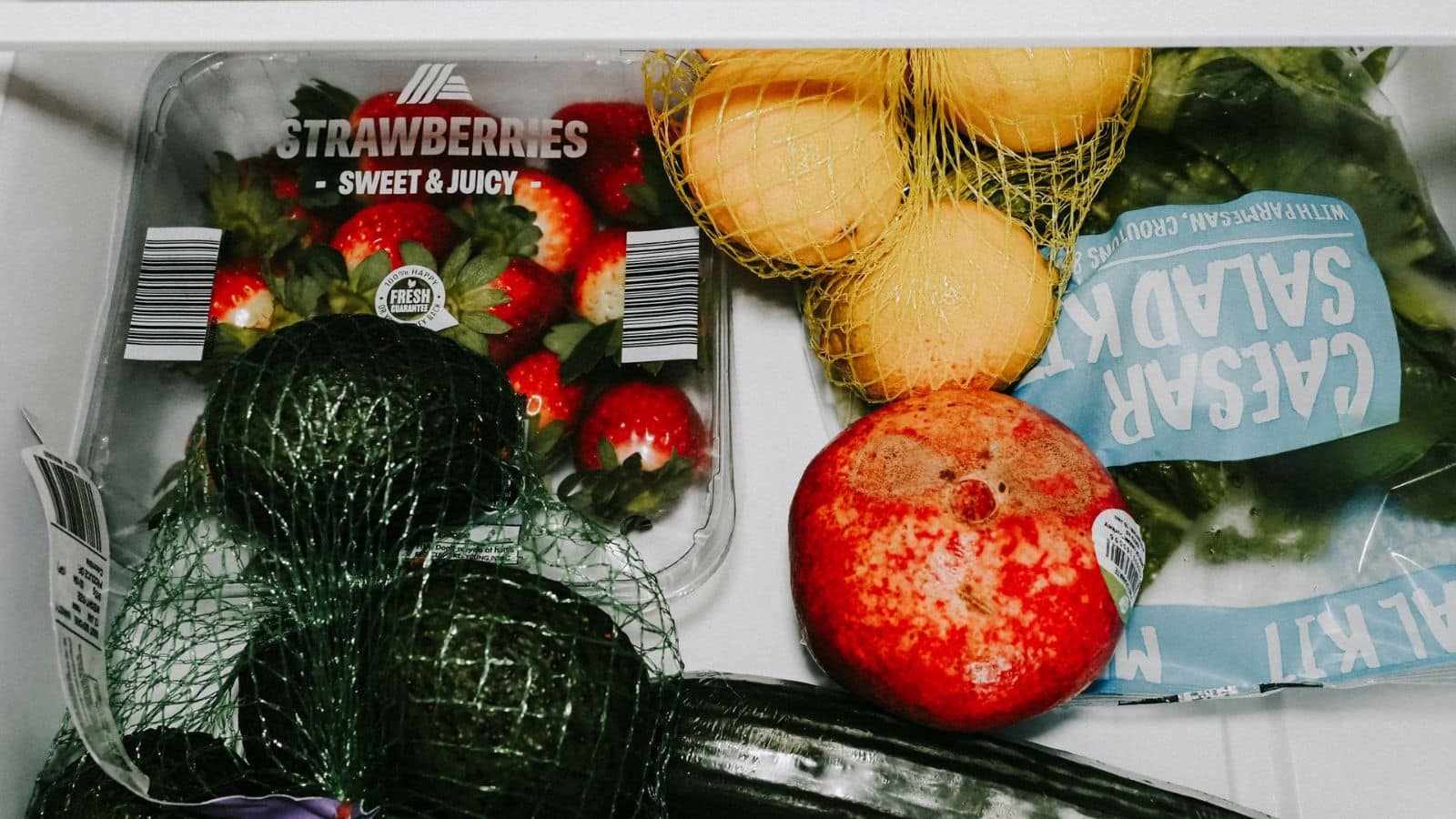
The crisper drawer can help, but putting vegetables inside it does not automatically keep them fresh.
Different vegetables respond differently to moisture, airflow, and temperature.
Leafy greens are a good example. Extra moisture can speed up wilting, which is why many home cooks use paper towels in containers with washed greens to absorb excess water.
Mushrooms are another common trouble spot. Storing them in a paper bag can help manage moisture better than trapping them in sealed plastic. The University of Maine Cooperative Extension recommends storing mushrooms in their original packaging or a paper bag and avoiding washing them before storage.
Save this article
Asparagus is often stored upright in a small amount of water, similar to flowers, to help maintain freshness.
The refrigerator itself matters too. FoodSafety.gov recommends keeping refrigerators at 40°F (4°C) or below, while Oregon State University Extension recommends a refrigerator temperature range of about 34°F to 40°F for storage and quality.
A refrigerator thermometer may be one of the most useful kitchen tools because it tells you whether your fridge is actually keeping food cold enough.
Prep Strategically, Not Automatically
Meal prep is often presented as the answer to food waste.
Chop everything on Sunday. Store everything in containers. Be ready for the week.
For some households, that works. For others, it creates another problem: containers of vegetables that were prepared with good intentions but never used.
Cut produce generally has a shorter shelf life than whole vegetables because cutting exposes more surface area and can speed up quality changes. The University of Maine Cooperative Extension recommends storing cut produce properly and using it within a shorter timeframe than whole produce.
A better approach is preparing what you know you will use soon. Wash berries before a busy week if that makes them easier to grab. Chop vegetables for tomorrow’s dinner. Prepare ingredients when there is a clear plan for them.
But leaving some produce whole can help it last longer.
Freeze Vegetables Before They Become a Lost Cause
The freezer is one of the most useful tools for reducing produce waste — but timing matters.
Freezing vegetables after they have already become slimy or spoiled won’t save them. Freezing works best when produce is still good but unlikely to be used in time.
Many vegetables benefit from blanching before freezing to help preserve quality. University extension guidance recommends blanching vegetables before freezing, including guidance from the University of Georgia Extension and University of Minnesota Extension.
Vegetables that can work well in the freezer include:
- Broccoli for soups and stir-fries.
- Spinach for smoothies, sauces, and eggs.
- Peppers for cooked dishes.
- Herbs blended into pesto.
- Celery and onions for soups.
Related: You’re Probably Not Refrigerating These 10 Foods, and It Could Cost You Your Health
Watch What Is Stored Next to Your Vegetables
Certain fruits release ethylene gas, a natural plant hormone that can speed up ripening and deterioration in some vegetables.
Oregon State University Extension recommends separating fruits and vegetables into different bags or drawers to reduce the effects of ethylene on vegetables.
This can be especially helpful for produce such as:
- Leafy greens.
- Broccoli.
- Asparagus.
- Green beans.
- Cucumbers.
Common ethylene-producing fruits include apples, bananas, pears, avocados, and tomatoes.
The Goal Is Not a Perfect Zero-Waste Kitchen
A realistic food routine is not one where every vegetable gets used perfectly every week.
Schedules change. Meals get canceled. The vegetables bought on Sunday do not always match the week that follows.
Households that waste less produce usually don’t have the most complicated meal-prep systems. They notice what they already have, buy according to their actual routines, and make small decisions before food reaches the point where it has to be thrown away.
A crisper drawer full of forgotten vegetables is not usually a sign that someone failed. It often signals that the kitchen needs a better system.
What vegetable do you always buy with good intentions but struggle to finish?