
Cacao may grow near the equator, but some of the most acclaimed chocolate bars in the world are now being made by hand in a quiet corner of Massachusetts.
Chocolate doesn’t usually begin in my home state of Massachusetts. Cacao trees grow thousands of miles away, in tropical regions where climate, soil, and fermentation practices shape flavor long before a bar is made. Yet some of the most exquisite, flavor-driven chocolate in the United States is being produced far from the equator, by makers who choose to stay closely involved with every step of the process.
Goodnow Farms Chocolate is a Massachusetts-based bean-to-bar chocolate company led by Monica and Tom Rogan, whose work begins with extensive travel throughout Latin America to source fine flavor cacao directly from farmers. Their approach emphasizes relationship-building over scale, often bringing them to small family farms and remote villages where exceptional cacao is grown but rarely reaches large commercial markets.
Internationally Renown
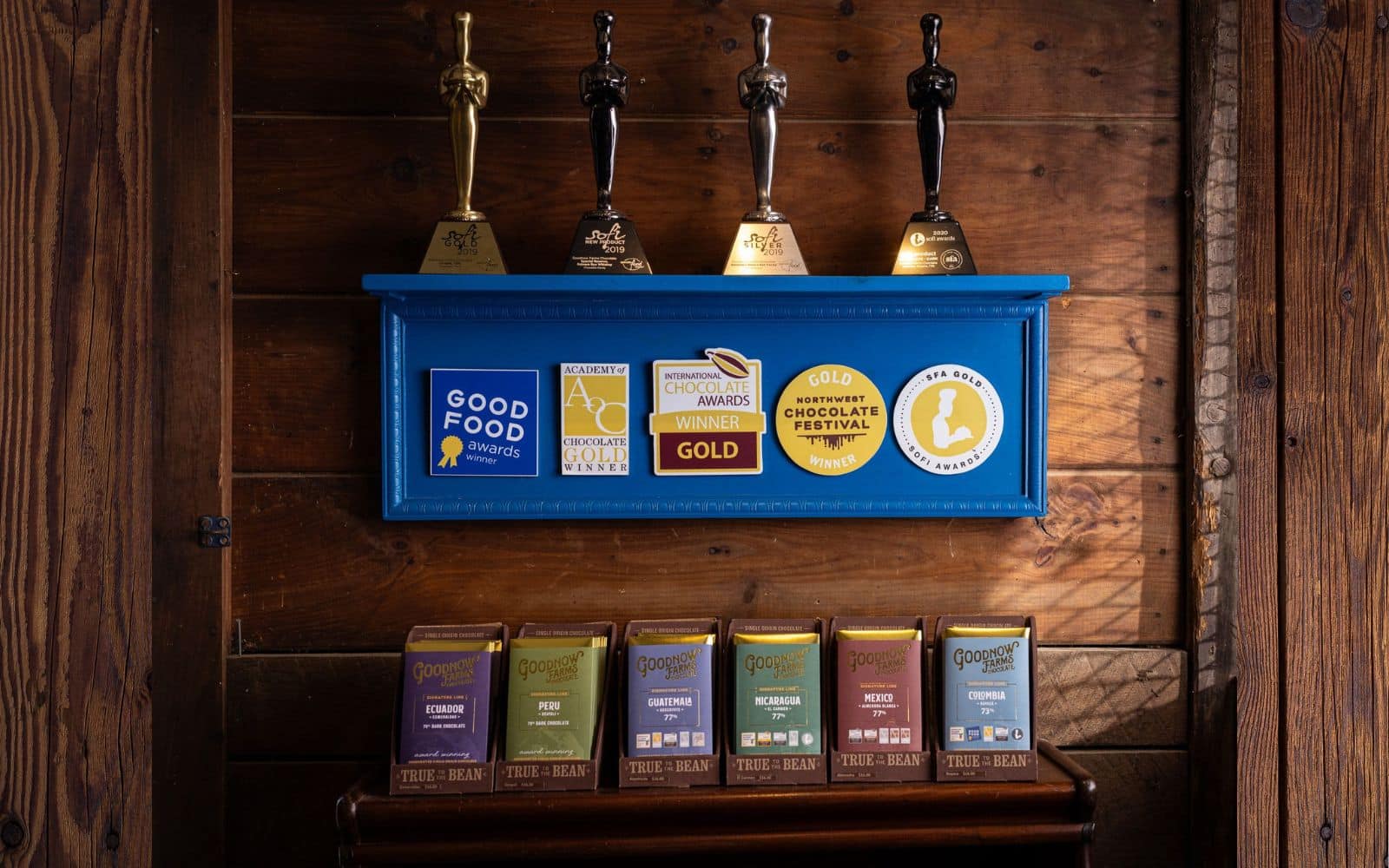
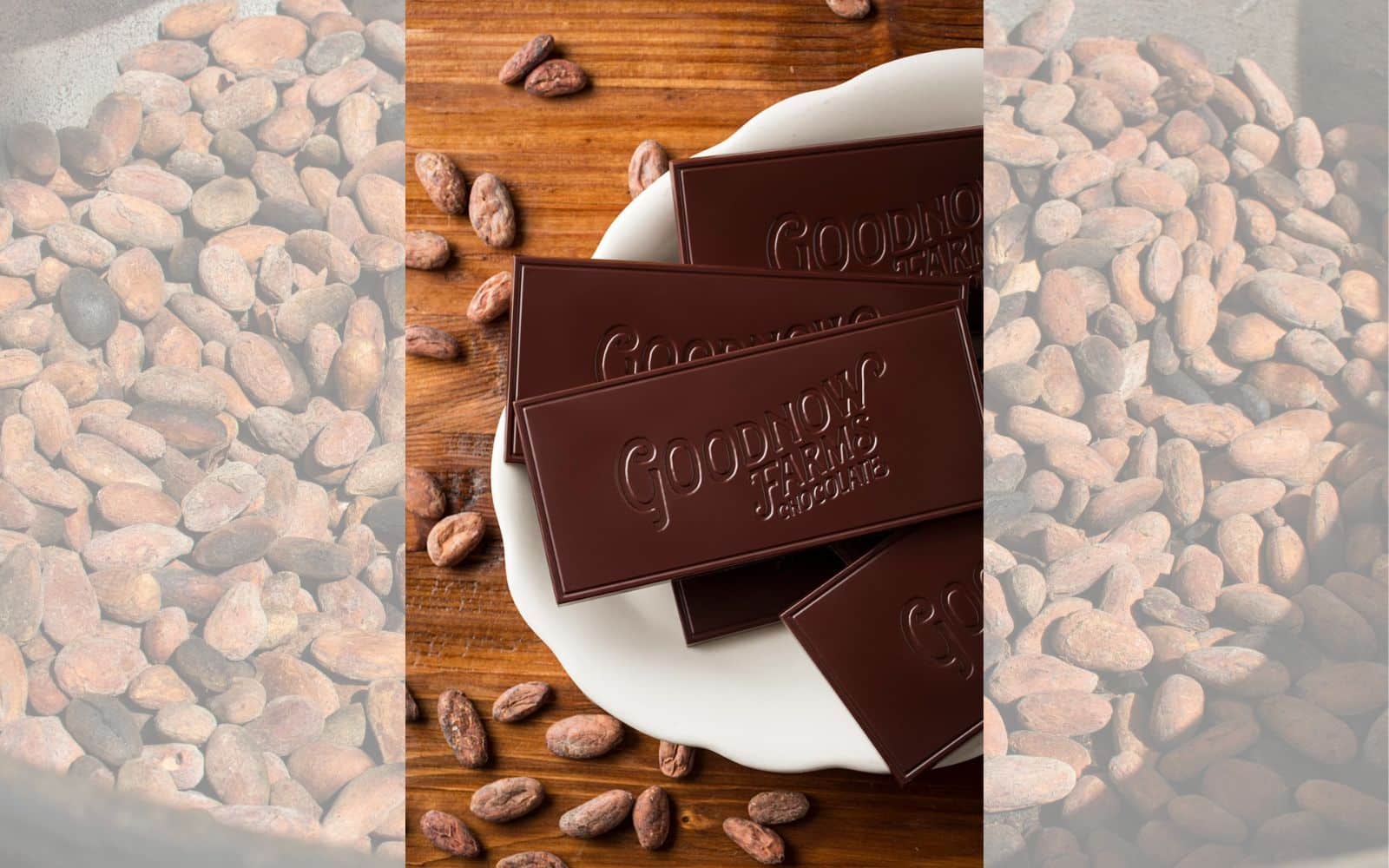
Unlike most chocolate makers, Goodnow Farms presses its own cocoa butter on site, a labor-intensive step that allows greater control over flavor and texture while preserving the identity of each origin. That commitment to process has earned the company significant international recognition, including more International Chocolate Awards and Academy of Chocolate Awards than any other U.S. chocolate maker.
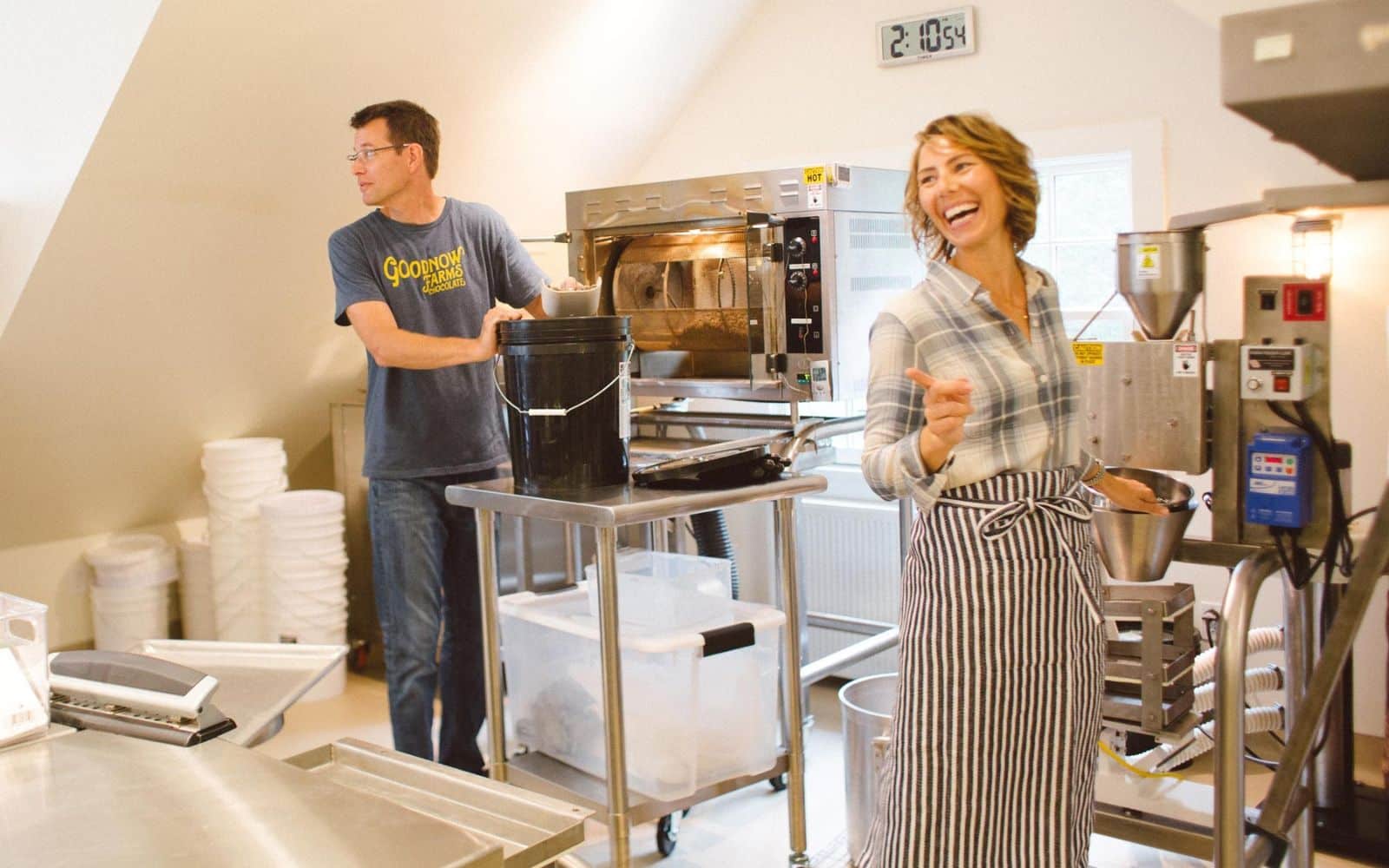
Founded after years of home experimentation and the purchase of a historic Sudbury property in 2015, Goodnow Farms began producing chocolate commercially in 2016. Today, visitors can tour the facility and watch the entire chocolate making process unfold by hand, from bean sorting to finished bars, all produced adjacent to a 225-year-old barn that anchors the company’s New England roots.
Once people taste craft chocolate, they understand that the chocolate we make is very different than the processed candy they find in those convenience stores.
Goodnow Chocolate farms
Teaching Others About Cacao
For the last 30 years, I have conducted chocolate tastings throughout New England and the Atlantic States, for professionals as well as for any and all chocolate lovers. There are a lot of facets to my work-life, but when people ask me what I do for a living, I always say that the best part is being paid to eat, talk, and write about chocolate. So, years ago when I discovered Goodnow in my backyard, I was thrilled to learn about a lauded local company.
All About Goodnow Farms Chocolate
Speaking of those International Chocolate Awards and Academy of Chocolate Awards, every fall I pay attention to winners and assemble chocolates that have won awards in various categories, to organize my upcoming tastings, which are often clustered around Valentine’s Day.
This year, I was able to chat with Monica and Tom of Goodnow Farms Chocolate and bring their story to you.
The Interview
Dédé: Monica and Tom, thank you so much for doing this interview. I have been a huge fan for years, and have used your chocolates in my tastings. Let’s dive right in. Probably everyone reading this interview has eaten chocolate. Take our readers through a journey that explains why that Hershey or Nestlé bar they grab at the convenience store is very different from Goodnow chocolate bars.
Monica: Of course! First of all, thanks very much for taking the time to speak with us, and for supporting small batch chocolate makers with your chocolate classes. Once people taste craft chocolate, they understand that the chocolate we make is very different than the processed candy they find in those convenience stores.
For many people mass market chocolate candy is the only chocolate they’ve ever tasted, but it doesn’t truly represent the taste of the cacao beans from which it’s made. There are many reasons for that. Because it’s a commodity product it’s made on a large scale using beans from many different sources, and those beans have varying degrees of quality.
Most of the flavorful cocoa butter is removed and sold off to the cosmetics industry, and then replaced with soy lecithin. The cacao is also alkalized, which removes not only most of the healthy antioxidants but also the complex, natural flavors. Then lots of sugar, and milk powder in the case of milk chocolate, is added.
Believe it or not a typical mass market milk chocolate bar sometimes contains only 11% cacao, and then only because the cacao percentage needs to be at least 10% to legally be called chocolate. Because most of the cacao flavor was removed during alkalization the resulting concoction doesn’t taste like much, so most manufacturers add vanilla.
People are surprised to hear that, since vanilla is considered the polar opposite flavor from chocolate! But vanilla is often the flavor people are responding to when they say they like mass market chocolate, since the flavors in the bars themselves have no relation to the flavors in the actual cacao beans.
Tom: What we do is completely different. We highlight the natural flavors of the cacao beans, so our chocolate bars taste like the beans they’re made from. We source our beans from single farms or small geographic areas to better understand their flavor profile and genetics, and we never alkalize, so the beans retain all of their incredible natural flavors. We also never add soy lecithin, as it competes with the flavor of the beans, and we add only enough sugar to highlight those flavors.
Monica: Most people don’t realize chocolate comes from a fruit, and just like any fruit different types of cacao have different flavors. Think of it like wine grapes – a Merlot tastes different than a Cabernet Sauvignon. So, we spend a lot of time finding beans that have incredible and unique flavors, and then we work directly with farmers to ensure the beans are of the highest quality.
The farmers even do custom harvests or custom fermentation protocols for us in order to draw out the specific flavor profile we’re looking for. That’s just one of the many reasons we have very close, long-term relationships with our farmers – creating fantastic, fine flavor cacao beans takes a lot of time, attention to detail and skill, and the farmers we work with are committed to producing a product of the highest quality. Without great beans you can’t make great chocolate!
Goodnow Farms Chocolate House Style
Do you have a “house style?” Are there flavor notes you see recurring across your lineup—your “signature” markers—even as origins change?
Tom: We’re known for being able to draw out very complex flavors in our chocolate. One of our farmers once told me that a friend of his was so blown away by the flavors of our bar he asked if the farmer had sent us different beans than he’d sent to everyone else. He thought the flavors were that different from all the other bars he’d tried! So, I think people who know craft chocolate have come to expect that any bar they try from us will be a great representation of the flavors in the cacao beans.
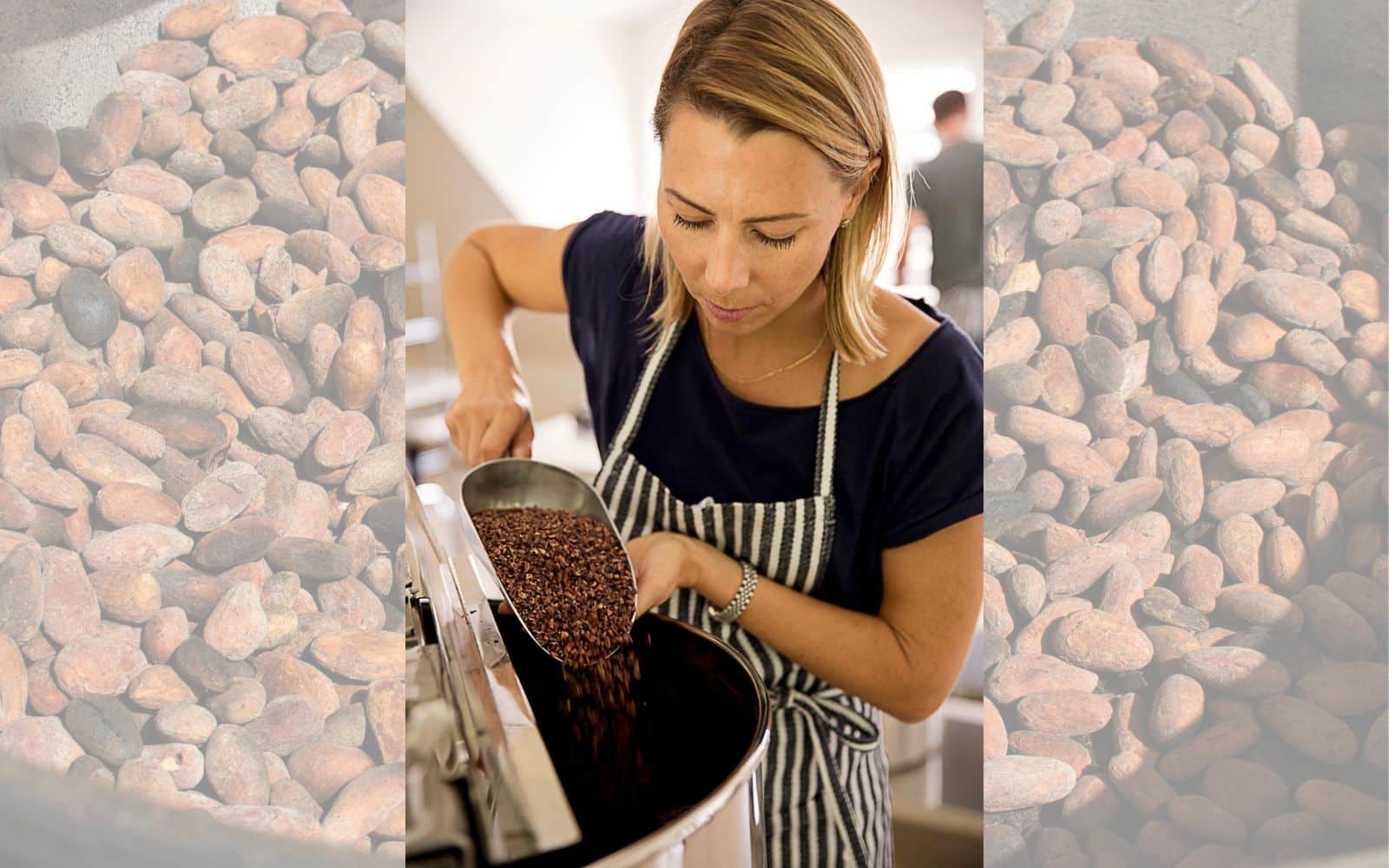
Monica: We’re also known for having exceptionally smooth and intensely flavorful chocolate, and one of the reasons for that is we press our own cocoa butter, which makes a tremendous difference in flavor and texture.
Cocoa Butter is a Key Component
I wanted to ask you about that. When I first learned that you press your own cocoa butter, I was impressed and thrilled. Explain why was this was important enough to invest in, and what does it change in the final bar?
Monica: It makes all the difference. It really does. It’s so important to us that we actually use about 60% more beans to make every batch of chocolate – that’s how much extra butter we add. It’s ridiculously time consuming and expensive but it’s absolutely worth it from the standpoint of flavor.
Tom: You don’t need to add extra cocoa butter to make chocolate, because the beans are naturally about 50% butter. But chocolate with no added butter is too dry for us, and we feel that the flavor is often lacking. After all, cocoa butter is a fat, and fat enhances flavor! So, at first, we tried adding deodorized cocoa butter purchased from a large manufacturer – this is the type of cocoa butter that’s in most bars containing added butter. But when we used the deodorized butter, it diluted the flavor of the chocolate. We also tried purchasing single origin butter, but the flavor of the butter competed with the flavors in our chocolate, since that butter is made from different beans. And doing either of those things would have meant our bars wouldn’t be truly single origin anymore.
Then we tried pressing our own butter and were completely blown away by the intensity of the flavor! We always press butter from the same type of bean we’re using to make the chocolate, so the butter contains the same flavors as the chocolate and enhances them tremendously. So, even though it’s expensive and a lot of hard work we do it for every batch of chocolate we make.
Understanding Labeling Terms
One thing that students of mine are often confused about is the part of labeling that states “organic” or “fair trade,” “direct trade,” and the like. Can you speak to these terms from the Goodnow perspective?
Monica: They’re confused for good reason, because it’s very confusing, and it’s a question we get a lot. Not enough is being done to educate people about what the various terms mean, so people often think that if a product has a particular label or certification that it has certain qualities, like no pesticides, or paying farmers a higher price, when that may not always be the case.
We don’t label our chocolate as organic and don’t ever require our farmers to have organic certification, for several reasons. One is that the certification itself is expensive, and the additional price farmers get for organic cacao may not always justify that cost.
Organic Chocolate Is Not Always Labeled
Monica: Another is, and this is the case with many cacao farms around the world, most of our farmers either don’t have access to or can’t afford the pesticides and other products that organic certification supposedly keeps out of the food supply chain, so our cacao is de-facto organic even though it isn’t certified.
And, I say supposedly because many people don’t understand that many smallholder farms with organic certification aren’t regularly inspected, and there’s also a practice known as “mass-balance sourcing” that allows certified organic beans to be mixed with non-certified beans in the supply chain. So, even if you see the organic certification what you’re getting may not be what you think you’re getting.
Tom: Fair Trade can be problematic as well. Like organic, farmers have to pay for the certification. And being part of a fair trade system doesn’t always mean farmers are getting paid higher prices than non-fair trade farmers. With cacao, fair trade certification is particularly problematic because most farms are too small to produce enough cacao to do their own fermentation and drying. Because of this they often send their cacao to a centralized fermentation and drying facility for post-harvest processing, so every farmer who sends their cacao needs to pay for fair trade certification. That cost cuts into profits, and also excludes farmers who can’t afford the certification.
The Meanings of Fair Trade & Direct Trade

Monica: To be clear we’re not saying fair trade and organic certification don’t have their place. In many circumstances they’re steps in the right direction, but consumers shouldn’t be complacent about what they mean, and shouldn’t think they solve every problem in every supply chain.
The reality is that if consumers really want to improve supply chains, and know where their food is coming from and how it’s treated, they have to spend more time understanding those supply chains. And, that can be very hard to do, as doing that research takes time most people don’t have.
Also, most companies aren’t forthcoming about how they source ingredients. One place to start when it comes to improving supply chain transparency is by asking questions – if a company doesn’t provide sourcing information look for one that will.
Many small companies, particularly small craft chocolate makers, are very transparent about how they source their ingredients, and even the prices they pay. The more consumers demand this information the more companies will do it, and once companies know sourcing information will be made public it will hopefully drive positive change as they look to ensure their sourcing practices stand up to scrutiny as equitable and sustainable.
Tom: There are a lot of other terms you’ll see on craft chocolate bars, like “direct trade,” which you mentioned, or “transparent trade.” These aren’t certifications, and the terms are defined differently by different people. But it’s an attempt by chocolate makers to communicate to consumers that their chocolate is created with certain priorities in mind, namely quality, sustainability and equity in the supply chain.
For Goodnow Farms we often use the term “direct trade” because of our close relationships with our farmers, and also because we negotiate prices directly with them and pay significantly more than commodity prices. But the term “direct trade” on any given chocolate bar doesn’t guarantee anything – someone who uses the term direct trade could be paying less than commodity prices. There’s no oversight. So, like Monica said, it comes down to consumers taking the time research where their chocolate, and really any food, comes from.
Relationship Building with Cacao Farmers

What’s one origin relationship you’re especially proud of—and what’s the part of that story most people never hear?
Tom: We’ve had a very rewarding, long-term relationship with the village of San Juan Chivite in Guatemala. When we first visited ten years ago, we were so impressed with their commitment to the production of fine flavor cacao that we helped fund the construction of a new fermentation and drying facility. They’ve since grown their operation to include many more farms, and they produce some of our very favorite cacao beans, Asochivite.
We’ve also seen them overcome so much adversity, including when the only bridge that connects the village to the main road washed away. Working with them really reminds us of one of the reasons we started making craft chocolate, which was to find ways to help support small farmers and cooperatives that face so many challenges on an ongoing basis.
Take a Tour!
I love that you have tours available. If you could show a visitor just one “aha” moment during chocolate production, what would it be and why?
Monica: It’s always the same thing, which is the realization that chocolate comes from a fruit, and that if it’s made well, it’s a food, not a candy, which is nutrient-dense with its own incredible flavors. The moment when we typically see this on our tours is when we give people cacao beans from two different origins to taste side by side. That’s when they get it, and it’s definitely the “aha” moment!
Tasting Chocolates
If you were teaching a first-time craft chocolate eater how to taste, what are the three things you’d tell them to do (or not do) before judging a bar?
Tom: First, don’t use cacao percentage as a gauge of whether you’ll like the chocolate. So often we hear “I only eat chocolate with a cacao percentage above 70%,” or “I don’t like dark chocolate.” All of that is secondary to the cacao that’s used and the approach the chocolate maker takes to making the chocolate.
If you find a chocolate maker you like, try everything they make! If it helps, do a blind tasting without looking at the cacao percentage first – you might surprise yourself.
Monica: Also, don’t just think “I’m eating chocolate.” Keep an open mind and try to identify the flavors you’re actually tasting – for example, is this herbal, floral, jammy, nutty? Craft chocolate, if it’s made well, will usually have many different flavors, and even though it’s hard to identify them at first you can train yourself to taste them.
And it’s fun training because it involves eating lots of chocolate! There are chocolate and other flavor wheels, like coffee and whiskey, available online that you can download to help you figure out what you’re tasting, and on our website, we also have tasting sheets you can use when you have a chocolate tasting party!
Tom: And be sure to try chocolate bars side by side to compare and contrast. For example, you can try bars from the same maker that have the same cacao percentage but are from different origins, or try bars all made from the same origin from different makers. The potential for mixing and matching is endless.
International Chocolate Awards
You’ve shared major success with the International Chocolate Awards, including a recent year with 22 awards and four golds, and “Best in Competition” for a milk bar—what do you think judges are responding to in your work? Please also address your 25 Academy of Chocolate awards (including 7 gold). What do those results say about your breadth as a maker—across origins, styles, and formats?
Tom: It says we’re awesome (laughs). That’s actually a difficult question to answer, since just because chocolate wins an award doesn’t mean everyone is going to like it. But I think the fact that we’re so often recognized with awards speaks to the obsessive attention to detail we put into every step of the cacao sourcing and chocolate making process.
I also should be clear that one of the reasons we highlight our award wins is because it helps draw in people who have never tried craft chocolate before, and maybe didn’t even know it exists.
Craft chocolate is a very, very small share of the overall chocolate market, but we’ve found that once people know a chocolate bar has won an award, they consider it differently, and the award may be enough to push them to spend the extra money it costs to buy that bar. And, once they taste the chocolate, they understand how it’s different. They’ll not only come back but will also tell their friends. We don’t have a marketing budget so it’s all word of mouth!
Monica: At the end of the day, what we need to do, as craft chocolate makers, is increase the number of people who understand what craft chocolate is, and are willing to pay a premium for what it represents, in terms of not only flavor but also food composition and supply chain transparency, among other things. It’s important for people to understand what they’re eating and how their choices impact not only them but also the entire supply chain.
Craft Chocolate Has Exploded
When I started my chocolate tastings years ago, I stuck with dark chocolates. Then I expanded and added some dark milk chocolates. Then came true milk chocolates and white chocolate. It was only fairly recently that I included chocolates with flavorings and inclusions. Most of this was because I was interested in helping people taste “true” chocolate.
But, in recent years, brands have created bars with flavors and inclusions, exploding with creativity, and your brand has some incredible offerings. Tell us a little about that pathway, from highlighting pure chocolate to developing bars with alternative sweeteners, fruits, nuts—even onions and spirits!
Monica: The true cacao flavors in our bars are incredible, but there are just so many other flavors that speak to us! Whenever we taste something that we love our first thought is, “how would this taste in our chocolate?” The reality is that when you’re adding real flavors to real chocolate the combination can be magical, and more than the simply sum of the ingredients.
The key is real flavor – we’re not adding anything artificial, and that’s one of the reasons our flavored bars are so complex and so well received. For example, for a batch of our Putnam Rye Whiskey bar we soak the cacao nibs in 55 bottles of craft whiskey so that they’ll absorb all of the complex flavors.
Our caramelized onion bar is another great example. We love caramelized onions and and it took us years to find just the right onion flavor to make our caramelized onion bar. People literally recoil when they see the name of the bar, but it’s become one of our best sellers and was recently the highest scoring bar in the flavored category at the International Chocolate Awards.
We’re also experimenting with alternatives to cane sugar, for many reasons, and we’re having fun trying new things. From date sugar to coconut sugar – our latest Limited Release bar is even made with sugar derived from corn cobs. It’s all about being creative, trying new things, and making food we like to eat!
Tom: I think it comes down to our chocolate being a real food and not a candy. We can pair it so well with other real foods, just like you pair foods with wine or with cheese. We love being creative with it because the possibilities are endless! So, I think we’re just expanding your definition of “real.”
Choosing Favorites

Okay, last question—and I know this is like choosing a favorite child. If each of you had to choose one bar to enjoy, which would it be?
Monica: Herbaceous Green Sichuan Pepper, hands down. I love that bar because it’s such an exciting flavor adventure. The chocolate has an aroma of pine, and after I take a bite, I get rosemary, mint, and floral notes, too. Then there’s a tingly buzzing sensation because the Green Sichuan contains a natural chemical compound that causes your tongue to vibrate at a frequency of about 50 hertz!
It’s actually not a pepper at all, but the skin of a citrus berry that has amazing, refreshing flavors, including a waterfall of lemon flavor and a bright acidity, which I love. When I finally take a breath through my mouth the experience finishes with a cool, wintergreen breeze. This bar isn’t hot but exciting and tingly, and it takes about about two minutes to experience the full flavor journey… and then I want another bite!
Tom: It really is hard to choose one, since it depends on so many things. I’ll have different cravings at different times. I’d say our Nicaragua El Carmen bar is my favorite single-origin bar – the flavors are just so deep and earthy, with notes of caramel and raisins. That’s my go-to single origin. But I also split my love between our Putnam Rye Whiskey, Caramelized Onion, and Café con Leche bars. I actually eat an entire Café con Leche bar every morning to satisfy my coffee craving, so maybe that’s the winner.
Tom and Monica, thank you so much for your time, and of course, your cacao expertise. I have five different bars of yours in my home right now, but not the onion or the Café con Leche. I have some tasting to do, and starting my day with chocolate is not unknown around here, so that bar is my next stop.
For those of you following the low FODMAP diet, as I am, many kinds of chocolates can be included, even during the Elimination Phase of the diet. We have more information for you in All About Dark Chocolate & The Low FODMAP Diet, All About Milk Chocolate & The Low FODMAP Diet, All About White Chocolate & The Low FODMAP Diet, and All About Cocoa & FODMAPs. And, if you are going to eat chocolate, make it great chocolate—and now you know what to look for.