

Creamy, comforting, and full of flavor, this Thai-inspired curry proves plant-forward meals can still feel indulgent. Tender tofu and crisp green beans soak up a beautifully balanced sauce that’s rich without being heavy.
A cozy, satisfying option that’s great for weeknights.
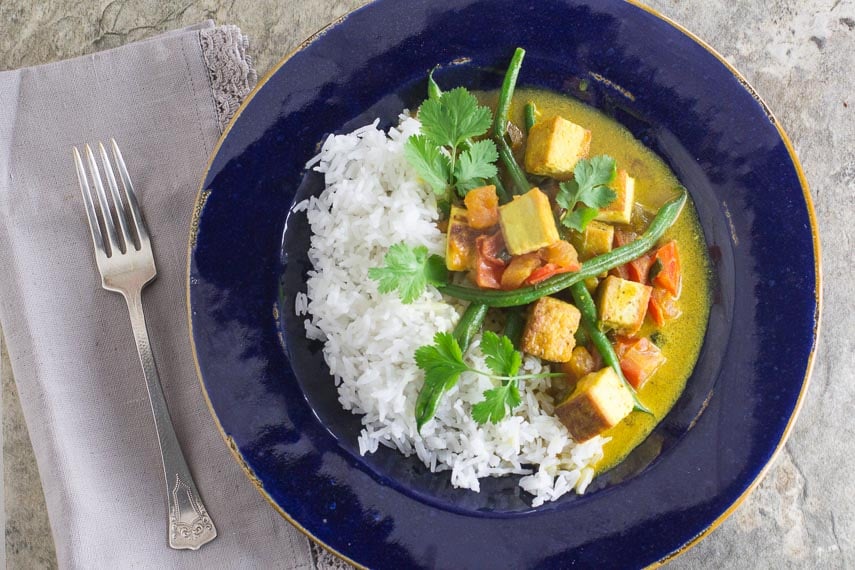
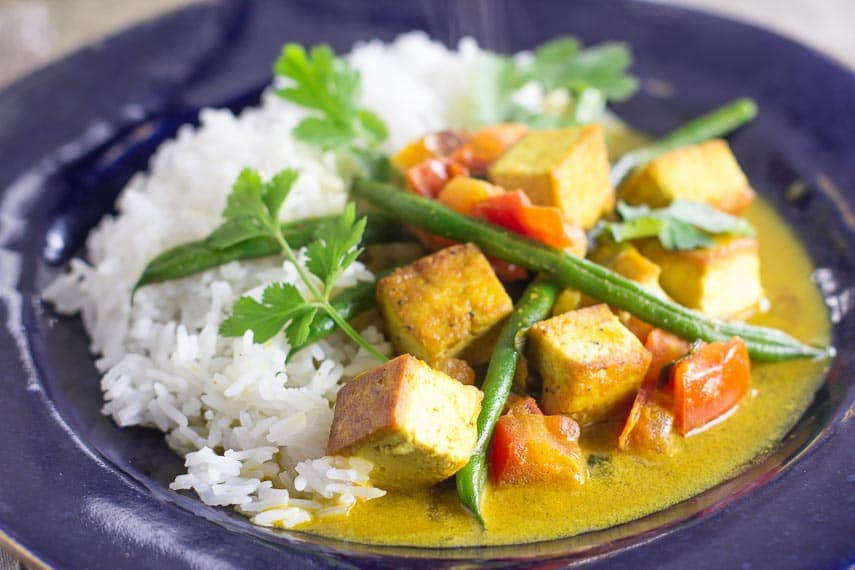
You can have all kinds of curries, even when following the Elimination Phase of the low FODMAP diet. In this Low FODMAP Thai Curry Tofu & Green Beans recipe the fragrant mixture of coocnut milk with turmeric, coriander, cumin, ginger, white pepper, and cayenne pepper create a flavor packed dish.
Yes, Tofu Is Low FODMAP!
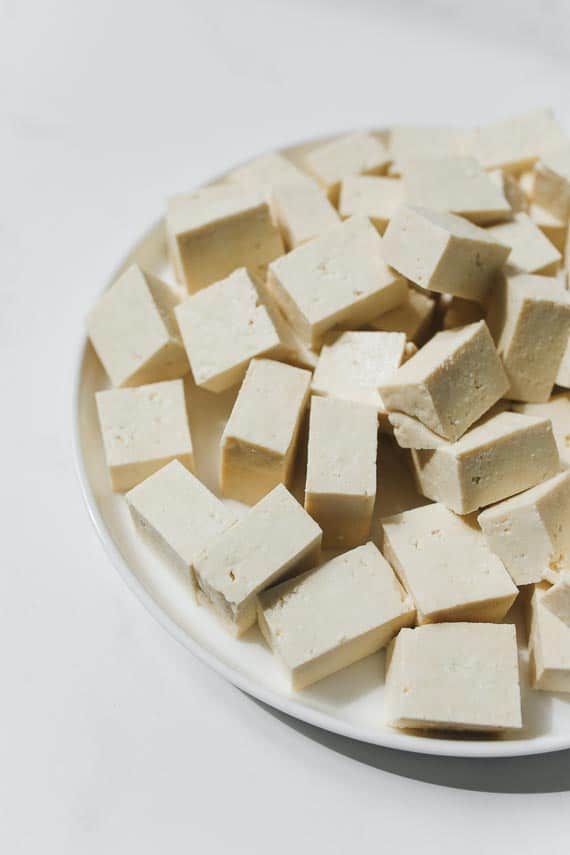
There is often confusion about soy foods as their FODMAP content varies widely. Firm and extra-firm tofu have very generous low FODMAP servings. In fact, while Monash University suggests a low FODMAP serving of 170 g, FODMAP Friendly has found no FODMAPs detected at all. This is actually not contradictory and refelect the variability of FODMAP content in food.
Read more in:
Use The Right Coconut Milk
In the Test Kitchen we keep three kinds of coconut milk on hand, as they have different uses. Full-fat canned coconut milk is very rich and is fabulous when you want that very rich mouthfeel. I did not think that is necessary for this dish and in fact, I think the full-fat canned is too rich for this dish.
“Lite” canned coconut milk, sometimes spelled “light”, is a similar product but with more water content, and therefore the FODMAP load is less.
UHT coconut milk is what you find on the grocery shelves in cardboard containers. It has the largest low FODMAP serving size of those lab tested and the added benefit of being shelf-stable, so this is the easiest to keep on hand. I highly recommend the UHT for this dish for texture as well as FODMAP levels.
Save this article
For complete information on all things coconut, please read our article, Is Coconut Low FODMAP?
Vegan or Vegetarian
Ghee is low FODMAP, casein-free and a very low lactose-product. Ghee is often used in curry dishes and I tried this recipe once with ghee and another time with Garlic-Infused Oil, made with vegetable oil. Both versions worked very well.
If you are looking for a vegan version of this dish use the oil, as the ghee, which is clarified butter, is based on dairy.
Green Beans & FODMAPs
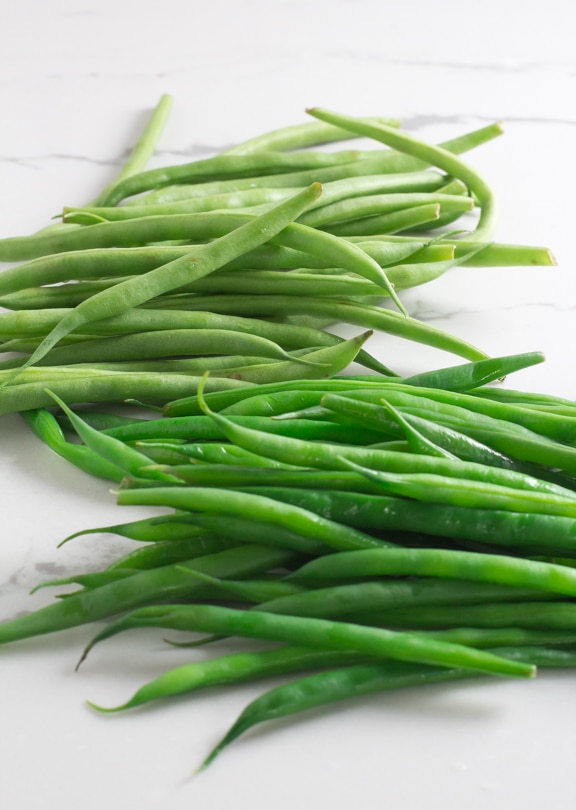
Many vegetables have low FODMAP serving sizes, and green beans are one of them! Lab testing by both Monash University and FODMAP Friendly suggest a 75 g serving is low FODMAP.
Read more in our Explore An Ingredient: Green “String” Beans.
This recipe a quick weeknight dish that is packed with flavor. Serve with the rice of your choice.
FODMAP Information
All recipes are based upon Monash University & FODMAP Friendly science at time of initial publication.
- Coconut Milk: Both Monash University and FODMAP Friendly has lab tested coconut milk for FODMAPs. Monash divides their testing into a few categories. Here are Monash’s statements: Coconut milk with inulin is Red Light high FODMAP at ½ cup (125 ml) or 120 g. There is no information on smaller amounts. UHT (long life, shelf-stable) coconut milk is Green Light low FODMAP at ¾ cup (180 g). Canned coconut milk (full fat) is Green Light low FODMAP at ¼ cup or 60 g. They also have some brands represented, such as Sanitarium, and their unsweetened coconut milk, which is a shelf-stable type, is low FODMAP at 1 cup (250 g). Monash University low FODMAP servings of light canned coconut milk are ¼ cup (60 g). Max serve is 500 g, but that is just because it is the most they tested. FODMAP Friendly initially gave coconut milk a “Fail” at 4-ounces (125 ml) but we do not know what kind they tested. Their next batches tested suggested a ⅓ cup serving, since updated to ¼ cup or 62.5 ml; a max low FODMAP serving size is 1 ¼ cups (312.5 ml). FODMAP content obviously varies greatly depending on the coconut used and type of processing.
- Cumin: Monash University has lab tested ground cumin and also black cumin seed, which is also known as kaloonji. Both are low FODMAP in 2 g portions.
- Garlic-Infused Oil: Make your own Garlic-Infused Oil or buy a commercial equivalent for the easiest way to add garlic flavor to your food. Fructans in garlic are not oil-soluble, so garlic-infused oil is low FODMAP.
- Ginger: Monash University has lab tested fresh ginger root and has determined it to be free of FODMAPs, making it one of our go-to no FODMAP foods.
- Green Beans: Green beans have been lab tested by both FODMAP Friendly and Monash University. FODMAP Friendly gives them a “Pass” at 75 g, and a max serve of 94 g. Monash gives them a Green Light low FODMAP serving size of 75 g or about 15 beans. They become Moderate at about 120 g.
- Rice: Between FODMAP Friendly and Monash University, many different kinds of rice have been lab tested and they have low FODMAP amounts. Cooked white rice, according to Monash, is low FODMAP at 1 cup (190 g). Cooked brown rice, according to Monash, is low FODMAP at 1 cup (180 g). Cooked red rice, according to Monash, is low FODMAP at 1 cup (190 g). FODMAP Friendly has lab tested black rice and says a low FODMAP serving is 125 g cooked. Note that this is less than white or brown rice. According to Monash, cooked glutinous rice at 1 cup (190 g) is low FODMAP and cooked basmati rice is low FODMAP at 1 cup (190 g).
- Scallions: Monash University lab testing initially found no FODMAPs detected in scallion greens; in subsequent tests, scallion greens showed fructose content. The suggested serving size is 75 g. Monash states the scallion bulb low FODMAP serving is 32 g (about ⅓ cup). FODMAP Friendly has also lab tested scallions: their recommended serving size for the green parts is 16 g, with a max low FODMAP serving between 160 g and 176 g (from different tests). FODMAP Friendly says it is low FODMAP in 19 g to 20 g portions, which is about 2 tablespoons finely chopped.
- Spices: Many fresh and dried spice have been lab tested by both Monash University and FODMAP Friendly and are easily looked up in the apps, which we strongly suggest that you have. The additional good news is that if you are interested in a spice that has not been lab tested, you can look at the nutritional panel and assess its FODMAP load for yourself. If the “Sugars” and/or “Carbs” are 1 g or less per serving, then the item would be a good bet to try.
- Tomatoes: Both Monash University and FODMAP Friendly have lab tested several kinds of tomatoes, numerous times. In earlier lab tests for common, beefsteak tomatoes, Monash University stated that their lab tests showed no FODMAPs. In later tests (now called just “common tomato”), the results suggest about ½ medium tomato or 65 g are low FODMAP. FODMAP Friendly gives them a “Pass” at ½ cup (75 g) portions and suggests up to 84 g are low FODMAP. Earlier lab tests by Monash for Roma (plum) tomatoes stated low FODMAP servings of 75 g, which is about 1 small tomato or ½ cup. Later tests state 48 g are low FODMAP, or about 2/3 tomato. FODMAP Friendly recommends 75 g is low FODMAP, with a serving up to 108 g being low FODMAP. For Cherry tomatoes, earlier lab tests by Monash showed that 75 g of cherry tomatoes were low FODMAP (about 5 or ½ cup); later tests suggest 3 tomatoes or 45 g are low FODMAP; then even later tests went to a serving size of 45 g, saying that is about 5 tomatoes. FODMAP Friendly states that 75 g are low FODMAP, with a max serve of 750 g being low FODMAP. Yes, these results are all over the map. Tomatoes vary hugely in sugar content, even variety to variety, and neither testing body has told us what varieties they tested. Use any of these accurate lab test results as a place to begin your exploration of your relationship to FODMAPs in tomatoes.
Please always refer to the Monash University & FODMAP Friendly smartphone apps for the most up-to-date lab tested information. Foods will be retested from time to time; in the case of raw ingredients, such as fruits and vegetables, results may vary. All lab tested results are valid and represent a snapshot in time. As always, your tolerance is what counts; please eat accordingly. The ultimate goal of the low FODMAP diet is to eat as broadly as possible, without triggering symptoms, for the healthiest microbiome.
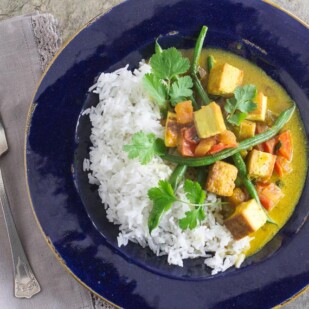
Low FODMAP Thai Curry Tofu & Green Beans
This Low FODMAP Thai Curry Tofu & Green Beans is an easy one-dish meal and we give you vegetarian and vegan options.
Ingredients:
- 1, 14- ounce to 16-ounce (400 g to 455 g block) of extra-firm tofu
- 2 tablespoons ghee or Garlic-Infused Oil, made with vegetable oil, or purchased equivalent, divided
- ¼ cup (16 g) chopped scallions, green parts only
- 1 teaspoon minced fresh ginger
- ¾ teaspoon ground coriander
- ¾ teaspoon turmeric
- ½ teaspoon ground cumin
- ⅛ teaspoon freshly ground white pepper
- ⅛ teaspoon cayenne
- 2 medium beefsteak tomatoes, cored and chopped
- 8 ounces (225 g) fresh green beans, trimmed
- 1, 14.5 ounce (403 ml) can lite coconut milk or preferably 14-ounces UHT coconut milk, well stirred if canned
- Kosher salt
- Freshly ground black pepper
- Cilantro, optional
Preparation:
-
Cut the tofu block in half lengthwise. Place a triple layer of paper towel on a cutting board, place tofu slabs on top, then cover them with another triple layer of towel. Put something heavy on top, like another cutting board with a heavy pot on top. Allow to sit for about 10 minutes. This technique will remove excess water from the tofu so that it will fry up with a nice crisp outer texture.
-
Once tofu has drained, discard paper towels and cut tofu into cubes.
-
Heat a large, deep skillet over medium heat and add 1 tablespoon of the ghee or oil (use oil for a vegan version) and heat until oil is shimmering. Add tofu and increase heat to medium-high. Cook undisturbed for a few minutes or until tofu is browned on the bottoms, then toss around and continue to cook until nicely browned. Remove from pan and set aside, keeping warm.
-
Add remaining tablespoon of ghee or oil to the pan over medium heat. Add scallions and ginger and sauté for about a minute or two until scallions are softened but not browned. Add the coriander, turmeric, cumin, white pepper, and cayenne, and stir around for 30 seconds, then add tomatoes and green beans and toss to coat, then coconut milk and stir everything around together well. Adjust heat, partially cover and simmer for about 3 minutes, then stir in tofu to coat with sauce and simmer for 5 more minutes or until heated through. Taste and season with salt and pepper as desired. Your curry is ready to serve with or without a garnish of cilantro. And we like this best with rice.
Notes:
Tips
- Often in recipes that call for canned coconut milk you can choose between classic style or lite (also sometimes spelled “light”). To remain low FODMAP I suggest you use “lite”, if using canned, or I highly suggest the UHT coconut milk, which has a larger serving size.
FODMAP Information
All recipes are based upon Monash University & FODMAP Friendly science at time of initial publication.
- Coconut Milk: Both Monash University and FODMAP Friendly has lab tested coconut milk for FODMAPs. Monash divides their testing into a few categories. Here are Monash’s statements: Coconut milk with inulin is Red Light high FODMAP at ½ cup (125 ml) or 120 g. There is no information on smaller amounts. UHT (long life, shelf-stable) coconut milk is Green Light low FODMAP at ¾ cup (180 g). Canned coconut milk (full fat) is Green Light low FODMAP at ¼ cup or 60 g. They also have some brands represented, such as Sanitarium, and their unsweetened coconut milk, which is a shelf-stable type, is low FODMAP at 1 cup (250 g). Monash University low FODMAP servings of light canned coconut milk are ¼ cup (60 g). Max serve is 500 g, but that is just because it is the most they tested. FODMAP Friendly initially gave coconut milk a “Fail” at 4-ounces (125 ml) but we do not know what kind they tested. Their next batches tested suggested a ⅓ cup serving, since updated to ¼ cup or 62.5 ml; a max low FODMAP serving size is 1 ¼ cups (312.5 ml). FODMAP content obviously varies greatly depending on the coconut used and type of processing.
- Cumin: Monash University has lab tested ground cumin and also black cumin seed, which is also known as kaloonji. Both are low FODMAP in 2 g portions.
- Garlic-Infused Oil: Make your own Garlic-Infused Oil or buy a commercial equivalent for the easiest way to add garlic flavor to your food. Fructans in garlic are not oil-soluble, so garlic-infused oil is low FODMAP.
- Ginger: Monash University has lab tested fresh ginger root and has determined it to be free of FODMAPs, making it one of our go-to no FODMAP foods.
- Green Beans: Green beans have been lab tested by both FODMAP Friendly and Monash University. FODMAP Friendly gives them a “Pass” at 75 g, and a max serve of 94 g. Monash gives them a Green Light low FODMAP serving size of 75 g or about 15 beans. They become Moderate at about 120 g.
- Rice: Between FODMAP Friendly and Monash University, many different kinds of rice have been lab tested and they have low FODMAP amounts. Cooked white rice, according to Monash, is low FODMAP at 1 cup (190 g). Cooked brown rice, according to Monash, is low FODMAP at 1 cup (180 g). Cooked red rice, according to Monash, is low FODMAP at 1 cup (190 g). FODMAP Friendly has lab tested black rice and says a low FODMAP serving is 125 g cooked. Note that this is less than white or brown rice. According to Monash, cooked glutinous rice at 1 cup (190 g) is low FODMAP and cooked basmati rice is low FODMAP at 1 cup (190 g).
- Scallions: Monash University lab testing initially found no FODMAPs detected in scallion greens; in subsequent tests, scallion greens showed fructose content. The suggested serving size is 75 g. Monash states the scallion bulb low FODMAP serving is 32 g (about ⅓ cup). FODMAP Friendly has also lab tested scallions: their recommended serving size for the green parts is 16 g, with a max low FODMAP serving between 160 g and 176 g (from different tests). FODMAP Friendly says it is low FODMAP in 19 g to 20 g portions, which is about 2 tablespoons finely chopped.
- Spices: Many fresh and dried spice have been lab tested by both Monash University and FODMAP Friendly and are easily looked up in the apps, which we strongly suggest that you have. The additional good news is that if you are interested in a spice that has not been lab tested, you can look at the nutritional panel and assess its FODMAP load for yourself. If the “Sugars” and/or “Carbs” are 1 g or less per serving, then the item would be a good bet to try.
-
Tomatoes: Both Monash University and FODMAP Friendly have lab tested several kinds of tomatoes, numerous times. In earlier lab tests for common, beefsteak tomatoes, Monash University stated that their lab tests showed no FODMAPs. In later tests (now called just “common tomato”), the results suggest about ½ medium tomato or 65 g are low FODMAP. FODMAP Friendly gives them a “Pass” at ½ cup (75 g) portions and suggests up to 84 g are low FODMAP. Earlier lab tests by Monash for Roma (plum) tomatoes stated low FODMAP servings of 75 g, which is about 1 small tomato or ½ cup. Later tests state 48 g are low FODMAP, or about 2/3 tomato. FODMAP Friendly recommends 75 g is low FODMAP, with a serving up to 108 g being low FODMAP. For Cherry tomatoes, earlier lab tests by Monash showed that 75 g of cherry tomatoes were low FODMAP (about 5 or ½ cup); later tests suggest 3 tomatoes or 45 g are low FODMAP; then even later tests went to a serving size of 45 g, saying that is about 5 tomatoes. FODMAP Friendly states that 75 g are low FODMAP, with a max serve of 750 g being low FODMAP. Yes, these results are all over the map. Tomatoes vary hugely in sugar content, even variety to variety, and neither testing body has told us what varieties they tested. Use any of these accurate lab test results as a place to begin your exploration of your relationship to FODMAPs in tomatoes.
Please always refer to the Monash University & FODMAP Friendly smartphone apps for the most up-to-date lab tested information. Foods will be retested from time to time; in the case of raw ingredients, such as fruits and vegetables, results may vary. All lab tested results are valid and represent a snapshot in time. As always, your tolerance is what counts; please eat accordingly. The ultimate goal of the low FODMAP diet is to eat as broadly as possible, without triggering symptoms, for the healthiest microbiome.
Nutrition
All nutritional information is based on third-party calculations and should be considered estimates. Actual nutritional content will vary with brands used, measuring methods, portion sizes and more. For a more detailed explanation, please read our article Understanding The Nutrition Panel Within Our Recipes.






Dear FODMAP everyday
I’m about to start the FODMAP diet and really hope it can help me deal with IBS. I’m in the process of figuring out what is safe to eat during the elimination phase and have a question about coconut milk, which I normally often use and can see is in several of the recipes here.
According to the Monash App, canned coconut milk is green for 1 serve, which is 60 g. (1/4 cup). 1/2 cup (120 g.) is yellow.
This recipe has 403 ml. coconut milk and makes 4 servings. So how is that low FODMAP? Wouldn’t it have to be around 240 g. (4×60 g.) for a recipe that serves 4, to be “green”?
Or is it safe to eat up until the “yellow” amount, fx 100 g.?
I hope you can help me with the calculations, so I can understand the system better! I would love it if I can include coconut milk in the elimination phase.
Best regards,
Laura
Hi Laura, Great question! The recipe called for “Lite” canned coconut milk, which has a higher water content than full-fat, and therefore a lower FODMAP content. That said, I just updated the recipe to be much more clear. You can make the recipe with UHT coconut milk, which not only has a larger serving size, but I also think is preferable in this dish. This is an older recipe and our newer recipes give much more of this kind of reasoning and background info. Thank you for mentioning this recipe as it gave me the opportunity to update it! You have a good “math eye” which will help you. Yes, stick with Green Light servings during Elimination. Also, working with a FODMAP trained RD will give you the best chance of success. And remember, the Elimination Phase is short. During your Challenge Phase you will learn what YOUR tolerance to coconut milk is and that is what counts! Check out this article.
Hi. Do you have the proportions of the spices in Casa de Sante’s Thai Curry Seasoning? They are sold out and I’m trying to prepare the dishes my daughter expressed interest in as she begins on the elimination portion of the fodmap diet. Thanks!
No, we do not. You could use the list as described on the Casa de Santé website and use your Monash app as well to create a low FODMAP blend. That is my best suggestion.