

Beyond America’s famous landmarks lies a network of little-known destinations where history, geology, and human eccentricity collide in remarkable ways.
What if some of the most intriguing travel destinations in America aren’t the ones you’ve seen on postcards? Beyond the Grand Canyon and Times Square, the United States is dotted with places so surprising, so under-the-radar that they barely make it into mainstream travel guides. These are spots where nature, history, and human creativity intersect in extraordinary ways — and chances are, you’ve never heard of most of them.
In this list, we’re skipping the tourist traps. Instead, we explore remote canyons painted by volcanic ash, ghost towns trapped in time, and bizarre roadside art that redefines the concept of sculpture. Whether you’re planning your next road trip or just want to be the most interesting person at your next trivia night, these 13 unusual U.S. destinations offer a glimpse into the country’s lesser-known, but endlessly fascinating corners.
Great Saltpetre Cave, Kentucky
Hidden in the hills of Kentucky, the Great Saltpetre Cave is a sprawling limestone cavern with a wartime secret. During the War of 1812, it served as a key source of saltpeter, an essential component of gunpowder. But what’s most unusual is its past life as a ballroom and community space. Candlelit dances were once held in the large chambers, and its natural acoustics still impress today.
While no longer mined or danced in, the cave remains preserved through tours offered by local conservancies. Unlike many show caves, this one has retained its historical ruggedness, allowing visitors to walk the same uneven stone paths that 19th-century miners once trod.
Salvation Mountain, California
In the middle of California’s Colorado Desert rises a technicolor mound known as Salvation Mountain. Built entirely by hand by local resident Leonard Knight over several decades, the mountain is covered in religious slogans, flowers, and abstract art, all painted using thousands of gallons of donated latex paint.
It’s both a spiritual monument and an outsider art installation. Despite its remote location near Slab City, a squatter community often referred to as “the last free place in America,” it attracts visitors from around the world, including documentary filmmakers and photographers. The mountain’s vivid colors and spiritual themes make it a surreal stop in the desert.
Carhenge, Nebraska
If you’ve ever wondered what Stonehenge might look like if built with junkyard cars, Carhenge in Alliance, Nebraska, has the answer. Created by artist Jim Reinders in 1987 as a tribute to his father, this quirky structure uses vintage American cars spray-painted gray and arranged in the same layout as the original Stonehenge.
Far from a gimmick, Carhenge has gained recognition as a serious piece of Americana. The site even hosts an annual summer solstice event, echoing the ancient roots of its British predecessor but with a Midwestern twist. It’s a perfect stop for road trippers in search of something wildly offbeat.
Toadstool Geologic Park, Nebraska
Out in Nebraska’s northwest corner lies a landscape that looks more Martian than Midwestern. Toadstool Geologic Park features strange, mushroom-shaped rock formations created by millions of years of wind and water erosion. The formations resemble a stone forest, and fossilized animal tracks from ancient rhinoceros-like creatures still mark the grounds.
Despite its rugged beauty, the park is largely unknown outside geology circles. Visitors can walk through trails that weave between towering toadstools, offering a firsthand look at the erosional processes that shaped the Great Plains. It’s a geologic time capsule few tourists ever stumble upon.
The Enchanted Highway, North Dakota
Stretching nearly 32 miles through rural North Dakota, the Enchanted Highway is lined with towering metal sculptures that break the horizon in the most unexpected way. From giant grasshoppers to a massive tin family, each piece along the road was designed and built by local artist Gary Greff in an effort to revitalize his small hometown of Regent.
The largest of the sculptures, “Geese in Flight,” stands at over 100 feet tall and holds the Guinness World Record for the largest scrap metal sculpture. This whimsical roadside attraction offers more than just photo ops; it’s a testament to one man’s creative vision in the face of economic decline.
The Wave, Arizona
Tucked away in the Coyote Buttes North area of Arizona’s Vermilion Cliffs, The Wave is a sandstone formation so surreal it looks computer-generated. Its undulating walls ripple in shades of orange and red, sculpted over millennia by wind and water. Due to its delicate structure, access is tightly regulated by a lottery system that limits the number of daily visitors.
Reaching The Wave requires a challenging hike through unmarked desert terrain, but those who undertake the trek are rewarded with one of the most photogenic natural sites in the country. Unlike other national landmarks, it offers a rare blend of exclusivity, fragility, and otherworldly beauty.
House on the Rock, Wisconsin
Equal parts museum, mansion, and maze, House on the Rock in Spring Green, Wisconsin, defies classification. Built atop a sandstone bluff by Alex Jordan Jr., it’s famous for its bizarre, sprawling interiors filled with everything from mechanical orchestras to an enormous sea creature sculpture that spans multiple stories.
Each room offers something unexpected, including a carousel with over 260 animals and no horses. The design seems intentionally disorienting, creating a dreamlike experience that’s part funhouse, part fantasy. It’s an American curiosity that leaves visitors equally awestruck and bewildered.
Cadillac Ranch, Texas
In the middle of a field off historic Route 66 near Amarillo, Texas, ten Cadillac cars stand nose-down in the dirt, forming an unexpected row of automotive monoliths. Created in 1974 by the art group Ant Farm, Cadillac Ranch is an evolving piece of public art where graffiti is not only allowed but encouraged.
Visitors often bring their own spray paint to leave behind temporary marks, making it one of the few monuments in the country that’s constantly being recreated. This blend of counterculture, consumerism, and open-air art makes Cadillac Ranch a roadside stop unlike any other.
The Blue Hole, New Mexico
While it might seem out of place in the arid landscape of eastern New Mexico, the Blue Hole in Santa Rosa is a crystal-clear artesian spring that draws divers from across the country. With a constant temperature of 62 degrees and water clarity that rivals tropical reefs, it’s become a training site for scuba enthusiasts in the Southwest.
What makes it truly unusual is its vertical shape: 80 feet deep and only about 60 feet wide. This natural bell-shaped pool feels like a secret oasis in the desert, offering a rare chance to explore underwater caves and rock formations far from the ocean.
Save this article
Coral Castle, Florida
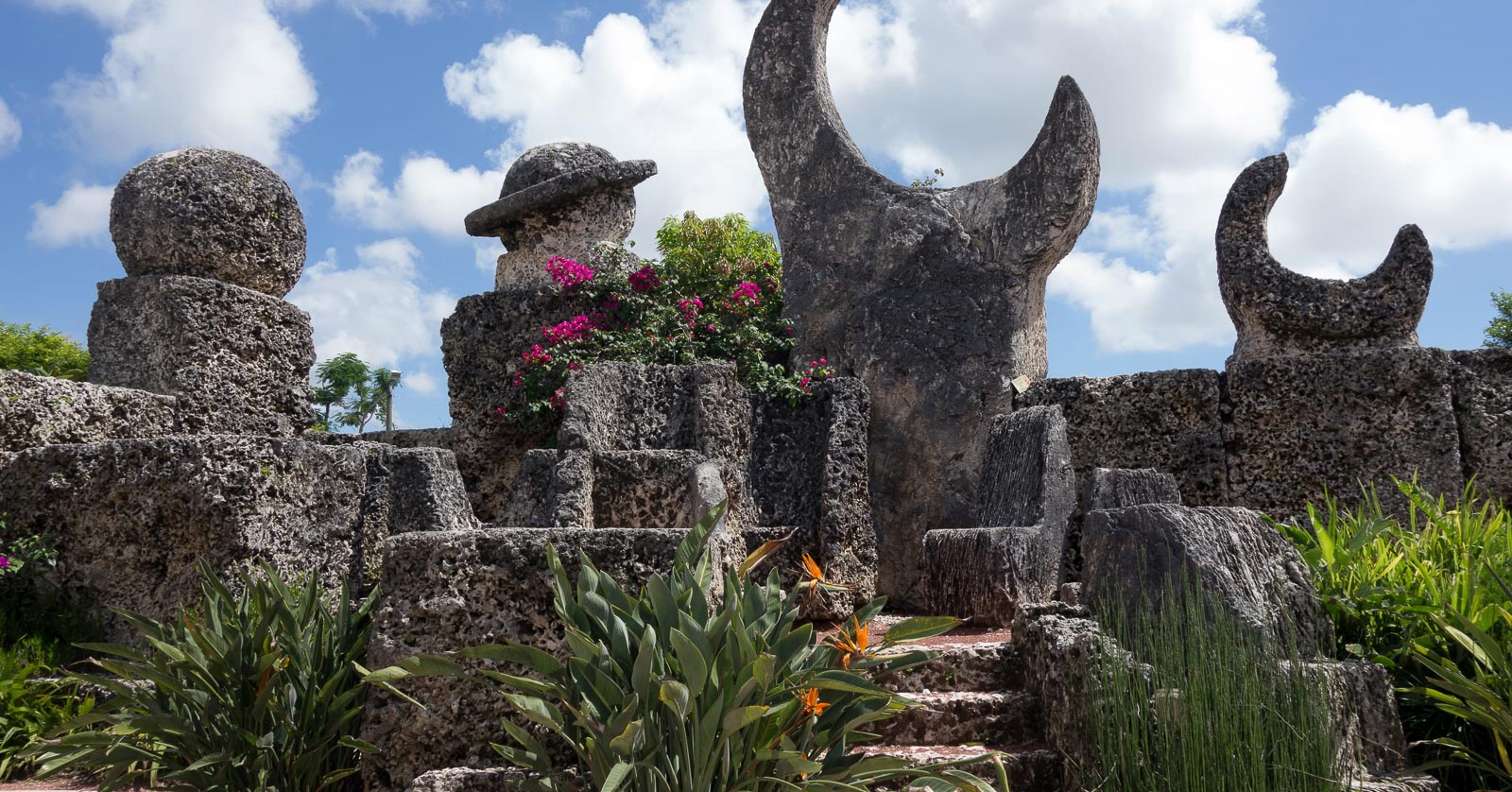
Few places are as shrouded in mystery as Coral Castle in Homestead, Florida. Built single-handedly by Latvian immigrant Edward Leedskalnin from over 1,100 tons of coral rock, the site raises more questions than answers. Leedskalnin claimed he knew the secrets of the pyramids, and to this day, no one is entirely sure how he moved the massive stones without the aid of machinery.
The castle includes a nine-ton gate that moves with the touch of a finger and intricately carved celestial sculptures. It’s not just an engineering marvel, but also a monument to heartbreak: Leedskalnin supposedly built it after being jilted by his fiancée the day before their wedding.
Fayette, Michigan
Fayette is a ghost town located on Michigan’s Upper Peninsula, once a thriving iron smelting community in the 19th century. When the iron market collapsed, the town was abandoned, but many of its stone buildings remain intact, preserved within Fayette Historic State Park.
Unlike many ghost towns in the West that have crumbled to dust, Fayette offers a remarkably complete glimpse into life in an industrial frontier town. The juxtaposition of natural shoreline beauty and eerie, deserted buildings makes it one of the most photogenic and haunting spots in the Midwest.
UFO Watchtower, Colorado
Situated in the San Luis Valley, a region renowned for its unusually high number of UFO sightings, the UFO Watchtower serves as both a literal and symbolic platform for those curious about extraterrestrials. Built by local rancher Judy Messoline, the tower is surrounded by “vortex gardens” and mementos left by visitors who believe they’ve had otherworldly encounters.
It may sound kitschy, but the location has been the subject of numerous books and documentaries. Scientists, skeptics, and believers alike visit in hopes of catching something strange in the sky. Whether you’re a diehard ufologist or just curious, it’s a destination that challenges the limits of conventional tourism.
Bishop Castle, Colorado
Started in the 1960s by one man with no formal architectural training, Bishop Castle in Rye, Colorado, is a towering stone structure complete with spires, stained glass, and an actual fire-breathing dragon made of metal. Jim Bishop began building the castle on his own as a personal project, and over the decades, it has grown into a Gothic, fairytale-like structure, all without permits or blueprints.
Visitors are welcome to explore the many levels of the castle, including narrow bridges and iron walkways that wind through the towers. The experience is raw, unfiltered, and completely unique, standing as a monument to obsessive creativity and sheer willpower.
More articles:
- 12 cruise dress code rules that spark debate every time
- 16 things you should never leave in your cruise cabin on port days
- 13 Hidden Cruise Risks Most Travelers Don’t Realize Until It’s Too Late
Disclosure: This article was developed with the assistance of AI and was subsequently reviewed, revised, and approved by our editorial team.
Like our content? Be sure to follow us on Newsbreak.
10 Insanely Fast Trains That Make Air Travel Look Slow

Rail travel has come a long way from the slow chugging of steam engines. Today, the race for the fastest train has become a high-speed pursuit of groundbreaking technology, pushing the boundaries of what’s possible on rails. From maglev marvels to sleek bullet trains, these trains don’t just break records; they redefine them. Here’s a look at the 10 fastest trains on Earth, each moving faster than most airplanes. Learn more.
8 financial mistakes travelers should avoid in Mexico

Traveling through Mexico can feel effortless, from booking boutique hotels to paying for street tacos on the go. Yet money mistakes can quietly turn a dream trip into an expensive lesson. Many travelers focus on flights and itineraries but overlook everyday financial decisions that shape their budget once they arrive. Exchange rates, payment methods, and local banking norms differ from those at home, and misunderstandings can drain funds faster than expected.
The stakes are higher than most people realize. According to data from the Consumer Financial Protection Bureau, international travelers can lose money on each transaction. Losses typically range from 3 to 10 percent when foreign transaction fees, poor exchange rates, and ATM charges are combined. Learn more.
10 travel scams targeting tourists

Vacations are supposed to be carefree, but a single clever scam can empty your wallet faster than any overpriced souvenir.
Planning a vacation is usually the highlight of the year, but falling for a scheme can ruin the fun before it even starts. Scammers are getting smarter and using advanced technology to trick even the most experienced globetrotters into handing over their hard-earned cash. You need to stay alert because these criminals often target distracted visitors who are just trying to relax. Learn more.





