

This low FODMAP Vegetable, Pasta & Bean Soup is basically a version of pasta di fagioli. Did you know that white beans, which are traditionally used in this dish, have a low FODMAP serving? They do! And the combination of beans, pasta, and vegetables makes a hearty enough soup for dinner, maybe with a hunk of sourdough bread alongside.
This soup is vegan, easy to make, and even freezes well. We like to take it in a thermos for lunch! The addition of a sprinkling of Parmesan cheese will make it vegetarian, but is a lovely addition, as is simmering it for a bit with a piece of Parmesan rind (you can ask for this at a cheese counter or store).
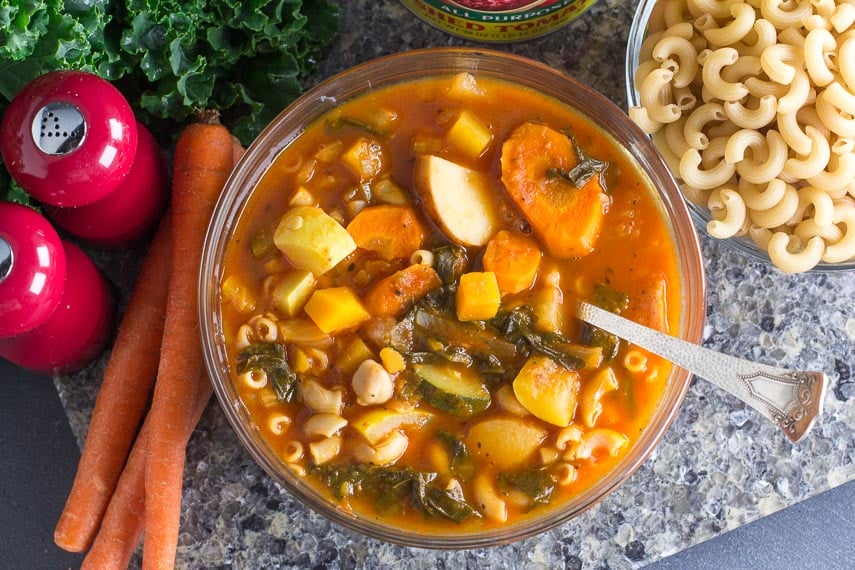
I give you comfort food in a bowl – Low FODMAP Vegetable, Pasta & Bean Soup!
FODMAP Stacking & Your Digestive Reactions
You will notice that this soup has a lot of ingredients, which is fabulous for flavor, color, texture and nutrition but can be problematic for those who are systematically working through their triggers.
This Low FODMAP Vegetable, Pasta & Bean Soup is technically appropriate for the Elimination phase and yet, all of us have different reactions to foods, FODMAP-related or otherwise. This is always true, so give it a try and see how you react.
With a dish like this, with numerous ingredients, it can be difficult to hone in on what might be upsetting your tummy, if indeed that happens.
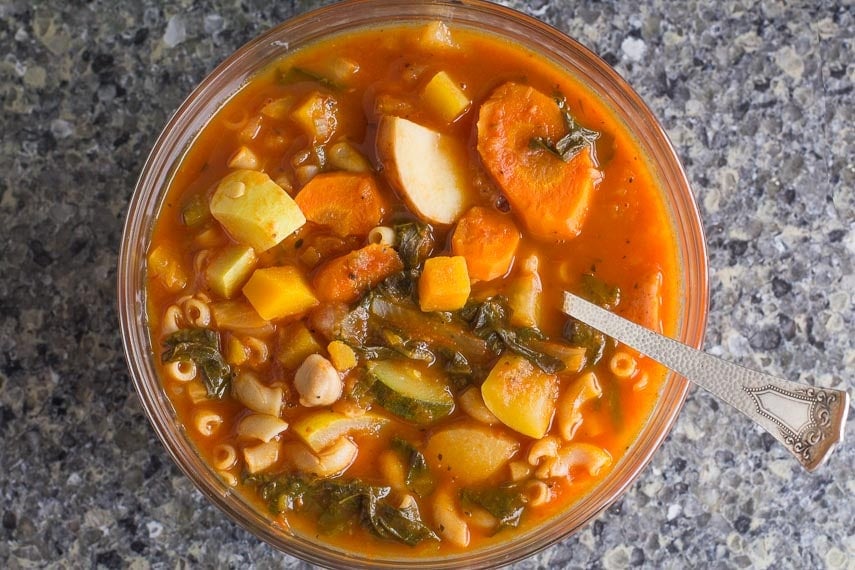
Perhaps if you already have knowledge that all of these ingredients sit well with you, or if you are at a stable stage with your diet, give it a go!
This soup doesn’t give me any trouble and in fact I find it very comforting – like comfort food in a bowl. I love being able to curl up with a bowl and spoon and eat my dinner!
At any rate, familiarize yourself with FODMAP Stacking, for more in-depth info.
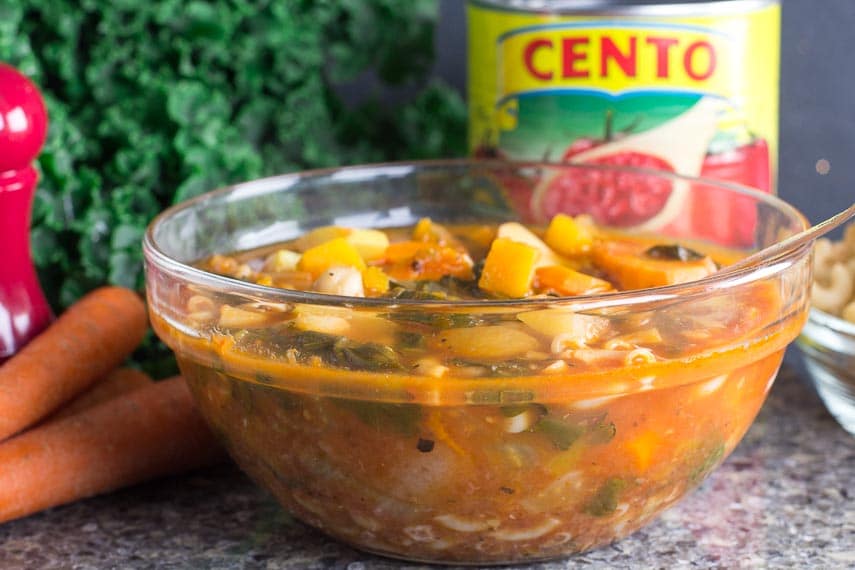
Save this article
Take Advantage of the Large Batch
This makes a lot, but it keeps well, you can eat it for days and it is no more difficult to make this generous batch.
A Look at Beans

Some folks think beans are off-limits during the more restrictive Elimination Phase, but that is not the case. And beans are a fantastic fiber source! Take a look at the beans that we have used in this soup:
NOTE: All beans below are canned and drained.
- Cannellini beans: Monash low FODMAP serving 76 g.
- Chickpeas: Monash low FODMAP serving 80 g.
- Red kidney beans: Monash low FODMAP serving 86 g.
- Adzuki beans: FODMAP Friendly max serve 63 g. Monash low FODMAP serving 44 g.
- Black beans: FODMAP Friendly max serve 66 g. Monash low FODMAP serving 45 g.
- Butter beans: FODMAP Friendly max serve 74 g. Monash low FODMAP serving 53 g.
There are many additional beans listed in the Monash and FODMAP Friendly apps; take a look.
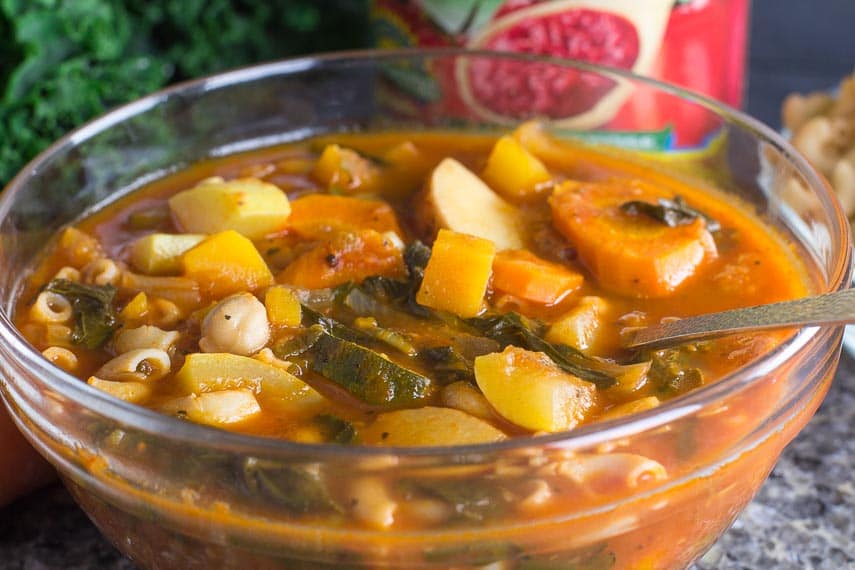
Let’s Talk Summer Squashes
Both Monash University and FODMAP Friendly have lab tested several kinds of summer squashes. Please note that the various amounts reported are not contradictory. You can read more in our article, When Low FODMAP Lab Test Results Differ.
- Zucchini, green: Monash University lab testing shows a low FODMAP serving size is 67 g. FODMAP Friendly max serve 375 g.
- Zucchini, white: FODMAP Friendly max serve 79 g.
- Yellow Summer squash, also called straightneck yellow squash: Monash lab tests show 75 g as a low FODMAP serving; FODMAP Friendly shows max serve of 107 g.
- Yellow pattypan squash: Monash University lab tests show no FODMAP content.
FODMAP Information
All recipes are based upon Monash University & FODMAP Friendly science at time of initial publication.
- Butternut Squash: Both Monash University and FODMAP Friendly have lab tested butternut squash (called pumpkin as well by both). Monash University tested the vegetable raw, without seeds, but with skin and their low FODMAP serving is 63 g (about ⅓ cup). FODMAP Friendly tested cooked, without skin or seeds, and the low FODMAP serving is 75 g, with a max low FODMAP serving of 214 g. The Monash test showed presence of fructose (in addition to fructans). The FODMAP Friendly did not show any fructose (but does principally show GOS and fructans). One wonders if the fructose was in the skin?
- Canned Tomatoes: Monash University has lab tested canned tomatoes, both round whole tomatoes, as well as Roma (plum). One problem is that most can labels do not distinguish what kind of tomatoes were canned. Both are set at low FODMAP green light serving sizes at 100 g (about ½ cup). The Moderate and High FODMAP levels differ, with the Roma tomatoes being lower FODMAP. Fructose is present in the larger servings. FODMAP Friendly has lab tested canned tomatoes as well; their image shows Roma tomatoes. Their lab tests determined a low FODMAP serving size to be 76 g (½ cup), with the max low FODMAP serving size set at 228 g (1 ½ cups).
- Carrots: Carrots have been lab tested and deemed low FODMAP by both Monash University and FODMAP Friendly. According to lab tests by both, carrots have shown no FODMAPs. Carrots were retested by Monash and their app entry is now confusing. They state that carrots remain low FODMAP up to 500 g, which is a lot of carrot. In conversations with Monash, they have indicated that this does not mean that they become Moderate or High FODMAP at 501 g; it is just the amount they are reporting to at this time.
- Chickpeas: Both Monash University and FODMAP Friendly have lab tested chickpeas. Monash says that drained, canned chickpeas are low FODMAP at ¼ cup or 42 g; this is what we base our recipes upon. The FODMAP Friendly low FODMAP serving is ½ cup (95 g). Note that recipes might call for a can of chickpeas that weighs 425 g, but what you are using is the chickpeas once they are rinsed and drained. Not only is a sizable amount of water-soluble FODMAPs going down the drain, but the weight of the drained chickpeas will be closer to 260 g (or thereabouts; we have seen it range from 250 g to 275 g). That is the weight of the chickpeas that you hold against the app entries to determine a low FODMAP serving.
- Garlic-Infused Oil: Make your own Garlic-Infused Oil or buy a commercial equivalent for the easiest way to add garlic flavor to your food. Fructans in garlic are not oil-soluble, so garlic-infused oil is low FODMAP.
- Herbs: Many fresh and dried herbs have been lab tested by both Monash University and FODMAP Friendly and are easily looked up in the apps, which we strongly suggest that you have. The additional good news is that if you are interested in an herb that has not been lab tested, you can look at the nutritional panel and assess its FODMAP load for yourself. If the “Sugars” and/or “Carbs” are 1 g or less per serving, then the item would be a good bet to try.
- Kale: Both Monash University and FODMAP Friendly have lab tested kale. Monash pictures Lacinato type kale and says that kale is Green light and low FODMAP in servings of ½ cup, chopped (75 g). FODMAP Friendly depicts curly kale and gives it a “Pass” at ½ cup chopped (30 g).
- Leeks: Both Monash University and FODMAP Friendly have lab tested leeks – greens (leaves) and bulbs. Monash University recommends a low FODMAP serving size of 100 g for the greens, and 14 g for the bulb. FODMAP Friendly suggests a serving size of leek greens of 37 g, with a low FODMAP max serve of 83 g. Their recommended low FODMAP leek bulb amount is 46 g.
- Pasta: Please note that small amounts (74 g) of conventional wheat-based pasta is low FODMAP Use your Monash app for more information; the diet is not wheat or gluten-free. If you are gluten-free, you have to read labels, as there are many low FODMAP gluten-free brands of pasta available, but remember that gluten-free does not equal low FODMAP. Use what is called for in individual recipes. Our go-to is rice-based pasta. Monash University and FODMAP Friendly have both tested “gluten-free” pasta, but they do not specify what the pasta was made from. Monash says gluten-free pasta is low FODMAP at 145 g or 1 cup cooked; FODMAP Friendly lab testing suggested 2 cups or 146 g cooked is low FODMAP. Monash has also lab tested pasta made from rice, which they list under “rice stick” and it is low FODMAP at 220 g, which no Moderate or High FODMAP amounts given.
- Patty Pan Squash: This round yellow summer squash has been lab tested by Monash University and it contains no FODMAPs.
- Potatoes: Potatoes have been lab tested and deemed low FODMAP by both Monash University and FODMAP Friendly. According to initial lab testing by Monash, starchy baking potatoes, red-skinned, yellow-skinned and purple potatoes contain no FODMAPs. They are currently presented as low FODMAP by Monash up to 500 g (which is the largest amount tested; still essentially no FODMAP). FODMAP friendly has low FODMAP servings currently set at 407 g.
- Scallions: Monash University lab testing initially found no FODMAPs detected in scallion greens; in subsequent tests, scallion greens showed fructose content. The suggested serving size is 75 g. Monash states the scallion bulb low FODMAP serving is 32 g (about ⅓ cup). FODMAP Friendly has also lab tested scallions: their recommended serving size for the green parts is 16 g, with a max low FODMAP serving between 160 g and 176 g (from different tests). FODMAP Friendly says it is low FODMAP in 19 g to 20 g portions, which is about 2 tablespoons finely chopped.
Please always refer to the Monash University & FODMAP Friendly smartphone apps for the most up-to-date lab tested information. Foods will be retested from time to time; in the case of raw ingredients, such as fruits and vegetables, results may vary. All lab tested results are valid and represent a snapshot in time. As always, your tolerance is what counts; please eat accordingly. The ultimate goal of the low FODMAP diet is to eat as broadly as possible, without triggering symptoms, for the healthiest microbiome.
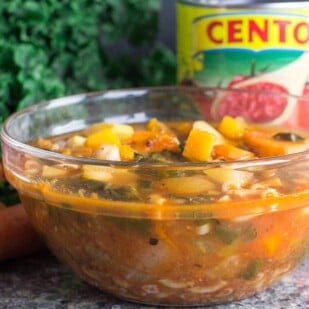
Low FODMAP Vegetable, Pasta & Bean Soup
This Low FODMAP Vegetable, Pasta & Bean Soup is hearty and nourishing and happens to be vegan! Easy to make, too.
Low FODMAP Serving Size Info: Makes about 14 cups (3.3 L); about 10 servings; about ¾ cup (180 ml) per serving.
Ingredients:
- 2 tablespoons Garlic-Infused Oil, made with olive oil, or purchased equivalent
- 3/4 cup (48 g) finely chopped scallions, green parts only
- 1/4 cup (18 g) finely chopped leek bulb
- 8 cups (2 L) water
- 1, 28- ounce (794 g) can crushed tomatoes
- 1, 15.5- ounce (439 g) can canned cannelinni beans or chickpeas, drained, rinsed and drained again
- 12- ounces (340 g) diced butternut squash
- 8- ounces (225 g) red potatoes, scrubbed and cut into small bite-sized pieces
- 6- ounces (170 g) cleaned and trimmed kale, chopped finely
- 3 medium carrots, scrubbed, trimmed and cut into thick rounds (1/2-inch/12 mm or even larger)
- 2 cups (150 g) sliced bok choy
- 1 medium patty pan or yellow squash scrubbed, trimmed and cut into thick rounds (about 1/2-inch/12 mm thick)
- 1 medium green zucchini scrubbed, trimmed, quartered and cut into small bite-sized pieces
- 1 teaspoon dried basil
- 1 teaspoon smoked paprika
- 1 teaspoon dried thyme
- Kosher salt
- Freshly ground black pepper
- 1 cup (100 g) raw gluten-free elbow or small shell shaped pasta
Preparation:
-
Place Garlic-Infused Oil in a large heavy pot or Dutch oven and heat over medium heat. Add scallion and leek greens and sauté for a few minutes until soft. Add water, canned tomatoes, chickpeas, squash, potatoes, kale, carrots, bok choy, yellow squash, zucchini, basil, smoked paprika and thyme and stir all together well. Season with salt and pepper.
-
Cover and bring to a boil over medium-high heat, then turn heat down and simmer for at least 30 minutes or until vegetables are tender, stirring occasionally. Taste and adjust seasoning as desired.
-
Meanwhile, cook pasta in a generous amount of salted water till al dente; drain and stir into soup (see Tips). Soup is ready to serve, or cool to room temperature and refrigerate in an airtight container for up to 5 days. Freeze for up to 1 month, adding pasta upon reheating. Reheat as needed.
Notes:
Tips
- You could cook the pasta right in the soup, but it gives you bit less control over the pasta texture and the pasta also soaks up some of the luscious soup liquid, but if you are short on time or don’t want to clean an extra pot, be our guest!
FODMAP Information
All recipes are based upon Monash University & FODMAP Friendly science at time of initial publication.
- Butternut Squash: Both Monash University and FODMAP Friendly have lab tested butternut squash (called pumpkin as well by both). Monash University tested the vegetable raw, without seeds, but with skin and their low FODMAP serving is 63 g (about ⅓ cup). FODMAP Friendly tested cooked, without skin or seeds, and the low FODMAP serving is 75 g, with a max low FODMAP serving of 214 g. The Monash test showed presence of fructose (in addition to fructans). The FODMAP Friendly did not show any fructose (but does principally show GOS and fructans). One wonders if the fructose was in the skin?
- Canned Tomatoes: Monash University has lab tested canned tomatoes, both round whole tomatoes, as well as Roma (plum). One problem is that most can labels do not distinguish what kind of tomatoes were canned. Both are set at low FODMAP green light serving sizes at 100 g (about ½ cup). The Moderate and High FODMAP levels differ, with the Roma tomatoes being lower FODMAP. Fructose is present in the larger servings. FODMAP Friendly has lab tested canned tomatoes as well; their image shows Roma tomatoes. Their lab tests determined a low FODMAP serving size to be 76 g (½ cup), with the max low FODMAP serving size set at 228 g (1 ½ cups).
- Carrots: Carrots have been lab tested and deemed low FODMAP by both Monash University and FODMAP Friendly. According to lab tests by both, carrots have shown no FODMAPs. Carrots were retested by Monash and their app entry is now confusing. They state that carrots remain low FODMAP up to 500 g, which is a lot of carrot. In conversations with Monash, they have indicated that this does not mean that they become Moderate or High FODMAP at 501 g; it is just the amount they are reporting to at this time.
- Chickpeas: Both Monash University and FODMAP Friendly have lab tested chickpeas. Monash says that drained, canned chickpeas are low FODMAP at ¼ cup or 42 g; this is what we base our recipes upon. The FODMAP Friendly low FODMAP serving is ½ cup (95 g). Note that recipes might call for a can of chickpeas that weighs 425 g, but what you are using is the chickpeas once they are rinsed and drained. Not only is a sizable amount of water-soluble FODMAPs going down the drain, but the weight of the drained chickpeas will be closer to 260 g (or thereabouts; we have seen it range from 250 g to 275 g). That is the weight of the chickpeas that you hold against the app entries to determine a low FODMAP serving.
- Garlic-Infused Oil: Make your own Garlic-Infused Oil or buy a commercial equivalent for the easiest way to add garlic flavor to your food. Fructans in garlic are not oil-soluble, so garlic-infused oil is low FODMAP.
- Herbs: Many fresh and dried herbs have been lab tested by both Monash University and FODMAP Friendly and are easily looked up in the apps, which we strongly suggest that you have. The additional good news is that if you are interested in an herb that has not been lab tested, you can look at the nutritional panel and assess its FODMAP load for yourself. If the “Sugars” and/or “Carbs” are 1 g or less per serving, then the item would be a good bet to try.
- Kale: Both Monash University and FODMAP Friendly have lab tested kale. Monash pictures Lacinato type kale and says that kale is Green light and low FODMAP in servings of ½ cup, chopped (75 g). FODMAP Friendly depicts curly kale and gives it a “Pass” at ½ cup chopped (30 g).
- Leeks: Both Monash University and FODMAP Friendly have lab tested leeks – greens (leaves) and bulbs. Monash University recommends a low FODMAP serving size of 100 g for the greens, and 14 g for the bulb. FODMAP Friendly suggests a serving size of leek greens of 37 g, with a low FODMAP max serve of 83 g. Their recommended low FODMAP leek bulb amount is 46 g.
- Pasta: Please note that small amounts (74 g) of conventional wheat-based pasta is low FODMAP Use your Monash app for more information; the diet is not wheat or gluten-free. If you are gluten-free, you have to read labels, as there are many low FODMAP gluten-free brands of pasta available, but remember that gluten-free does not equal low FODMAP. Use what is called for in individual recipes. Our go-to is rice-based pasta. Monash University and FODMAP Friendly have both tested “gluten-free” pasta, but they do not specify what the pasta was made from. Monash says gluten-free pasta is low FODMAP at 145 g or 1 cup cooked; FODMAP Friendly lab testing suggested 2 cups or 146 g cooked is low FODMAP. Monash has also lab tested pasta made from rice, which they list under “rice stick” and it is low FODMAP at 220 g, which no Moderate or High FODMAP amounts given.
- Patty Pan Squash: This round yellow summer squash has been lab tested by Monash University and it contains no FODMAPs.
- Potatoes: Potatoes have been lab tested and deemed low FODMAP by both Monash University and FODMAP Friendly. According to initial lab testing by Monash, starchy baking potatoes, red-skinned, yellow-skinned and purple potatoes contain no FODMAPs. They are currently presented as low FODMAP by Monash up to 500 g (which is the largest amount tested; still essentially no FODMAP). FODMAP friendly has low FODMAP servings currently set at 407 g.
- Scallions: Monash University lab testing initially found no FODMAPs detected in scallion greens; in subsequent tests, scallion greens showed fructose content. The suggested serving size is 75 g. Monash states the scallion bulb low FODMAP serving is 32 g (about ⅓ cup). FODMAP Friendly has also lab tested scallions: their recommended serving size for the green parts is 16 g, with a max low FODMAP serving between 160 g and 176 g (from different tests). FODMAP Friendly says it is low FODMAP in 19 g to 20 g portions, which is about 2 tablespoons finely chopped.
Please always refer to the Monash University & FODMAP Friendly smartphone apps for the most up-to-date lab tested information. Foods will be retested from time to time; in the case of raw ingredients, such as fruits and vegetables, results may vary. All lab tested results are valid and represent a snapshot in time. As always, your tolerance is what counts; please eat accordingly. The ultimate goal of the low FODMAP diet is to eat as broadly as possible, without triggering symptoms, for the healthiest microbiome.
Nutrition
All nutritional information is based on third-party calculations and should be considered estimates. Actual nutritional content will vary with brands used, measuring methods, portion sizes and more. For a more detailed explanation, please read our article Understanding The Nutrition Panel Within Our Recipes.





3/4 cup times 14 equals 10.5 cups, not 18
I have adjusted what it says, However, as it says, it very much “about” as every time you make this soup the vegetables absorb varying amounts of liquid, yielding different volumes in the end.
Can this be frozen perhaps without pasta and add that fresh when taken out of freezer. Thank you.
Yes it would freeze, best without pasta.
This soup sounds delicious!! However I am experiencing some very uncomfortable reflux and tomatoes are on the no no list. What can I sub for the can of tomatoes?
Many thanks. Any soup recipe I really want to make finds tomatoes in the recipe.
Peggy
Sassypegg@aol.com
Hi Peggy, tomatoes are very much a part of this recipe. I would try a completely different recipes, such as the Root Vegetable Soup.
Are there any other beans that would work instead of chickpeas? Also, could I add a hambone?
Love the ham bone addition! You could use other beans, just adhere to ones that have low FODMAP serving sizes and stick with those guidelines.
Thank you for info about beans and hambone.
A couple of other questions: would canned butter beans get too soft? Also, would kobocha squash work instead of patty pan which I rarely see anymore? Finally, would a crock pot on low work for this? Thanks!
I think canned butter beans would be fine (I have used them). LOVE kabocha. And yes, try the slow cooker!
Any advice on converting this to a slow cooker recipe?
I really don’t. You are not starting with dried beans. The whole thing cooks fairly quickly, and certainly the pasta would not work that way. The cook time is only 30 minutes.