
Digestive discomfort has a way of reshaping daily life, especially for people living with irritable bowel syndrome (IBS) or food intolerances. Even small amounts of ingredients can have a big impact. For many, the low FODMAP diet offers relief, but it can also feel complicated or restrictive, particularly when dining out, traveling, or trying to enjoy favorite foods. That is where targeted enzyme supplementation can provide an extra layer of support. We are thrilled to introduce you to the Intoleran brand, made up of several digestive enzyme products and blends that can help you enjoy food again.
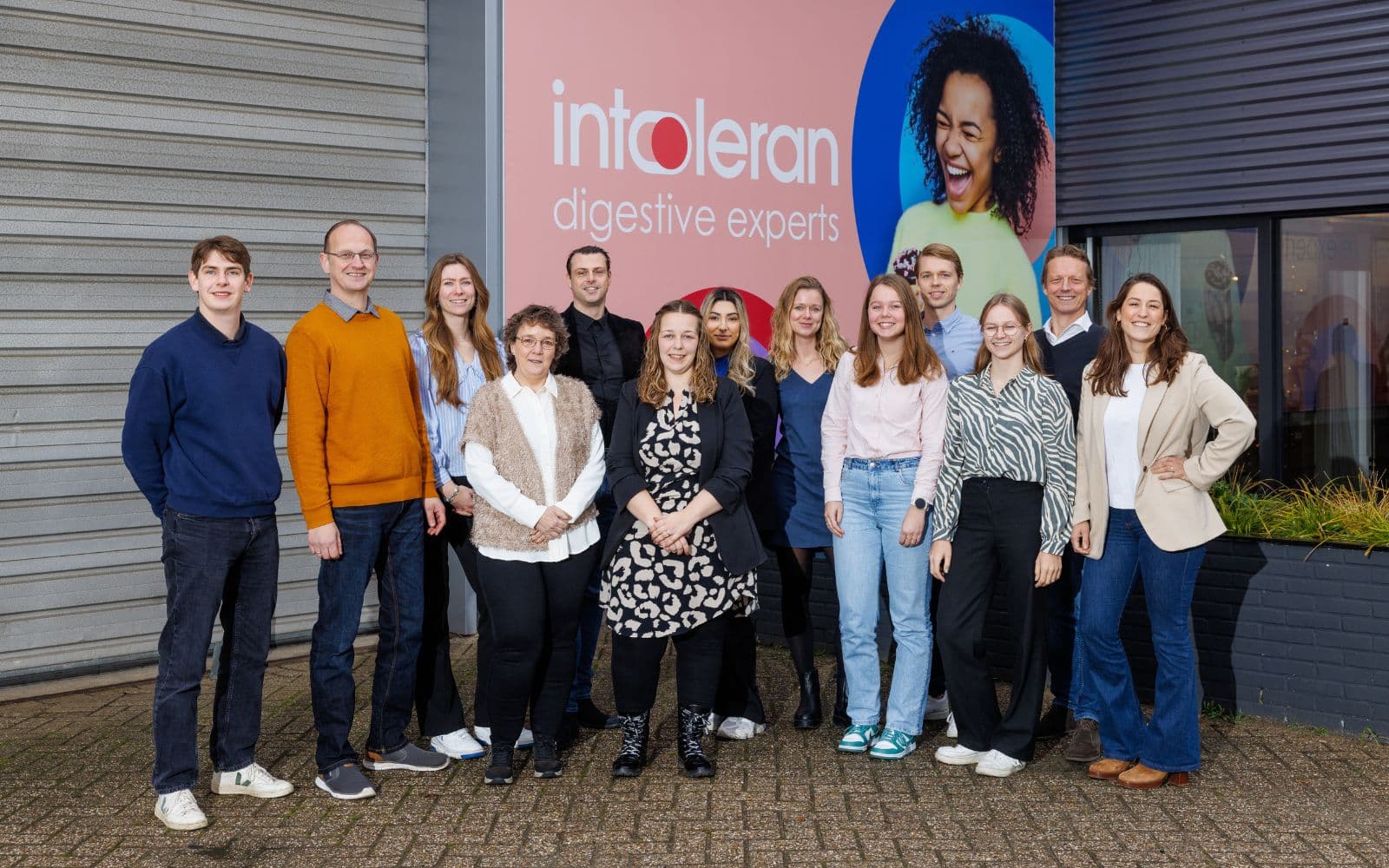
Intoleran, The Digestive Experts, founded in 2008, has emerged as a trusted voice in the digestive enzyme community, and are lab tested and certified by both Monash University and FODMAP Friendly. They offer carefully formulated enzyme blends designed to help people break down specific FODMAP carbohydrates, as well as address additional digestive issues, such as histamine, starch, and fructose intolerance.
Today we are taking a closer look at how these products work, who they are designed for, and how they can fit into a flexible, real-world lifestyle. We sat down with Iris Wierda, Registered Dietitian at Intoleran, to have a focused conversation, beginning with the topics that matter most to our community.

Dédé: Thank you so much for doing this interview with us. As soon as we learned about your range of products, we knew there was important and valuable information to bring to our community. Let’s start at the beginning. Can you introduce Intoleran and briefly describe your mission around food intolerance management and enzyme supplementation?
Iris: I’ve been with Intoleran for over two years now, but the company itself has been around since 2008. It began when our founder — who struggled with lactose intolerance himself — started developing targeted enzyme supplements to help both himself and others enjoy food without discomfort.
Fast forward to today and our mission is still the same: helping people enjoy food again, even if they live with food intolerances or gut-related challenges.
At Intoleran we focus on very practical food intolerance management. That means giving people tools that allow them to eat more freely — whether that’s supporting them to follow dietary guidelines or offering enzyme supplements that can break down the components they don’t tolerate well.
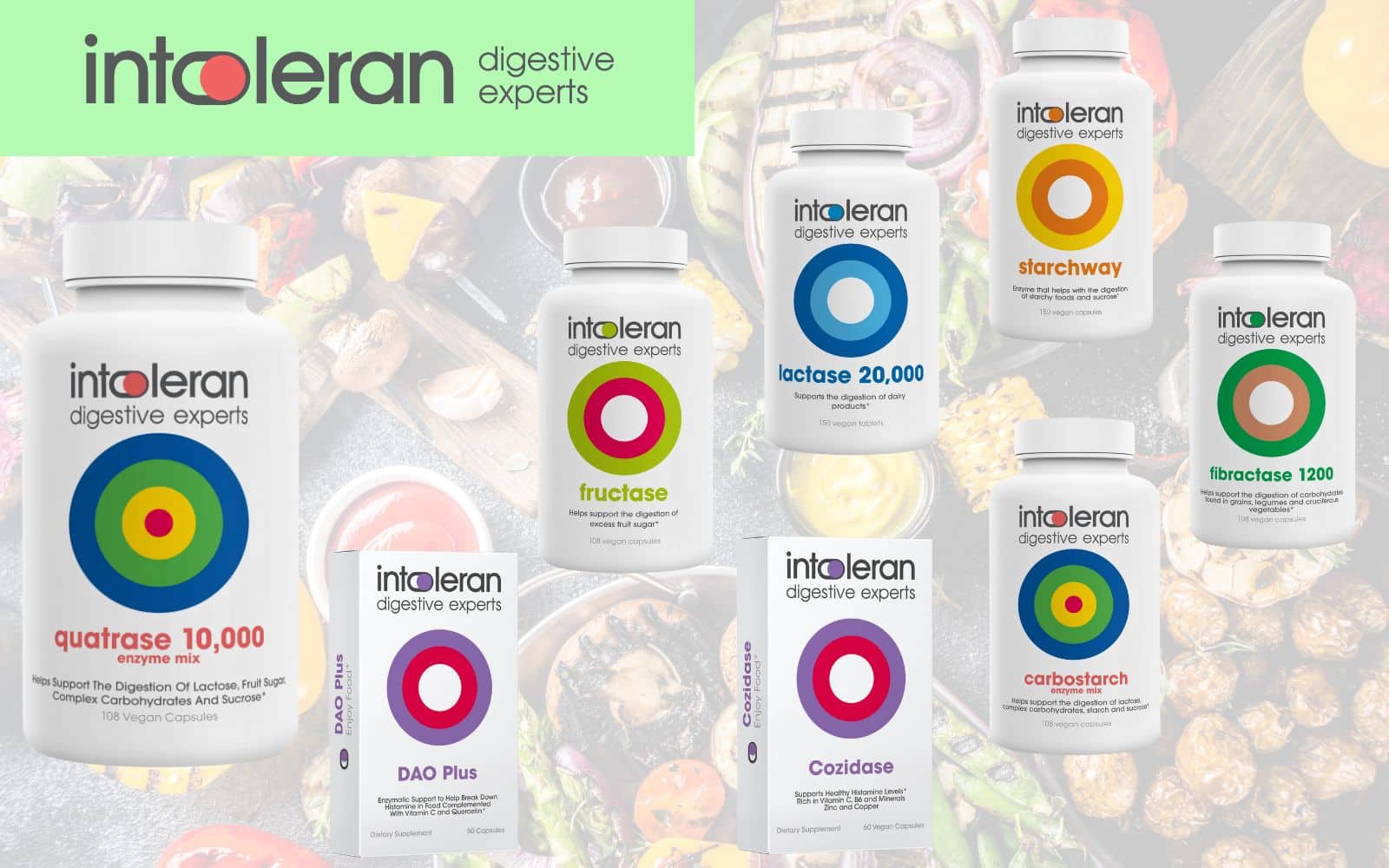
We now offer a wide range of highly specific digestive enzyme supplements, from lactase for lactose intolerance and xylose isomerase for fructose malabsorption, to alpha-galactosidase for FODMAP sensitivities, and enzymes for sucrose and starch to support those with sucrase-isomaltase deficiency. The idea is always the same: targeted support that helps reduce symptoms so people can enjoy meals without fear or restriction.
And, I was thrilled to see that you offer direct contact with your team dietitians. I am sure many people, especailly those new to the brand, have questions!
Overall, everything we do at Intoleran is about making eating enjoyable and worry-free again for anyone who struggles with food reactions. We even have a Risk Free 100 Day Satisfaction Guarantee.
Your product line includes specialized enzyme formulas for FODMAPs (e.g., blends for fructans/galactans, lactose, starch/sucrose). Please walk us through how these different FODMAP-categories impact digestion and how your enzymes target them? (E.g., alpha-galactosidase for fructans/galactans; lactase for lactose; etc.)
Many people react to fermentable carbohydrates — the group we call FODMAPs. These are short-chain carbohydrates that aren’t always well absorbed in the small intestine. When they move into the large intestine, they ferment quickly, pulling in water and producing gas. This fermentation can trigger bloating, abdominal pain, cramping and changes in bowel habits.
A big part of this comes down to enzyme availability. If certain digestive enzymes are lacking or insufficient, those carbohydrates remain undigested and become food for fermentation. That’s where targeted enzyme supplementation can play a role alongside a structured low FODMAP approach.

Let me walk you through the main categories and the enzymes that can support them:
- Lactose (a disaccharide): Here we use lactase, which breaks lactose into glucose and galactose. This is helpful for anyone who doesn’t produce enough lactase themselves.
- Fructose (a monosaccharide): For individuals who struggle with fructose absorption, xylose isomerase can help convert fructose into glucose. This helps balance the fructose-to-glucose ratio and reduces the amount of free fructose that can cause digestive symptoms.
- Fructans and galacto-oligosaccharides: These are the fermentable carbohydrates found in foods like onions, garlic, wheat, beans and lentils — often big gas producers. Alpha-galactosidase helps break these down, reducing fermentation and symptoms like bloating.
Targeted enzyme supplementation helps reduce fermentation in the gut and can be a very practical tool for people living with food intolerances.
Beyond FODMAPs, we also support people who struggle with other carbohydrates that behave similarly in the gut:
- Sucrose and starch: People with sucrase-isomaltase deficiency, or those who simply don’t digest starch and sucrose well, can benefit from enzymes like invertase (sucrase) and gluco-amylase. These help make starchy meals much easier to tolerate.
- Histamine: Although not a carbohydrate issue, excess histamine can also cause digestive discomfort. Here, the DAO enzyme can help break down histamine in the gut.
Grab your 15% holiday discount now!
So overall, targeted enzyme supplementation helps reduce fermentation in the gut and can be a very practical tool for people living with food intolerances.
When a person with IBS or FODMAP sensitivity is trying to reintroduce more foods, how can enzymes like yours play a role, and what are realistic expectations?
When a person with IBS or FODMAP sensitivity is trying to reintroduce foods, enzymes can be helpful — but not during the official reintroduction phase.
The purpose of the reintroduction phase is to clearly determine which specific FODMAP groups you react to and at what threshold. To get accurate results, it’s important to test foods without enzyme support.

Using enzymes during this phase can blur the picture, because the enzymes may reduce or delay symptoms — making it hard to know whether you tolerate the food itself or whether the enzyme prevented a reaction.
Our key recommendation is: do the full FODMAP reintroduction phase without enzymes to avoid confusion and get a clear tolerance profile.
Once the reintroduction phase is completed and you know which FODMAP groups trigger symptoms (and at what amounts), enzymes can become very useful tools to help expand your diet again.
At that stage, enzymes can support the digestion of the specific carbohydrates you struggle with, for example:
- Lactase → for people who react to lactose in dairy.
- Alpha-galactosidase → for GOS and fructans in foods like legumes, nuts, or onions.
- Xylose isomerase → for those sensitive to fructose-heavy fruits or honey.
- Invertase or gluco-amylase → for sucrose or starch-related symptoms.
Enzymes don’t cure IBS or completely mask intolerances; they simply help break down the carbohydrates you don’t digest well. This can reduce fermentation, gas, bloating, and cramping — allowing some people to tolerate a larger portion or a wider range of foods than they normally could.
Could you explain the timing and dosage guidelines for using your enzyme products (for example: before or with a meal, how many capsules, etc.)? What common mistakes do users make?
One of the questions I get most often is: “Okay, but how do I actually use these enzymes in real life?”
The good news is: digestive enzymes are very straightforward. But using them correctly can make a huge difference in how well they work.
Timing is very important. Digestive enzymes need to be in the digestive tract right when the food arrives.
So, the rule of thumb is:
- Take them just before a meal or with your very first bite.
- Taking them after a meal is usually too late, because the food has already moved on and the enzyme can’t catch up.
That simple timing difference can make or break the effect.
Matching the enzyme to the food is important as well.

Always match the enzyme to the carbohydrate that triggers you:
- Lactase → for lactose in milk, cream, soft cheeses.
- Alpha-galactosidase → for fructans and GOS: onions, garlic, wheat, beans, lentils, cashews.
- Xylose isomerase → for fructose-heavy foods like apples, pears, honey.
- Sucrase / gluco-amylase → for starch and sucrose, especially in people with sucrose–isomaltase deficiency.
So, it’s really like choosing the right tool for the right job.
Dosaging mus be considered as well.
Dosage depends on:
- The amount of the trigger food,
- Your personal sensitivity,
- And the strength of the supplement.
We often advise starting with a higher dose the first time you test a product, so you can clearly see if it works for you — and then adjust down if you can.
And, you can combine enzymes, which is a common question that we hear. And the answer is yes — absolutely.
Many meals contain more than one FODMAP group, so combining, for example lactase + alpha-galactosidase, is completely normal, possible, and helpful.
They don’t interfere with each other, and they don’t suppress your body’s own enzyme production.

Then, be mindful of the most common mistakes.
There are three I see all the time:
- Taking the enzyme too late — after eating. By then, it simply can’t keep up.
- Using the wrong enzyme for the wrong food — for example taking lactase for a meal that contains no lactose but lots of onion.
- Underdosing — taking too small a dose for a very high FODMAP meal, which makes people think it “doesn’t work.”
Some people believe there’s a “universal FODMAP pill” — you note there isn’t one. Why is that the case, and how should consumers think about choosing the right enzyme product for their particular triggers?
People sometimes ask whether there’s a “universal FODMAP pill” — one enzyme that breaks down every FODMAP. And the simple answer is: no, that doesn’t exist, and there are a few good reasons why.
First, FODMAPs are not one single thing. They’re different groups of carbohydrates, each with their own chemical structure — lactose, fructose, fructans, GOS and polyols.
And because each of those carbohydrates requires a different digestive enzyme, there’s no single enzyme that can break them all down.
On top of that, not everyone reacts to the same FODMAPs, and people don’t react to them in the same amounts. One person might be extremely sensitive to fructans in onions, while another reacts mostly to lactose or fructose.
So, giving everyone the same pill wouldn’t actually solve the problem — because the triggers are different.
That said, we do have a product that comes close. Our Quatrase 10,000 combines multiple enzymes — lactase, alpha-galactosidase, xylose isomerase and others — to help with all major FODMAP groups except polyols. It’s a great option for people who react to several FODMAP categories or who want broader coverage for complex meals.

But even then, it’s important to understand your own triggers. The most effective approach is:
- Identify which specific FODMAPs cause your symptoms, and in what quantities.
- Match the enzyme to the carbohydrate, so you’re using the right tool for the right job.
- Use broader blends like Quatrase 10,000 when you need support across multiple categories.
So instead of a one-size-fits-all pill, the goal is personalized FODMAP management — understanding your own sensitivities and choosing the enzyme that best fits the meal in front of you.
Tell us about your other digestive enzyme products; your range goes beyond FODMAPs!
Even though many people know us for our FODMAP-focused enzymes, our range actually goes far beyond that. We also support people who struggle with other types of food intolerances — like starch and sucrose intolerance, histamine sensitivity, and overall gut health. Let me walk you through the main categories.

1. Starch & Sucrose (Other Carbohydrate Intolerances)
Product: Starchway
Some people don’t necessarily react to FODMAPs, but they do have trouble digesting starch and sucrose, especially individuals with sucrase-isomaltase deficiency or those who simply experience symptoms after starchy meals.
Our product Starchway contains the enzymes sucrase and gluco-amylase, which help break down these carbohydrates more efficiently. Many people find it really helpful for meals that contain potatoes, rice, bread, pasta or sugary foods — it just makes those meals much easier to tolerate.”
2. Histamine Intolerance
Products: DAO Plus, DAO Mini, Cozidase
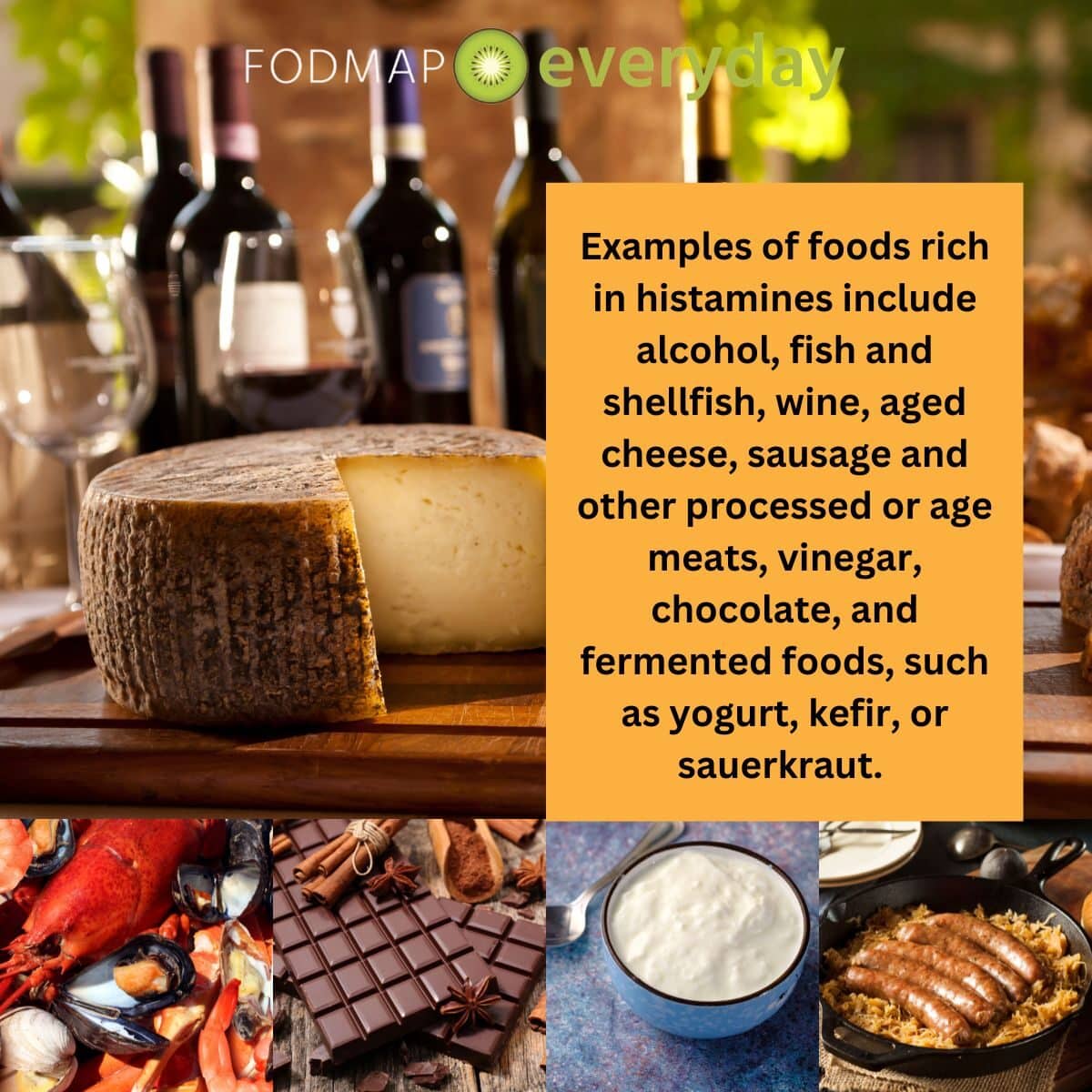
Another area we focus on is histamine intolerance, which can cause symptoms like headaches, skin flushing, digestive discomfort, or reactions to wine, aged cheeses, fermented foods or cured meats.
We have three products in this category:
- DAO Plus — provides the digestive enzyme diamine oxidase (DAO), along with vitamin C and quercetin to support histamine breakdown in the gut.
- DAO Mini — a convenient, portable format of the same DAO enzyme, perfect for meals out.
- Cozidase — this one is different. It doesn’t contain DAO; instead, it provides nutrients like copper, zinc, vitamin B6 and vitamin C that support your body’s own DAO production. It’s especially helpful as daily support, or for people who prefer a vegan alternative.
Also, speaking of pills, tell us more about why you chose a pill format.
Great question — people often assume capsules are just a convenience choice, but there’s a lot of intention behind it. We use capsules for most of our products because it allows us to keep the formulas as pure and clean as possible, with very few additives. Many people with IBS or food intolerances are sensitive to fillers, coatings or artificial ingredients, so a simple capsule format helps us avoid that.
Another big advantage is flexibility. Most of our capsules can be opened, and the powder can be taken directly or mixed into a small amount of food. That’s incredibly helpful for people who don’t like swallowing pills or who need to adjust the dose — for example, children or anyone starting slowly with a new enzyme.
Many travelers or people dining out find it hard to stick to a strict low FODMAP diet. How might enzyme supplementation support more flexibility in real-world settings like travel or social meals?
Absolutely — sticking to a strict low FODMAP diet while traveling or eating out is incredibly challenging. You don’t always know what’s in a dish, you can’t read ingredient labels, and you often want to just enjoy the moment without overthinking every bite.
That’s where enzyme supplementation can really give people more flexibility.
When you take the right enzyme before a meal — whether that’s lactase for dairy, alpha-galactosidase for onions, garlic or beans, or a broader blend like our Quatrase 10,000 — it helps break down the carbohydrates you personally struggle with. So even if you don’t know exactly which FODMAPs are in the food, you’re giving your gut extra support.
Does it mean you can eat absolutely anything without limits? No — realism is important. But enzymes can:
- Reduce the intensity of symptoms if you accidentally eat a trigger
- Allow you to tolerate small to moderate amounts of certain FODMAPs
- Make eating socially much less stressful
- And give you confidence when choices are limited, like at airports, restaurants, or family gatherings
For many people with IBS, this makes a huge difference. Instead of avoiding situations or feeling anxious, they gain a bit of freedom and spontaneity back. And that’s really what enzyme supplementation is about — not replacing the low FODMAP diet, but making real-life eating a lot more manageable.
What does your evidence look like? Are there clinical trials, real-world user data, or dietitian-led studies supporting enzyme use for managing FODMAP-related symptoms?
When people ask what the science says about enzyme therapy for IBS and FODMAP intolerance, the answer is: quite a lot. There’s strong evidence that undigested carbohydrates — like lactose, fructose, GOS, fructans and sucrose — can drive IBS symptoms through rapid fermentation in the gut. Enzymes help by breaking these carbohydrates down before they ferment.

We have solid clinical research behind several enzymes:
- Lactase — one of the most well-studied; multiple randomized trials show it reduces gas, bloating and diarrhea in lactose intolerance.
- Alpha-galactosidase — proven to reduce gas from GOS, with emerging evidence and strong real-world data showing benefits for fructans as well.
- Xylose imerase — clinical trials show it improves fructose absorption and reduces symptoms after high-fructose foods.
- DAO — shown to reduce symptoms in people with histamine intolerance.
- Sucrase and gluco-amylase — effective for starch and sucrose intolerance, including sucrase-isomaltase deficiency.
And importantly, we’re now partnering with Monash University on a rigorous randomized, double-blind clinical trial using our Quatrase 10,000 enzyme blend. The study will test whether FODMAP enzymes can reduce IBS symptoms while people eat a normal, everyday diet — without strict FODMAP restriction. Results are expected in mid-2026.
Overall, enzyme therapy has a solid scientific foundation, and even stronger evidence is on the way.
And importantly, we’re now partnering with Monash University on a rigorous randomized, double-blind clinical trial using our Quatrase 10,000 enzyme blend. The study will test whether FODMAP enzymes can reduce IBS symptoms while people eat a normal, everyday diet — without strict FODMAP restriction. Results are expected in mid-2026.
The gut microbiome is increasingly seen as playing a role in IBS, FODMAP intolerance, and general digestive health. How do your enzyme products intersect with or complement microbiome-focused strategies (like diet changes, probiotics, prebiotics)?
The gut microbiome absolutely plays a role in IBS and digestive health, and our enzyme products fit alongside microbiome-focused strategies in a very complementary way.
Enzymes don’t change the microbiome directly — that’s what diet, probiotics and prebiotics are for. But they do influence the environment the microbiome lives in. By breaking down difficult carbohydrates before they reach the colon, enzymes can reduce excessive fermentation, gas production and distension. That often means less irritation and a more stable gut environment, which can indirectly support a healthier microbiome.
Enzymes are also very helpful during dietary changes.
For example: They allow people to tolerate a wider variety of foods, which is actually beneficial for microbiome diversity — something we know is important for long-term gut health.
And for people taking probiotics or prebiotics, enzymes can reduce the discomfort that sometimes comes from fermentable fibers while the gut is adjusting.
The way we see it, enzymes don’t replace microbiome strategies — they work alongside them. Diet improves the microbiome, probiotics add beneficial bacteria, prebiotics feed those bacteria, and enzymes help manage symptoms so people can actually follow these approaches without feeling miserable.

In other words: enzymes support the function of the gut, while microbiome strategies support the ecosystem. Together, they make a very effective combination for many people with IBS.
When someone tries your enzyme products and still has symptoms, what next steps do you recommend? (E.g., reassessing diet, checking other intolerances, contacting a specialist)
First, it’s important to reassess the meal and the enzyme match. Sometimes the issue is simply using the wrong enzyme for the wrong carbohydrate, or taking too low of a dose. Timing can also matter — enzymes really need to be taken before or with the first bite.
If the symptoms continue even with correct use, it may be a sign that another FODMAP group or food trigger is involved — something like polyols, high-fat meals, caffeine, spicy foods or even stress. This is where keeping a brief symptom and food log for a few days can be very helpful.
The next step is to consider other intolerances or conditions. For example:
- Histamine intolerance
- Sucrose–isomaltase deficiency
- Non-carbohydrate triggers like fat or protein
- Or even non-dietary factors like gut-brain interactions
Sometimes the symptoms are not caused by FODMAPs at all, so enzymes alone won’t solve it.
And finally, we always encourage people to work with a dietitian or GI specialist, especially if symptoms are persistent, severe or confusing. A professional can help identify patterns, guide reintroductions, rule out medical conditions and tailor the strategy — whether that involves enzymes, diet changes or other treatments.
In short: if enzymes don’t fully resolve symptoms, it usually means it’s time to reassess the triggers, fine-tune the approach, and possibly involve a specialist. Enzymes are a great tool, but they’re just one part of a broader strategy for managing IBS
What safety or usage guidance do you want consumers to know? Are there any groups who should take caution (pregnant, young children, other gut disorders)?
Digestive enzymes are generally considered safe for both daily and long-term use. They’re not drugs — they’re proteins that work locally in the digestive tract, doing exactly what your body’s own enzymes do: breaking down food. Most of the enzymes we use are plant-based and very similar to the enzymes your body naturally produces.
A lot of people are relieved to hear that enzymes don’t shut down or weaken your own enzyme production. Your body doesn’t become “dependent” on them. If you take more enzyme than you need, the excess simply passes through the digestive tract and leaves the body.
We’re also moving toward more personalized nutrition, because not everyone reacts to the same FODMAPs or in the same amounts. The future is about helping people understand their triggers and giving them targeted, flexible tools instead of one-size-fits-all solutions.
From your perspective, what is the future of enzyme supplementation for FODMAPs and digestive health? Are you developing new blends, integrating with personalized nutrition, or collaborating with clinicians?
From my perspective, the future of enzyme therapy for FODMAPs and digestive health is all about deeper science, smarter formulas, and closer collaboration with clinicians.
At Intoleran, we’re constantly diving into the scientific literature to identify new ingredients and new enzyme pathways that can help people with digestive sensitivities. Until now, much of the focus in our field has been on carbohydrate intolerances — like lactose, fructose, fructans and sucrose. But we’re now exploring what we can do for people who struggle with fat and protein digestion as well, because digestive challenges rarely fit into just one category.
We’re also moving toward more personalized nutrition, because not everyone reacts to the same FODMAPs or in the same amounts. The future is about helping people understand their triggers and giving them targeted, flexible tools instead of one-size-fits-all solutions.

And honestly, what matters most to us is collaboration with professionals — dietitians, gastroenterologists, researchers. Working together ensures people get the right guidance, the right diagnosis and the right product for their unique needs. That’s why we invest heavily in clinical partnerships and education.
The future, as we see it, is:
- More advanced and diverse enzyme blends,
- More personalized use,
- And even stronger integration with healthcare professionals.
All with the goal of helping people with digestive issues enjoy food with more comfort and confidence
Tell us how your products are differentiated from others on the market.
What really sets Intoleran apart is the combination of purity, science, and real-world practicality.
First, our formulas are intentionally simple and clean. We keep our ingredients as pure as possible with very few additives, fillers or coatings — something that’s especially important for people with IBS or sensitive digestion. Every enzyme we use is carefully selected and supported by scientific evidence, not trends or guesswork.
Second, we design our products through the lens of clinical experience. Our team includes registered dietitians who work directly with people dealing with IBS, FODMAP sensitivities and food intolerances. They know firsthand how overwhelming and restrictive digestive issues can feel, so we make our products as practical and easy to use as possible — clear dosing, flexible formats, and targeted formulas that match real meals, not theoretical ones.
Finally, we stay very close to the science. We continually review new literature and collaborate with researchers and clinicians to refine our products and develop smarter enzyme blends based on what truly works.
In short: we focus on purity, evidence, and practicality, guided by professionals who understand the day-to-day reality of living with digestive issues. That’s what really differentiates Intoleran.

For dietitians or healthcare professionals recommending your products: what key points should they know about complementing a low FODMAP diet with these enzymes (e.g., when, how, for whom)?
For dietitians and healthcare professionals, the key thing to know is that digestive enzymes are not a replacement for the low FODMAP diet — they’re a complement that can make the diet more practical and sustainable.
Enzymes are especially helpful:
- For patients with multiple food triggers, where pinpointing the exact FODMAP is difficult.
- In social, travel or unpredictable eating situations, where strict avoidance isn’t realistic.
- For individuals who struggle with nutritional adequacy because the elimination phase is too restrictive.
Timing matters: enzymes should be taken before or with the first bite of the trigger food, and matched to the specific carbohydrate — lactase for lactose, alpha-galactosidase for GOS/fructans, xylose isomerase for fructose, invertase/gluco-amylase for starch/sucrose.
They’re also appropriate for people who are unable or unwilling to follow strict dietary restriction, or who need more flexibility in everyday life.
In short, enzymes help patients expand their diet more safely, reduce fear around eating, and maintain quality of life — while still following evidence-based dietary therapy.
IBS is never just about food. Stress, sleep, hormones, travel, routine changes… they can all play a huge role in symptom flares. So, enzyme support should always be seen as one tool within a broader, full-spectrum management plan.
Many of our readers are interested in non-food triggers of IBS as well, such as stress, sleep, travel, hormones). Do you have any guidance about how enzyme support fits within a full-spectrum approach to managing IBS or FODMAP sensitivity?
Absolutely — IBS is never just about food. Stress, sleep, hormones, travel, routine changes… they can all play a huge role in symptom flares. So, enzyme support should always be seen as one tool within a broader, full-spectrum management plan.
Enzymes help by reducing the food-related burden on the gut — meaning less fermentation, less gas and less distension after meals. And when the digestive system is calmer, many people find they’re more resilient to non-food triggers like stress or poor sleep.

But enzymes don’t replace the other pillars of IBS care. They work best alongside:
- Stress and nervous-system regulation (breathing work, psychological therapies, gut–brain approaches)
- Consistent sleep routines
- Motion and gentle movement
- Hormone-awareness, especially for those whose symptoms fluctuate across the menstrual cycle
- Travel strategies, where unpredictable meals and schedule changes make enzyme support especially useful
- And, of course, individualized dietary guidance such as the low FODMAP framework.
The way we see it: enzymes help reduce one major source of digestive load, giving people more stability and confidence — but they’re most effective when combined with a holistic approach that addresses both food and non-food triggers.
What advice do you have for someone just starting out: perhaps they recognize some food intolerance symptoms but are unsure whether to try a low FODMAP diet, enzyme supplementation, or both?
My biggest advice for anyone who’s just starting to explore their digestive symptoms is: you don’t have to choose one path right away. Many people benefit from a combination of dietary guidance and enzyme support — and you can start gently.
If you suspect food intolerances but you’re unsure where to begin, here’s a simple approach:
- Start by observing patterns.
Notice which foods tend to trigger bloating, pain or changes in bowel habits. A short symptom log for 3–5 days can already give you helpful clues. - Try targeted enzymes with known trigger foods.
Lactase for dairy, alpha-galactosidase for beans/onions/garlic, xylose isomerase for fructose, or a broader blend like Quatrase for mixed meals. Enzymes can make eating less stressful while you’re still figuring things out. - If symptoms are frequent or difficult to predict, work with a dietitian.
A structured low FODMAP approach — done properly — can help identify true triggers much more clearly. Enzymes can be used alongside it to support reintroductions or social meals. - Don’t jump into heavy restriction unless necessary.
You may not need the full low FODMAP diet. Sometimes one or two FODMAP groups are the real issue, and targeted enzyme support is enough.
Enzymes are a safe, gentle starting point, and the low FODMAP diet offers structure when you need deeper clarity. Used together, they can give people confidence, flexibility and a much clearer understanding of what their gut can handle.
If I could give just one tip, it would be this: focus on adding tools instead of removing foods.
Finally: if you could share one actionable tip for someone with FODMAP sensitivity wanting to improve their eating experience (without feeling overly restricted), what would it be?
If I could give just one tip, it would be this: focus on adding tools instead of removing foods.
Instead of thinking in terms of restriction, use support strategies — like targeted enzymes, smart meal planning and gradual reintroductions — that help you tolerate more foods with confidence. The goal isn’t a perfect FODMAP-free diet, but a flexible way of eating where your symptoms are managed and your meals still feel enjoyable.

Iris, thank you and your team so very much for sharing your expertise. Your products are making a huge difference for those suffering with digestive issues.
The Takeaway
Living with digestive challenges can be frustrating, but it does not have to limit the joy or comfort of eating. The insights shared here highlight how targeted enzymes may help expand options, support confidence, and complement the low FODMAP approach. Whether someone is traveling, navigating restaurant menus, or simply experimenting with reintroductions at home, understanding how these enzymes work can make a meaningful difference.
We are grateful to Intoleran for taking the time to share their expertise. These conversations remind us that even small tools can open the door to more freedom and ease around food.
Be sure to check out their product line, take advantage of their team of dietitians, 100 day risk-free guarantee, and see if there is an Intoleran digestive enzyme that could support you.

- Intoleran Quatrase 10,000 (previously called Quatrase Forte)
- Intoleran Fructase
- Intoleran Dao Plus
- Intoleran Dao Mini
- Intoleran Fibractase 1200
- Intoleran Starchway
- Intoleran Cozidase
- Intoleran Lactase 2500
- Intoleran Lactase 10,000
- Intoleran Lactase 20,000
- Intoleran Lactase Drops
- Intoleran Carbostarch

You may want to read: Finding Digestive Freedom at the Holiday Table with Enzyme Support From Intoleran